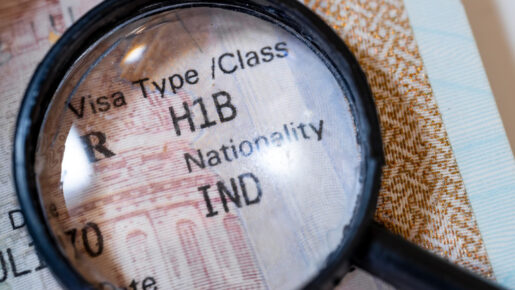
A range of bills in the 119th Congress is creating a high-stakes confrontation regarding the future of the H-1B visa program, revealing a growing divide in Washington over how, or even if, the program should continue.
Lawmakers from both parties have introduced proposals that could significantly expand, restrict, reform, or even eliminate the high-skilled worker visa system.
On one end of the spectrum, Representative Raja Krishnamoorthi (D-IL) has pushed to double the annual H-1B cap through the HIRE Act, reviving a proposal previously reported by The Dallas Express. This push would increase the number of visas from 65,000 to 130,000. The effort drew scrutiny of donor ties and industry backing, as well as bipartisan criticism amid a surge in negative public comments about the program.
Supporters argue expansion is necessary to maintain U.S. competitiveness. Krishnamoorthi has said the measure is “designed to strengthen America’s long-term economic and technological competitiveness.” Industry advocates have similarly argued that alleged labor shortages in science and technology justify increasing visa supply.
In contrast, a bloc of lawmakers is pushing restrictions. Senator Jim Banks (R-IN) has proposed a sweeping overhaul that would impose a $150,000 minimum salary and eliminate the Optional Practical Training pipeline. “Corporations rigged the system to flood the country with cheap foreign labor and drive down wages,” Banks previously said, according to DX reporting.
Other proposals go further. Legislation from Rep. Marjorie Taylor Greene (R-GA) would reportedly phase out the H-1B program entirely over time, while a separate bill from Rep. W. Gregory Steube would set visa allocations to zero beginning in fiscal year 2027.
Greene reportedly argued that corporations have used the system to replace American workers, framing her bill as a final effort to dismantle what she described as a broken pipeline before leaving office. The congresswoman resigned shortly after introducing the bill, but the legislation remains live in the House of Representatives.
Meanwhile, Senate proposals, including those from Sen. Chuck Grassley (R-IA) and Sen. Dick Durbin (D-IL), seek a middle ground by tightening wage requirements, increasing enforcement, and limiting how heavily companies can rely on visa holders.
In a different direction, Rep. Bonnie Watson Coleman (D-NJ) has introduced legislation to roll back restrictions imposed by President Donald Trump, including a $100,000 visa fee announced in September 2025.
“Trump’s shortsighted proclamation has created significant barriers for U.S. employers, universities, hospitals, and research institutions that rely on highly-skilled professionals,” Watson Coleman said in a March 6, 2026, press release. “The H-1B program does not replace the domestic workforce; it serves as a bridge between U.S. talent and global talent that fuels U.S. economic growth.”
Her bill would nullify the fee and restore prior wage rules, reflecting concerns from universities and healthcare systems about workforce shortages.
Despite the volume of proposals, none of the measures has advanced out of committee as of March 17, 2026, leaving the program’s future uncertain as political, economic, and public pressures continue to mount.
|
Bill Number & Title
|
Sponsor (Party-State) & Key Cosponsors
|
Introduction Date
|
Key Reforms (What the Bill Would Do)
|
Bill Text Link
|
Press Release / Sponsor Info
|
|---|---|---|---|---|---|
|
H–1Bs for Physicians and the Healthcare Workforce Act (official H.R. number pending)
|
Rep. Mike Lawler (R-NY-17); cosponsored by Reps. Sanford D. Bishop (D-GA), Maria Elvira Salazar (R-FL), Yvette Clarke (D-NY)
|
March 17, 2026
|
• Exempts physicians and other healthcare workers (per ACA definition) from the $100,000 additional fee imposed by the 2025 presidential proclamation. • Prohibits any extra or higher fees beyond standard statutory processing fees for these petitions.
|
Lawler Press Release (Mar 17, 2026)
|
|
|
S.4087 – A bill to exempt public school employees from non-processing related fees for H-1B visas imposed by Presidential Proclamation 10973
|
Sen. Lisa Murkowski (R-AK)
|
March 12, 2026
|
• Exempts public K-12 school districts from the $100,000 H-1B entry fee (and similar surcharges).
|
Murkowski Press Release (Mar 12, 2026)
|
|
|
H.R.7859 – Welcoming International Success Act (WISA)
|
Rep. Bonnie Watson Coleman (D-NJ-12); cosponsored by Reps. Yvette Clarke (D-NY), Lois Frankel (D-FL), Seth Moulton (D-MA), Henry C. Johnson (D-GA)
|
March 5, 2026
|
• Nullifies the $100,000 fee and stricter wage rules from the 2025 Trump proclamation. • Restores 2024 DOL wage methodology.
|
Watson Coleman Press Release (Mar 6, 2026)
|
|
|
H.R.7451 – EXILE Act (Ending Exploitative Imported Labor Exemptions Act)
|
Rep. W. Gregory Steube (R-FL-17)
|
February 9, 2026
|
• Sets H-1B numerical allocation to 0 starting FY2027 (full phase-out after FY2026).
|
Steube office announcements
|
|
|
H.R.6937 – End H-1B Now Act
|
Rep. Marjorie Taylor Greene (R-GA-14)
|
January 2, 2026
|
• Phases cap down to 0 by FY2035. • Restricts specialty occupations to physicians/nurses only; eliminates dual-intent and fashion-model eligibility. • Bars Medicare funding for H-1B-trained residencies.
|
Greene office announcements
|
|
|
H.R.6305 – High-skilled Immigration Reform for Employment Act (HIRE Act)
|
Rep. Raja Krishnamoorthi (D-IL-8)
|
November 25, 2025
|
• Doubles annual H-1B cap from 65,000 to 130,000. • Raises thresholds for “H-1B-dependent” employers (eases attestation burdens). • Creates new $25M/year STEM education grant program.
|
Krishnamoorthi office announcements
|
|
|
S.2941 – Visa Cap Enforcement Act
|
Sen. Tom Cotton (R-AR)
|
September 30, 2025
|
• Eliminates cap exemptions for universities, research institutions, nonprofits, and certain master’s holders. • Makes H-1B visas count against the cap after 3 years and for certain employer changes.
|
Cotton Senate Press Release (Sep 30, 2025)
|
|
|
S.2928 – H–1B and L–1 Visa Reform Act of 2025
|
Sen. Chuck Grassley (R-IA); cosponsored by Sen. Dick Durbin (D-IL) (bipartisan)
|
September 29, 2025
|
• Raises wage floor to the highest of local prevailing, median occupation, or skill-level 2 median. • Requires 30-day public job posting on DOL site; prohibits H-1B-only ads or preference. • Prohibits displacement of U.S. workers; extends liability to end-clients. • Limits large employers to ≤50% H-1B/L-1 workforce. • Strengthens “specialty occupation” definition and adds tiered priorities + mandatory audits.
|
Grassley/Durbin Joint Release (Sep 29, 2025)
|
|
|
S.2821 – American Tech Workforce Act of 2025
|
Sen. Jim Banks (R-IN)
|
September 16, 2025
|
• Sets minimum wage at $150,000 (inflation-adjusted) or comparable U.S. worker wage. • Terminates OPT program for F-1 students. • Limits third-party worksite visas to 1 year with specific assignments only. • Prioritizes approvals by highest offered pay.
|
Banks Senate Press Release (Sep 17, 2025)
|
* All proposals remain in committee with no floor action or passage as of March 17, 2026. This table now comprehensively covers every major bill introduced in the 119th Congress to expand, shrink, end, or reform the H-1B program. For real-time status updates or additional cosponsors, check Congress.gov directly.*