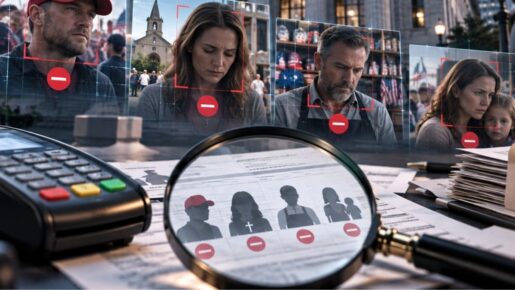
President Donald Trump is escalating a legal and political fight over birthright citizenship while pairing it with claims about immigration, demographics, and hiring in the U.S. tech industry.
The dispute centers on a Supreme Court case challenging a Trump administration effort to narrow birthright citizenship under the 14th Amendment. This move could affect children born in the United States to parents without lawful immigration status. In arguments earlier this month, Solicitor General John Sauer, representing the administration, argued that the Citizenship Clause does not extend to children of illegal aliens, The Dallas Express reported.
Lawyers challenging the policy, including American Civil Liberties Union legal director Cecillia Wang, countered that the 14th Amendment establishes broad birthright citizenship with only narrow exceptions such as children of diplomats.
The Supreme Court is expected to issue a decision later this year.
Trump’s April 23 Truth Social post on the case also drew attention for its language on immigration, demographics, and American identity.
“In my un-humble opinion… the ACLU is the most dangerous criminal organization in the history of America,” Trump wrote.
In another section, he opined, “The Constitution was written before air travel… and you could say, how relevant are some of these arguments when people are coming here by airplane in the ninth month of their pregnancy.”
He also stated that “The Irish integrated, the Italians integrated… They all integrated and became Americans in the melting pot. The idea of the melting pot is long over,” adding, “White men need not apply to jobs in the state of California. Nevermind in high tech.”
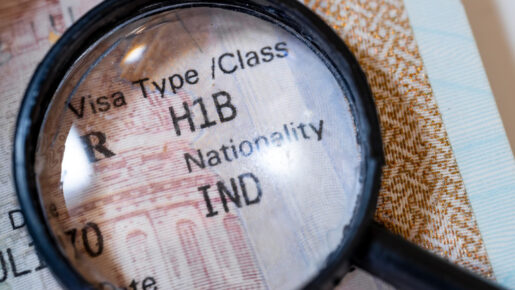
Appearing to pivot to H-1B visas, Trump claimed that “almost all the internal mechanisms are set up to run by Indians and Chinese” in tech hiring, adding, “Your chances are nil,” in reference to white applicants.
USCIS figures indicate approximately 72% of H-1B visas are granted to workers from India and about 12% to workers from China.
Trump’s comments come after a significant federal court ruling. In December 2025, a federal judge ruled against Cognizant Technology Solutions in a discrimination case involving H-1B-related staffing practices, DX reported. The ruling found that company policies during the 2016–2022 period had a disparate impact on non-South Asian and non-Indian workers, according to the court’s findings as summarized in that report. Representatives for Cognizant said the company “does not tolerate discrimination” and planned to appeal.
At the same time, his administration has continued the H-1B visa program, albeit in varying forms, as economic data suggests uneven conditions across science and technology fields. Figures from the Federal Reserve Bank of New York, based on 2024 data released in February 2026, show elevated unemployment and underemployment in multiple STEM categories, including computer science and physics.
Selected STEM labor market indicators (2024 data)
| Major | Unemployment Rate | Underemployment Rate | Median Wage Early Career | Median Wage Mid-Career | Share With Graduate Degree |
|---|---|---|---|---|---|
| Mathematics | 5.8% | 26.2% | $70,000 | $100,000 | 51.3% |
| Mechanical Engineering | 4.4% | 20.1% | $80,000 | $120,000 | 39.1% |
| Medical Technicians | 6.2% | 47.0% | $62,000 | $80,000 | 24.7% |
| Biological Science (Misc.) | 4.4% | 46.9% | $46,000 | $80,000 | 59.5% |
| Computer Engineering | 7.8% | 15.8% | $90,000 | $131,000 | 39.4% |
| Computer Science | 7.0% | 19.1% | $87,000 | $120,000 | 32.7% |
| Physics | 6.6% | 29.1% | $67,000 | $105,000 | 67.3% |
The data has fueled broader debate over the availability of domestic STEM jobs, particularly as companies continue to hire through federal visa programs.
In late September 2025, Trump sharply increased fees for H-1B applicants to as much as $100,000. The proposal triggered confusion among employers and workers before the White House clarified the fee would apply only to new applicants without another legal status in the U.S., DX reported.
Trump’s administration has also overhauled the system by changing the allotment process to favor employers that pay the highest wages to their H-1B workers.
The H-1B program is administered federally, with support from the Department of Labor, the Department of Homeland Security, and the Department of State; it is not primarily governed by state or local authorities.
Some inquiries have suggested that the program undermines domestic wages. “On average, H-1B workers earn 16 percent less than comparable natives,” Harvard economist George J. Borjas wrote in a recent paper reported by DX.
Others have argued that employer interest in foreign workers is primarily driven by their alleged better suitability to the demands of the American labor market.
Ohio GOP gubernatorial contender Vivek Ramaswamy wrote in 2024, “Our American culture has venerated mediocrity over excellence for way too long (at least since the 90s and likely longer)…. ‘Normalcy’ doesn’t cut it in a hyper-competitive global market for technical talent. And if we pretend like it does, we’ll have our asses handed to us by China.”
The legal battles, labor market data, and political messaging reflect a broader national debate over immigration, skilled labor shortages, and who benefits from U.S. technology and professional job growth.
A Supreme Court decision in the birthright citizenship case is expected to further shape that debate, with potential implications for immigration policy and constitutional interpretation.