Autonomous robots and artificial intelligence could be essential in securing a power grid that is becoming increasingly strained by the growing demand from data centers. This insight comes from the CEO of a defense technology company that specializes in autonomous robotics and AI-driven security solutions for critical infrastructure.
Speaking at the EarthX 2026 Congress of Conferences in Dallas, Nick Davis, the founder and CEO of SMR Defense, emphasized that AI and robotics provide a means to monitor and protect critical infrastructure at a scale that humans cannot achieve.
Davis’ presentation, titled “Guardians of the Grid: Autonomous Defense for the Frontlines of Resilience,” centered on the idea that the rapid expansion of decentralized energy systems — including solar installations, microgrids, and future small modular nuclear reactors — is creating what he described as “unguarded perimeters” across the energy landscape.
“The grid is vulnerable,” Davis said, describing a future in which there are “too many [sites] for people to secure, for people to maintain, and for people to defend.”
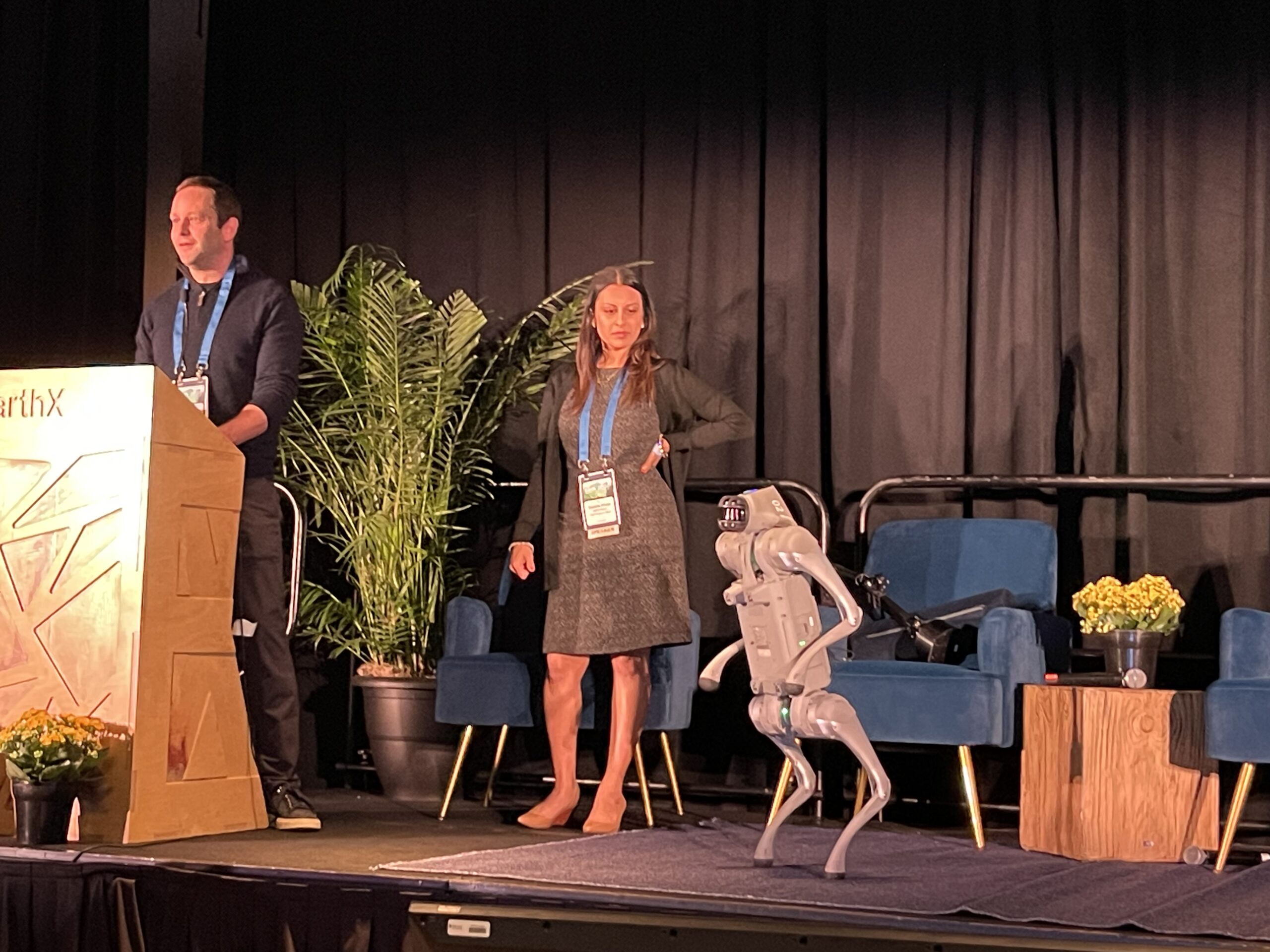
Davis showcased a fleet of AI-enabled machines, including drones and a quadruped robotic dog that accompanied him onstage. The robot walked beside him throughout the talk, made small movements, and, at one point, audibly said, “I’m here,” drawing attention from the audience.
Davis said such systems can continuously patrol infrastructure, detect anomalies, and even carry out the most “delicate repairs” using robotic arms. Compared to traditional human patrols, which he described as “periodic” and limited in scope, an autonomous fleet could cover tens of thousands of acres per day and generate exponentially more data.
The pitch comes as Texas faces mounting pressure on its power grid amid a surge in artificial intelligence development and data center construction. State officials and industry leaders have warned that electricity demand is rising sharply, with projects flooding interconnection queues and straining existing infrastructure.
A Texas regulator recently said government policy — not technology — may be the biggest obstacle to meeting that demand. Wayne Christian, Commissioner at the Railroad Commission of Texas, said at the same conference the day before that “the biggest threat we have with development or AI centers is government regulation,” according to previous reporting by The Dallas Express.
The commissioner’s statements come as some question whether that growth would be desirable for Texas. Around half of the increase in power demand in Texas over the next 6 years is reportedly projected to come from AI data centers.
This could have a steep impact on prices. Texans currently pay an average rate of 15.36¢/kWh for electricity, but under the pressure of projected new demand, those prices could rise to 19¢/kWh or even as much as 27¢/kWh, per Electricity Plans’ analysis of Energy Information Administration data.
That broader statewide debate, whether AI is overtaxing the grid or driving innovation, framed Davis’ remarks, which emphasized the potential benefits of AI in strengthening energy resilience rather than simply consuming power.
Davis pointed to real-world scenarios where autonomous systems could operate in hazardous or remote environments. He described efforts to deploy robotic patrols in the Darién Gap, a dense jungle corridor between Panama and Colombia, where he said migration flows have contributed to environmental degradation.
According to Davis, robotic systems could be used to “police” the area, monitor activity, and help protect ecosystems by reducing pollution and the spread of unmanaged alien species through the region.
Beyond security, he suggested AI-driven machines could support environmental restoration efforts, such as distributing seeds for reforestation or monitoring forest health.
The company’s broader business model builds on Davis’ earlier work with GridMarket, which develops on-site energy systems for industrial clients and data centers. He said the same network of partners could be leveraged to deploy autonomous security systems at scale, particularly as hyperscale data centers and next-generation energy projects expand.
Davis framed the convergence of cheaper robotics hardware, advances in AI such as computer vision and edge computing, and the decentralization of energy as a “once-in-a-decade market opportunity.”
“This is just getting started,” he said, predicting that autonomous systems will become commonplace in infrastructure, industry, and even everyday life.
While some warn that data centers and AI workloads are pushing grids to their limits, others, like Davis, argue the same technologies could play a key role in securing and managing the infrastructure they depend on.