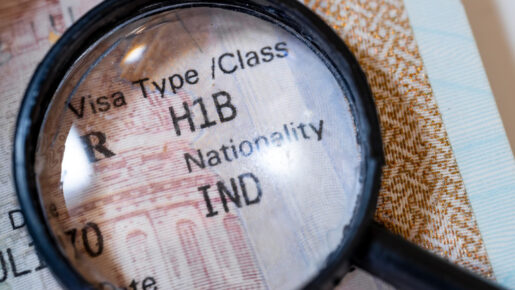
The Trump administration did not kill the H-1B visa program on October 8. It did, however, cut eight major technology and outsourcing companies off from a key federal green-card pipeline while the administration continues a broader campaign to reduce alleged abuse of foreign-worker programs.
Labor Secretary Keith Sonderling announced the action at a White House press conference with Vice President JD Vance. Sonderling suspended Microsoft, Adobe, Cognizant, Infosys, Tata, Wipro, HCL and Capgemini from the Permanent Labor Certification program, known as PERM.
He said the Department of Labor would stop accepting new permanent labor certification applications involving the companies and stop processing pending applications.
That does not cancel existing H-1B status or repeal the visa category Congress created. Instead, it blocks a major route that employers use to move foreign workers toward permanent U.S. residency.
A Green-Card Choke Point, Not H-1B Extinction
PERM often serves as the first major federal step for an employer seeking an employment-based green card for a foreign worker.
The Labor Department requires employers to show that sufficient U.S. workers are not able, willing, qualified and available for the job and that hiring the foreign worker will not adversely affect the wages and working conditions of similarly employed U.S. workers.
H-1B, by contrast, provides temporary status for qualifying specialty-occupation workers. Congress has not repealed the H-1B category, and the October 8 action does not terminate H-1B status across the eight companies.
The administration has attacked the system from several directions.
President Donald Trump extended a 2025 proclamation on September 18 that conditions entry for certain H-1B workers outside the United States on a $100,000 payment, subject to exceptions, through September 21, 2027.
The policy carries an important legal qualification.
An August Department of Homeland Security proposed rule noted that a federal district court vacated the agencies’ 2025 guidance implementing the payment on June 8 and that the government appealed. The First Circuit later denied the government’s request to stay that ruling while the appeal proceeds. Trump nevertheless extended the proclamation in September.
The September proclamation also supplies new evidence of how sharply H-1B filing behavior has changed. It states that the largest IT staffing and outsourcing firms reduced their combined H-1B registrations from 24,946 to 2,055, a 92% decrease. It also reports a nearly 97% decline in consular-processing requests from the fiscal 2025 to fiscal 2027 cap seasons.
Those precise figures come directly from the proclamation. The document also says registrations for beneficiaries with at least a U.S. master’s degree rose from 45.1% of fiscal 2026 registrations to 66.1% for fiscal 2027.
Texas Sits Near The Center Of The Fight
The Texas impact could prove substantial because two companies caught in the new PERM suspension dominate H-1B approvals in the state.
A February analysis by The Dallas Express found that Cognizant and Infosys ranked first and second among Texas H-1B employers from January 1, 2020, through December 31, 2025.
DX calculated 50,666 approvals for Cognizant and 45,323 for Infosys from federal data. Oracle ranked a distant third with 11,603. Other Texas employers in the top 25 included KPMG with 2,677 approvals, AT&T Services with 2,084, American Airlines with 1,672, UT Southwestern Medical Center with 1,379, Dallas ISD with 1,290 and Texas Instruments with 1,040.
Those figures represent H-1B petition approvals in the federal database, not a count of unique workers currently employed in Texas.
Federal investigators have also brought the enforcement campaign directly to Dallas.
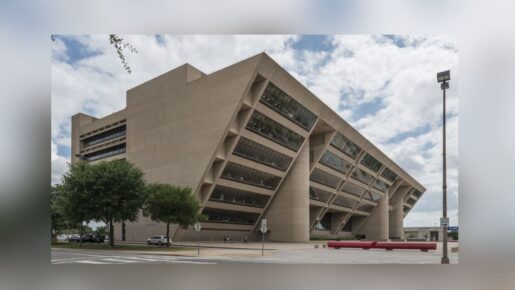
Labor Department Inspector General Anthony D’Esposito traveled to Dallas in August and conducted field checks at locations tied to companies with hundreds of approved H-1B petitions. At one multi-story building associated with more than 500 approved applications, investigators found many locked doors, dark offices and little evidence of active business operations, according to the inspector general.
The inspector general’s office had launched a nationwide investigation in July into alleged H-1B and PERM fraud, including claims involving fraudulent applications, wage-kickback arrangements and labor-broker schemes. Those claims remain allegations unless authorities establish violations through the appropriate legal process.
The Dallas Express has also examined the issue from a North Texas perspective. DX released the full replay of its June 18 Frisco forum on H-1B, which focused on local hiring, workforce displacement, political accountability, fraud and possible reforms.
DX later covered federal records tying 193 requested H-1B positions to Texas Department of Transportation worksites or recognized TxDOT addresses through private employers. Those records did not establish that all 193 workers obtained H-1B status or ultimately worked for TxDOT.
Sonderling Targets Major Users Of The System
At the October 8 press conference, Sonderling said the eight companies had collectively requested almost 3 million foreign workers since 2009, received more than 230,000 H-1B approvals and obtained more than 100,000 permanent labor certifications. The Labor Department had not released the underlying company-level dataset with the announcement, so those totals remain attributed to Sonderling.
Vance focused heavily on Microsoft. “Our message to Microsoft is: You’re a great American company, but you’ve got to hire great American workers,” he said during the White House recording.
Microsoft pushed back on the administration’s characterization. In an October 8 corporate statement, the company said about 80% of its roughly 6,000 H-1B applications in the last fiscal year sought extensions or status changes for existing Microsoft employees. Microsoft said filings involving new employees covered people already legally in the United States and equaled about 1% of its U.S. workforce.
Microsoft also said it pays H-1B employees the same as comparable employees and looks forward to providing the administration with additional information.
What Changes Now
For workers at the eight named companies, the immediate October 8 consequence falls on the employer-sponsored permanent-residency pipeline. The Labor Department will not process new or pending PERM applications involving those employers while the suspensions remain in effect.
For employers nationally, the move sends a broader signal.
The administration has combined PERM suspensions, H-1B entry restrictions, wage and layoff scrutiny, fraud investigations and proposed regulatory changes into a campaign aimed at forcing companies to rely less on foreign labor and more on U.S. workers.
The policy could also produce competing economic effects.
Employers may recruit more Americans, raise wages, change job requirements or reduce reliance on H-1B sponsorship. Companies could also move more work abroad, while skilled foreign workers may avoid employers that cannot offer a reliable route to permanent residency.
For now, calling H-1B extinct would overstate what Washington has done. The visa program remains in federal law, and the October 8 action targets PERM rather than abolishing H-1B.
But the administration has now cut eight major employers off from a critical green-card channel while documenting a 92% collapse in registrations among the largest IT staffing and outsourcing firms and a nearly 97% decline in consular-processing requests.
The question is no longer whether the Trump administration wants to shrink reliance on H-1B labor. The question is how far it can reshape the system without Congress formally repealing it.