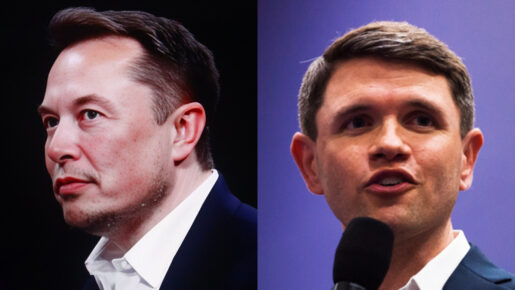


In a new episode of Going Rogue, journalist Lara Logan speaks with Venezuelan investigator Martin Rodil, who describes what he calls a decades-long effort to expose Venezuela’s ruling apparatus as a transnational criminal enterprise.
Rodil, who says he worked with U.S. agencies including the DEA’s Special Operations Division, outlines how Venezuela’s Cartel de los Soles allegedly evolved from a political alliance into a global narco-terror network trafficking cocaine, laundering oil and gold revenues, and exporting violence across the hemisphere.
According to Rodil, the cartel’s origins trace back to early coordination between Cuba’s intelligence services, Venezuela’s military leadership, and Colombia’s FARC, forming what he describes as a state-protected trafficking pipeline designed to weaponize drugs against the United States.
A State-Embedded Criminal Network
Rodil argues the Cartel de los Soles differs from traditional drug organizations because it is allegedly embedded within Venezuela’s military and political hierarchy rather than operating outside the state.
He describes the cartel as a loose federation of military-run networks, each controlling territory, logistics, and trafficking routes, with Venezuela’s geography providing access to Caribbean, Central American, Atlantic, and European corridors.
Rodil also claims the regime exported criminal organizations abroad, including Tren de Aragua, which he describes as a gang weaponized to suppress opposition, destabilize neighboring countries, and later operate beyond Venezuela’s borders.
Echoes in Dallas Express Exclusive Reporting
Rodil’s allegations closely mirror warnings published in two recent Dallas Express exclusives featuring high-ranking Venezuelan defectors now imprisoned in the United States.
In December, DX published a letter from former Venezuelan military intelligence chief Hugo Carvajal Barrios, who alleged that Venezuela operates as a narco-terrorist regime targeting the United States through drug trafficking, foreign intelligence partnerships, and exported criminal networks.
Days later, DX obtained a second letter from retired Major General Cliver Antonio Alcalá Cordones, who claimed Nicolás Maduro expanded Tren de Aragua from a prison-based gang into a transnational criminal force and exported its operatives abroad, including into the United States.
Both former officials — who served in different branches of Venezuela’s security structure — describe Venezuela as a criminal enterprise they say threatens U.S. national security. The Dallas Express has not independently verified the allegations contained in either letter.
Elections, Influence, and Foreign Partnerships
During the episode, Rodil further claims Venezuelan operatives used election technology and foreign partnerships to influence democratic systems beyond their borders. He alleges these efforts were part of a broader strategy to secure political protection and legitimacy for the regime.
Rodil also asserts that foreign governments — including China, Iran, and Cuba — played roles in sustaining the cartel’s operations through financial, logistical, and intelligence cooperation. These claims remain disputed and have not been independently verified.
Why Rodil Says It Matters Now
Rodil argues recent U.S. actions against Venezuela’s leadership represent a turning point but says dismantling a system he describes as decades in the making will require sustained pressure and enforcement.
He frames the issue not as foreign intervention, but as self-defense, claiming drug trafficking, corruption, and hybrid warfare have directly harmed American communities through addiction, crime, and political destabilization.
Episode 55 of Going Rogue with Lara Logan is available on YouTube and Substack.