

The third attempted assassination of President Donald Trump has intensified scrutiny of political violence in the United States, where targeted attacks against public officials, political figures, and symbolic institutions have increasingly unfolded alongside broader social polarization.
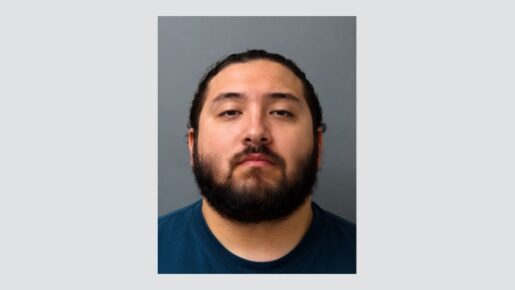
The latest incident, involving allegations that Cole Tomas Allen opened fire near a security screening area at the Washington Hilton during the White House Correspondents’ Dinner on April 25, followed what The Dallas Express reported was the third high-profile armed attack involving Trump since 2024. Federal prosecutors have charged Allen with, among other counts, attempted assassination of the President. Authorities allege he created an anti-Trump manifesto before the shooting and identified administration officials as targets.
The episode added to the questions raised in a recent DX report examining whether Trump has faced more known assassination attempts than any other U.S. President. That report counted 17 documented armed attacks, plots, or credible threats involving Trump, more than any other president in the outlet’s review, though such tallies can vary by methodology.
The attack occurred at the same Washington Hilton where President Ronald Reagan survived an assassination attempt in 1981.
The incident comes amid a wider pattern of high-profile political and ideologically tinged violence that has unsettled the country in recent years, as reported on by The Dallas Express.
In 2024, UnitedHealthcare CEO Brian Thompson was killed in New York City, allegedly by Luigi Mangione. More recently, TPUSA co-founder Charlie Kirk was killed in Orem, Utah, allegedly by Tyler Robinson. Though the motives and legal allegations in those cases differ, each fueled concern over whether political grievance and personalized rage are increasingly spilling into lethal violence.
Some, including Utah Republican Sen. Mike Lee, have embraced the term “Luigi Leftism” as a shorthand for describing the phenomenon.
Luigi Leftism:
A warning to Americans
About the dangers of socialism https://t.co/hRFwmTtgd5 pic.twitter.com/yMrcHoYeJJ
— Mike Lee (@BasedMikeLee) April 27, 2026
Elon Musk recently reposted an image widely circulating on X, adding his own comment, “Major,” to the growing concern of “Luigi Leftism”:
Major https://t.co/IxkcA421Ss
— Elon Musk (@elonmusk) April 26, 2026
Researchers at the Center for Strategic and International Studies (CSIS) have argued that the threat environment has been shaped by what they describe as a “security dilemma,” in which opposing ideological factions arm or mobilize in response to one another, driving escalation.
In a 2022 brief, CSIS found 53% of domestic terrorist incidents in 2021 occurred in connection with demonstrations, up from 2% in 2019, while government, military, and law enforcement targets accounted for 43% of incidents.
Historical context suggests the problem is not entirely new. Adjunct Senior Researcher Brian Michael Jenkins of RAND wrote that the United States experienced more than 1,470 terrorism incidents in the 1970s, including frequent bombings, armed assaults, and assassinations, a period he argued was in some respects more violent domestically than the post-September 11 era. The comparison has led some analysts to caution against treating current violence as unprecedented, even as they acknowledge rising concern.
Data on extremist killings remains contested. The Anti-Defamation League reported domestic extremists killed at least 13 people in 2024, all attributed in its accounting to anti-government or white supremacist-linked perpetrators. The group also acknowledged methodological limitations that may undercount violence tied to other ideologies while overcapturing non-ideological criminal acts involving easily identifiable extremist affiliations.
For example, the killing of fireman Corey Comperatore during the attempted assassination of Trump in Pennsylvania in 2024 is not listed as an “extremist killing” in the ADL’s dataset. While the actions of the deceased shooter, Thomas Crooks, were certainly extreme, his motivations have yet to be clearly established by investigators, roughly two years later.
Still, a recurring theme across studies is that lone actors and small networks, often radicalized online or animated by personal grievances layered onto political narratives, have become central drivers of violence.
The United States has long confronted assassination and political violence, from the killings of Presidents Abraham Lincoln, James Garfield, William McKinley, and John F. Kennedy to the attempted killing of Reagan and attacks on major candidates, including Robert F. Kennedy and George Wallace.
What distinguishes the present moment, CSIS researchers argue, is the overlap between online radicalization, partisan distrust, and a broader normalization of violent rhetoric.
The Secret Service expanded its protective mission after McKinley’s assassination in 1901, and threats against presidents have been a federal crime since 1917. Yet the latest allegations involving Trump suggest the protective architecture continues to face evolving strains.