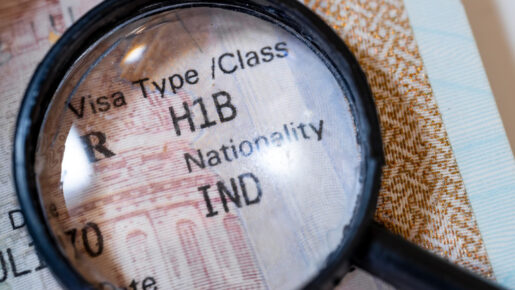


Updates to Federal Housing Administration rules in the past year have sparked widespread questions about whether illegal aliens can access government-insured home loans with low down payments.
Illegal aliens have long been ineligible for FHA-insured mortgages under federal guidelines; however, prior policies created loopholes for certain non-permanent residents, including some with temporary work authorizations and Social Security numbers, prompting the Department of Housing and Urban Development to issue clarifications and restrictions.
Previous Loopholes and Non-Permanent Resident Access
Under guidance issued in January 2021, Deferred Action for Childhood Arrivals (DACA) recipients and other non-permanent residents legally permitted to work could qualify for FHA loans if they provided a valid Social Security number and met credit and income standards. This approach interpreted certain “lawfully present” individuals as eligible despite lacking permanent residency.
To add to the confusion, the FHA does not comprehensively track citizenship or residency status on applications, leaving uncertainty about how many such loans are issued through these pathways, as The Dallas Express previously covered.
Critics argued that these loopholes allowed individuals without stable legal status, including some illegal aliens, access to low-down-payment, taxpayer-backed financing on terms matching those for citizens, according to a Center for Immigration Studies analysis.
A Social Security card alone does not prove eligibility. The Social Security Administration issues numbers to non-citizens authorized to work by the Department of Homeland Security. Issuances to non-citizens rose sharply in recent years, exceeding 2 million in fiscal year 2024 alone, tied to expanded work authorizations, per NewsNation reporting.
Down Payment and Default Rules: Comparison to Citizens
Eligible borrowers, now limited to U.S. citizens and lawful permanent residents (green card holders), face the same FHA terms.
With a credit score of 580 or higher, the minimum down payment is 3.5%. Scores between 500 and 579 require a 10% down payment. All applicants must satisfy income, debt-to-income ratio, and employment criteria.
If an FHA borrower defaults, the insurance protects the lender by covering the claim following foreclosure. The borrower faces standard consequences, including foreclosure, credit damage, and potential deficiency liability.
The government does not make ongoing payments on any borrower’s behalf to prevent default indefinitely. Loss mitigation options, such as forbearance, are available but require repayment plans or lead to foreclosure if unresolved. No exemptions apply based on immigration status.
Recap: Summary of Current Policy
- FHA insurance pays the lender after foreclosure (claim process).
- Temporary loss mitigation (forbearance, partial claims, Payment Supplements) exists but is limited in duration and requires the borrower to eventually repay or resume full responsibility.
- There is no program providing indefinite government payments on a borrower’s behalf to avoid default.
Legal citizens and permanent residents follow identical qualification and default processes as previously eligible non-permanent residents. Both groups’ loans are subject to the same insurance and recovery mechanisms.
Rising FHA Delinquencies
FHA loan delinquencies have increased. In the fourth quarter of 2025, the seasonally adjusted FHA delinquency rate reached 11.52%, the highest since 2021, according to the Mortgage Bankers Association. Serious delinquencies (90+ days) rose notably.
Hundreds of thousands of FHA loans are reported as delinquent or in forbearance, per HousingWire. Borrowers in mitigation programs may delay full repayment, but FHA requires resolution or initiates foreclosure.
Policy Shift
Effective May 25, 2025, Mortgagee Letter 2025-09 eliminated the “non-permanent resident” category for FHA Title II single-family and related programs. Only U.S. citizens, lawful permanent residents, and citizens of certain Freely Associated States remain eligible. Lenders must verify status using documentation from U.S. Citizenship and Immigration Services.
Remaining Pathways
No significant federal loopholes remain that would allow illegal aliens to obtain FHA-insured mortgages. However, illegal aliens can still purchase homes through private-market options outside of government-backed programs. These include all-cash purchases or conventional loans from certain private lenders using an Individual Taxpayer Identification Number (ITIN), noted Yahoo Finance. Such loans typically require higher credit scores, larger down payments, and higher interest rates than FHA financing and carry no taxpayer backing.
In public and assisted housing, HUD is actively closing loopholes for mixed-status households. Proposed rules would require every household member to prove eligibility for immigration status to receive taxpayer-funded benefits, ending prior arrangements that allowed partial assistance in mixed-status households.
Why Questions About Illegal Aliens and FHA Loans Persist
Questions about illegal aliens’ access to FHA-insured mortgages persist more than a year after the policy change because of widespread public confusion over past loopholes, the lack of historical tracking data on non-permanent resident borrowers, and ongoing high delinquency rates in the FHA portfolio.
With more than 11.8% of FHA loans now delinquent as of the first quarter of 2026 and significant taxpayer exposure remaining, the Department of Housing and Urban Development’s clarification continues to draw attention as part of the efforts to ensure federal housing programs prioritize U.S. citizens and lawful permanent residents.