

The White House released the 2026 National Drug Control Strategy on Monday, outlining President Donald Trump’s plan to reduce overdose deaths, target cartel drug networks, and strengthen prevention, treatment, and recovery efforts across the United States.
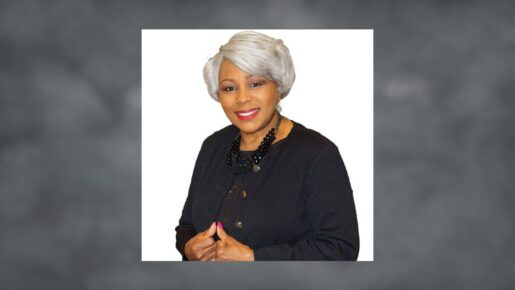
The strategy, released by Office of National Drug Control Policy Director Sara Carter, frames the drug crisis as both a public health emergency and a national security fight. It calls for a two-front approach: attacking the supply of illicit drugs entering the country while reducing demand through prevention, treatment, recovery, and faith-based support.
“My mission as National Drug Control Policy Director is built on a clear and urgent priority that animates every chapter of this Strategy: to fight and win this war on two equally important fronts,” Carter said.
“We are taking the fight to the enemies that profit from killing our citizens. As we attack the supply of these poisons, we will work tirelessly to eradicate the demand for them in our country,” she added. “Under President Trump’s leadership, our goal is not management of the illicit drug crisis. It is victory.”
Strategy Targets Cartels, Supply Chains
The White House said the strategy builds on Trump’s border security and counter-cartel efforts by targeting illicit drugs and precursor chemicals before they reach American communities.
The plan calls for expanded drug-detection technology, broader use of Homeland Security Task Forces, stronger border-security operations, and increased intelligence-driven interdictions of precursor chemicals and drug-manufacturing equipment.
It also calls for action against transnational criminal organizations and foreign terrorist threats, including efforts to dismantle online drug trafficking networks, prosecute money launderers, impose financial sanctions, and disrupt cartel leadership.
The strategy focuses heavily on the global supply chain, arguing that criminal organizations exploit legitimate shipping, chemical, pharmaceutical, and logistics networks to move drugs, precursor chemicals, and equipment used to manufacture synthetic drugs.
Faith-Based Recovery Highlighted
For the first time, the White House said the National Drug Control Strategy is grounded in the “healing power of faith” for Americans who have an addiction.
The strategy calls for expanded access to faith-based prevention and recovery programs, closer partnerships with faith-based organizations, and collaboration with faith leaders to discourage drug use and support those battling addiction.
“Faith has proven profoundly effective for many recovering from drug addiction, and embracing the power of faith has the potential to help millions of Americans achieve recovery,” per the White House Fact Sheet.
The strategy also emphasizes the Great American Recovery Initiative, which the White House described as part of a national response to save lives, restore families, and strengthen communities.
Data, AI, And Emerging Threats
The plan also calls for modernizing how the federal government identifies and responds to drug threats.
The strategy says federal officials will expand public safety and public health data collection, use artificial intelligence to analyze current and future drug threats, and rapidly distribute warnings about dangerous drugs appearing in communities.
One of the most notable provisions calls for implementing wastewater testing “for the first time at a national scale” to obtain near-real-time data on illegal drug use.
The strategy also sets measurable overdose-reduction goals. It lists 79,384 drug overdose deaths as the 2024 baseline and sets targets of 71,630 deaths in 2026 and 60,000 in 2029.
As previously reported by The Dallas Express, ONDCP recently issued a separate Drug Threat Notice warning that cychlorphine, a synthetic opioid that has already appeared in Texas, may be up to 10 times more potent than fentanyl.
“The American people need to know what we’re up against—synthetic opioids that can take a life in an instant,” Carter said in that warning.
The new national strategy addresses that kind of fast-moving threat by calling for faster public warnings, improved toxicology testing, expanded data collection, broader access to naloxone, and better coordination between public health and law enforcement agencies.
Prevention And Overdose Response
The White House said the strategy aims to make a drug-free life the social norm in America through school-, workplace-, community-, and media-based prevention efforts.
The plan also seeks to strengthen overdose response by increasing naloxone availability, developing new overdose-reversal medications, updating overdose rescue training, and creating a standardized approach for responding to mass overdose clusters.
The strategy highlights evolving drug threats, including fentanyl, methamphetamine, nitazenes, kratom products with high 7-OH content, psychoactive hemp derivatives, and counterfeit pills sold online or through social media.
The document also includes a Texas example involving Lucci-Reyes McCallister, who died in League City after taking a pill he believed was Xanax. The strategy said the counterfeit pill contained N-pyrrolidino protonitazene, one of many nitazene analogues. It also said McCallister’s friend, Hunter Clement, died three months later after taking a counterfeit pill containing a nitazene.
Carter said the strategy is intended to move the country beyond crisis management.
“This document is more than a plan; it is our pledge to secure our homeland, protect our children and families, and bring these criminals to justice,” Carter said. “Under President Trump’s leadership, our goal is not management of the illicit drug crisis. It is victory.”