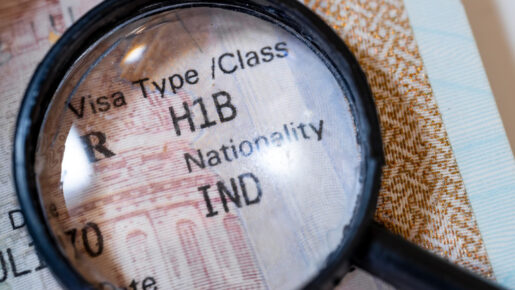


A Saturday Fox News segment and viral X posts reignited debate over H-1B visa fraud, fake academic credentials, and foreign workers in lower wage levels, as U.S. Rep. Chip Roy (R-Texas) pushes new legislation to overhaul the skilled-worker visa program.
The discussion revived scrutiny of earlier fake-degree investigations in India, claims from a former U.S. consular officer about fraudulent documentation, and ongoing enforcement efforts tied to alleged H-1B abuse.
🚨 OMG. A MASSIVE India H-1B visa fraud ring has just been busted…nearly 90% PERCENT of India’s visa applications contain FRAUDULENT INFORMATION
100,000 THOUSAND counterfeit certificates have been seized 🤯
“Law enforcement in India claim it has uncovered a network of… pic.twitter.com/vGz6uZSahW
— Eric Daugherty (@EricLDaugh) June 6, 2026
The Fox segment said nearly 7 million H-1B-related filings have been processed since 2015, with about 70% tied to India and 12% tied to China. It also highlighted Newsweek’s report on former U.S. diplomat Mahvash Siddiqui, who alleged that 80% to 90% of H-1B applications from India she reviewed involved fraudulent documentation or unqualified applicants.
That fraud claim reflects Siddiqui’s account of consular work from 2005 to 2007, not a current official finding covering all Indian H-1B applications.
The segment also revived scrutiny of fake-degree scandals in India, including Manav Bharti University, which has been linked in prior reporting to the alleged sale of more than 36,000 fake degrees.
DHS data cited in a federal rulemaking notice showed that, from fiscal years 2020 through 2024, 28% of H-1B cap-subject petition receipts were tied to wage level I and 55% were tied to wage level II. DHS described wage level II as the largest category, followed by level I, level III, and level IV.
Fake Degrees, Visa Fraud Claims Resurface
The Fox segment also brought renewed attention to reports about counterfeit academic credentials.
Reports earlier this year said Kerala Police seized more than 100,000 counterfeit certificates linked to 22 universities in a fake-degree racket. Critics of the skilled-worker system say forged education credentials can support job, education, or immigration applications, though the seized documents were not H-1B visas.
Another case involved Manav Bharti University in India. A 2021 South China Morning Post report said investigators found the university sold about 36,000 bogus degrees for as little as $1,362 each.
Roy Bill Targets H-1B System
The renewed attention comes as Roy introduced the American White-Collar Worker Jobs Act of 2026, a bill aimed at overhauling the H-1B visa program.
Roy’s bill would replace the H-1B lottery with a wage-based selection process, require employers to show good-faith efforts to hire American workers first, and block companies that recently conducted layoffs from hiring H-1B workers, according to his office.
The proposal would also end the use of H-1B visas as a pathway to permanent residency and eliminate the Optional Practical Training program, which allows many foreign students to work in the United States after graduation.
“For its nearly forty-year history, the H-1B visa has been abused, allowing employers to routinely sideline American STEM workers in favor of cheap foreign labor, while masking layoffs and wage suppression as ‘shortages,’” Roy said. “It’s time to end this lottery-based pipeline and replace it with a system that prioritizes merit, enforces real wage standards, and puts American white-collar workers first.”
Federal Enforcement Already Underway
Federal labor officials had already increased scrutiny of the H-1B program before Roy introduced his bill.
DX reported in December that “Project Firewall,” a federal enforcement initiative tied to alleged H-1B fraud, involved roughly 200 active investigations into possible violations of the specialty-occupation visa program.
The same report noted that the Labor Department had begun using secretary-certified investigations that can proceed without a formal worker complaint when officials claim reasonable cause to believe an employer may be violating the law.
That enforcement push also came amid questions about academic credentials used in the visa system. DX reported that the Center for Immigration Studies said USCIS did not track data on H-1B awardees who obtained degrees from Manav Bharti University, the Indian school linked to large-scale fake-degree sales.
North Texas Already In The Fight
The issue has also surfaced in North Texas through employer data, state investigations, and federal fraud cases.
The Dallas Express previously analyzed federal data showing thousands of H-1B approvals across Dallas, Tarrant, Denton, and Collin counties since 2020, with major employers, universities, consulting firms, and technology companies appearing throughout the records.
A separate DX analysis of Dallas H-1B approvals found that KPMG, UT Southwestern, and Dallas ISD ranked among the top local employers in federal data covering 2020 through 2025.
Texas Attorney General Ken Paxton expanded a probe into alleged H-1B “ghost office” fraud earlier this year, issuing demands to nearly 30 North Texas businesses.
Paxton later sued a North Texas company and its owner, alleging they operated fraudulent businesses to obtain H-1B visas.
Federal prosecutors also brought a North Texas H-1B fraud case involving allegations that a Dallas-area visa consulting operation submitted fraudulent immigration filings over several years, DX reported.
Housing And Jobs Enter The Debate
The H-1B fight has also expanded into housing and regional growth questions.
The New York Post reported Friday that the Trump administration’s H-1B crackdown has contributed to falling home prices in parts of suburban North Texas, citing Collin County communities that saw major growth tied to Indian-born H-1B workers and technology-sector hiring.
That report followed months of scrutiny over how H-1B hiring has shaped North Texas labor markets, universities, schools, housing demand, and business formation.
Roy’s bill remains a proposal and would need to pass Congress before becoming law. The Fox segment and viral X discussion, however, have given H-1B critics a fresh opening to connect credential fraud, wage-level data, Texas enforcement actions, and worker-displacement concerns.
For North Texas, the debate now touches major employers, public institutions, suburban housing markets, and a widening enforcement push tied to alleged H-1B fraud and abuse.
DX Event Reminder
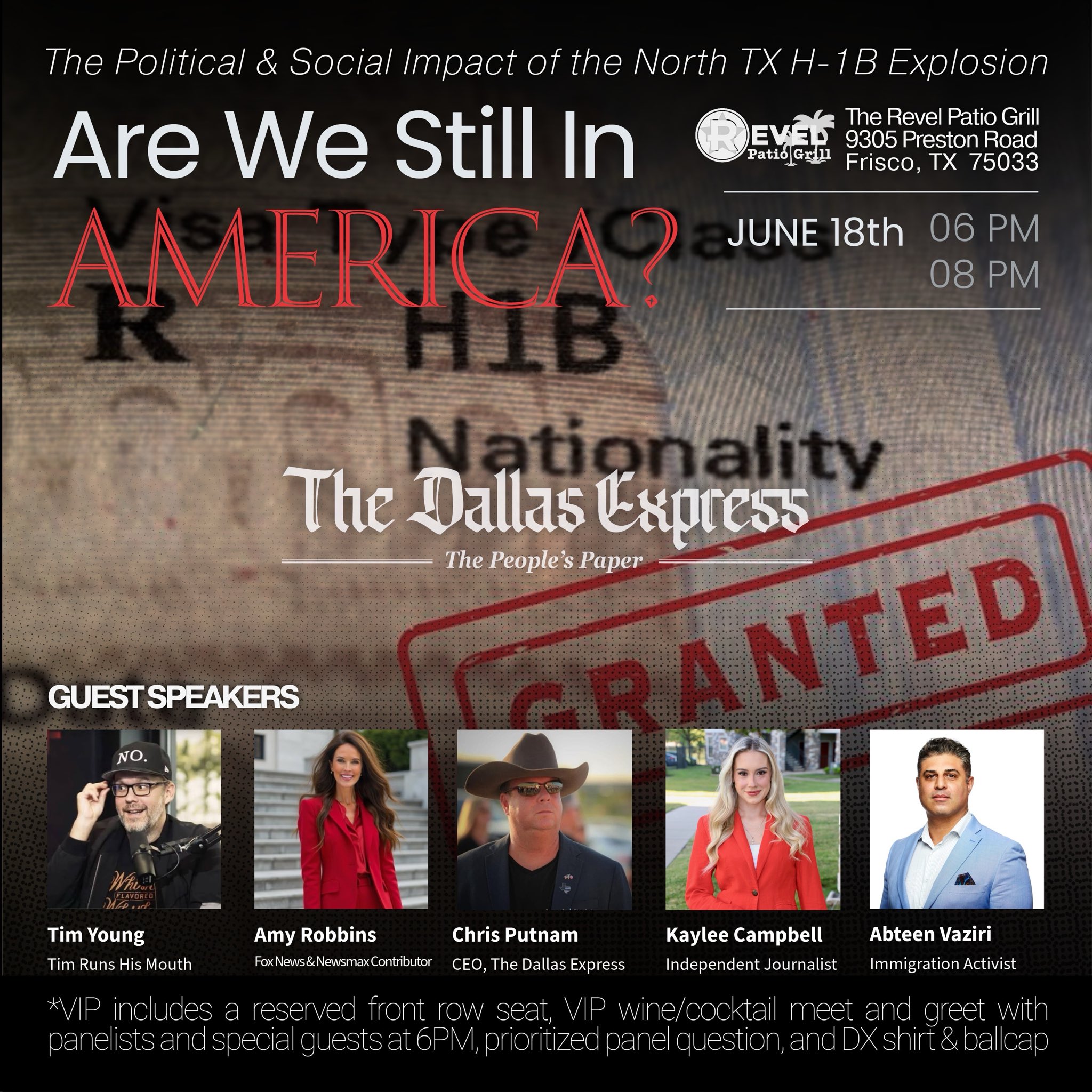
The Dallas Express will host the June 18 panel “Are We Still In America?” in Frisco on the political and social impact of H-1B growth in North Texas. The event runs from 6 to 8 p.m. at The Revel Patio Grill, 9305 Preston Road, and will feature Tim Young, Amy Robbins, Chris Putnam, Kaylee Campbell, and Abteen Vaziri.