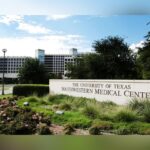
After students at the University of Texas-Arlington helped name a suspect in a 1991 cold case murder, a grand jury declined to indict.
Janie Perkins, 63, was arrested in November 2025 for the 1991 capital murder of Cynthia Gonzalez, as The Dallas Express reported at the time. But on March 20, a Tarrant County grand jury returned “no bill” of indictment – saying the allegations did not warrant criminal charges, according to a statement from her attorneys.
“We appreciate their commitment to fairness and to the integrity of the judicial process,” said Perkins’ attorney D. Miles Brissette.
“The Perkins family is grateful to the Tarrant County Criminal District Attorney’s Office and to the members of the Grand Jury for taking the time to conduct a thorough, evidence-based review,” added Brissette. “Their evaluation was grounded in the facts – not in the narrative advanced publicly by the Arlington Police Department and UTA.”
Gonzalez was a 25-year-old “adult entertainer” who went missing before police found her body in rural Johnson County. After the alleged murder, detectives investigated Perkins. For decades, they could not prove her involvement.
In the fall of 2025, however, UT-Arlington criminology students helped Arlington police detectives name Perkins as a suspect, citing alleged admissions regarding the murder and prior witness testimony. U.S. Marshals arrested Perkins for capital murder in Azle on November 6, as The Dallas Express reported.
The Cold Case
Gonzalez’s ex-husband reported her missing on September 17, 1991, as The Dallas Express reported. She was last seen the evening before, leaving her Arlington home to meet with a “client.”
Her vehicle soon turned up in a neighborhood near 900 Cedar Springs Terrace in Arlington, and the city’s police began investigating whether she was kidnapped.
Days later, someone found the body of an “unknown female.” She was dumped on private property in rural Johnson County, off County Road 313, shot multiple times, and decomposing.
The Tarrant County Medical Examiner’s Office identified the body as Gonzalez.
After the murder, detectives investigated Perkins, since she was reportedly a friend of Gonzalez, with whom she “shared a romantic partner.” He allegedly said he was leaving Perkins for Gonzalez.
At the time, Perkins could not provide an alibi for the night Gonzalez went missing, and she reportedly failed two polygraph tests when asked if she killed Gonzalez or knew who did.
The tests were not admissible in court, and Perkins insisted she was not involved in the murder. Though she reportedly “made statements to investigators indicating she was glad Ms. Gonzalez was dead and that she’d even thought about killing her or having someone else kill her.”
Officials never charged Perkins. After following multiple leads, detectives never made an arrest.
A New Look At Old Leads
In 2024, the case was assigned to an Arlington homicide detective for review. The detective initially found no new evidence or leads, but agreed to keep the case open for further investigation when possible.
Then, UTA students partnered with Arlington police to review cold cases. They considered three cases – one of which was Gonzalez’s murder. Officers provided students access to all reports and materials from case files, except physical evidence.
Students communicated with homicide detectives about their cases throughout the semester. The group working on Gonzalez’s case began asking questions about Perkins, leading detectives to perform further research.
After detectives’ recent review of case files, they found witnesses had come forward claiming Perkins admitted she was involved in the murder, and provided specific details. These claims allegedly lined up with the evidence in the case.
After the jury declined to indict, Brissette said Perkins and her family look forward to moving past “intense public scrutiny” from what he called “premature and highly publicized accusations.”