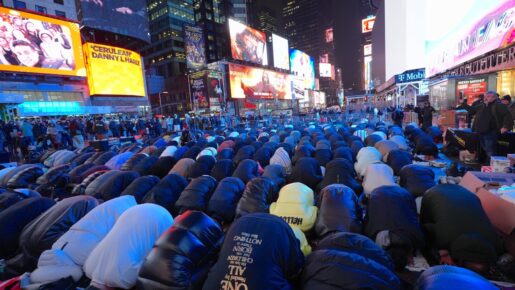
Fasting looks different depending on your place of worship, but the heart behind it is often the same. At its core, fasting is giving something up to remind yourself that you depend on God more than food, comfort, or control. It’s not about proving how spiritual you are. It’s about humility.
Long before Christians observed Lent, fasting was already deeply rooted in Jewish faith and Scripture. I just recently learned that in the Tanakh (the Hebrew Bible — Torah, Prophets, and Writings), fasting appears as an expression of repentance, covenant humility, and national remembrance. The Day of Atonement (Yom Kippur) commanded Israel to “afflict” themselves, which was understood as a complete fast.
In Jewish tradition, fasting was never about spiritual performance. It was about returning to God, remembering sacred history, and acknowledging dependence on Him. This was the spiritual world Jesus Himself inhabited. Christian fasting did not emerge alone; it developed from this Jewish foundation and was later shaped by Christ’s own forty days in the wilderness.
Today, fasting still looks different across Christian traditions. My Uncle Matt is a Protestant who founded Christian Union, a ministry helping Ivy League students at some of the most prestigious universities grow in Christ-centered faith. He also runs a deliverance ministry, so he fasts more intensely similar to how Catholic priests may fast before performing exorcisms. At the start of this year, my Uncle Matt completed a 40-day liquids-only fast. No food. Just drinks. For him, fasting isn’t a rule imposed by a calendar. It’s voluntary preparation and a way to seek God more intentionally and depend on Him more fully.
Most Catholics approach fasting a little differently. During Lent, fasting is structured and communal. On Ash Wednesday and Good Friday, adults eat one full meal and two smaller meals. It’s about penance, humility, and uniting personal sacrifice with Christ’s suffering. The discipline is set by the Church, not by individual preference. Beyond Lent, Catholic priests, especially exorcists, may fast more strictly before certain ministries for spiritual readiness.
This year, my mom gave up cursing, alcohol, and processed sugar for Lent. If she slips, she adds $10 per word to a donation for St. Rita Catholic Church, which she gives in cash at the end of Lent. She also follows my Uncle Matt’s “Daniel Spirituality” style of fasting during the year. She describes year-round fasting as a way to gain spiritual clarity and become more receptive to grace, which aligns closely with Catholic teaching on discipline and detachment.
The styles are different. The structures are different, but the foundation is shared.
Jewish fasting emphasizes covenant remembrance and repentance. Catholic fasting emphasizes penance and union with Christ. The Protestants I know well emphasize voluntary surrender, spiritual grounding, and deeper dependence on the Lord.
Some fast because sacred seasons call for it. Some fast because they feel personally led. Some fast because history commands remembrance. I don’t think holiness is measured by how many meals you skip. I also don’t think you build eternal rewards by outlasting someone else in a 40-day fast, but through humility, obedience, and love.
The real question isn’t whether 40 days is enough. I believe the real question is if we can hunger for God more than we hunger for everything else. That’s a question all God-following beings have wrestled with for thousands of years. And it’s something Catholics and Protestants, and even our Jewish brothers and sisters can understand together.
If you want to submit an article to this column, please follow the attached document.
Email [email protected] with any questions.
Future_Voices_Contributor_Guide_2025.
About Future Voices
Future Voices is a Sunday-morning column in The Dallas Express in which young Texans share how faith and perseverance shape their lives. These stories remind readers that God often speaks through the honesty and courage of the next generation.