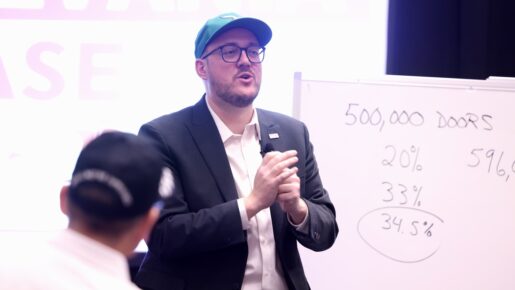
When I first walked into the Texas Capitol as a young staffer for then-Representative Phil King, the House belonged to the Democrats. Then-Speaker Pete Laney ran the place through committee chairs and the calendar. King and his fellow Republican classmate Geanie Morrison ranked last in seniority. They got the two smallest offices, as far from the House floor as the building allowed.
On the floor they sat in the final two desks under the Speaker’s dais, surrounded by Democratic committee chairs. We called that corner “Red Square” because it was so reliably liberal. Seniority and the committee structure limited what a junior member could move, but they didn’t stop coordinated Republican action once a bill actually reached the floor.
Even against that headwind, Republicans led by King delivered real wins. The most important was parental notification before a minor could obtain an abortion. It wasn’t the full protection many of us wanted, but it was a clear step toward where Texas sits today. The difference was unity. Texas Republicans stayed together, kept their focus, and moved the ball. Grassroots voices had a place at the table.
That lesson matters more than ever. The country has swung sharply left. The Founders understood that concentrated power is dangerous, so they split authority among three branches of government. That design still works. With President Trump holding the executive branch, America has a real check against the further spread of socialist ideas.
What happened in Texas on Tuesday was not an inevitable national tide. Internal divisions played a real role. A portion of Republican voters stayed home because the party’s Senate nominee was not their preferred candidate. Others crossed over and supported Democratic candidates out of frustration with foreign policy or with the past two years under President Trump.
At the same time, many grassroots Republicans feel ignored. Their priorities on taxes, spending, and the direction of the party get treated as noise instead of the core of the coalition. Those choices helped produce the result.
Democrats now hold important influence over redistricting, election administration, and the state budget. They will also help shape the next round of federal judicial nominations from Texas. Most consequentially, state-level control affects how Texas implements the election code and participates in the post-census map-drawing process after the 2030 federal apportionment count.
Those maps can lock in advantages for a decade or longer. By sitting out or switching sides, some Republican voters signaled they were willing to punish their own party when the top of the ticket didn’t meet every preference. That carries lasting costs.
Leadership choices over the past several cycles added to the frustration. Campaigns repeatedly promised meaningful property-tax relief. What arrived was largely rate compression and homestead adjustments while the overall burden on many working families kept rising. Grassroots concerns were frequently set aside. People noticed. Some stayed home. Some decided to punish the broader ticket. Don Huffines captured the reaction when he noted that treating major offices as permanent appointments has consequences.
I’ve worked in politics for nearly three decades. Over that time a political consulting class has grown comfortable recycling the same talking points and the same limited set of ideas year after year. In the NFL it’s hard for any team to win multiple championships in a row. When a good team keeps the same coordinators season after season, the other side learns every tell. Then the good team starts losing. Texas saw a similar pattern. The same agenda got pushed repeatedly. Party faithful began saying, “That’s what you told us 10 years ago. What’s taking so long?”
A generation of Texas Republicans has grown up treating the March primary as the main contest. Energy goes into internal disputes and purity tests instead of building the case that wins in November. In safe Republican districts you can win the general with limited outreach once the primary is over. That produces narrower margins than earlier cycles and leaves the party less practiced at competing when the map is less favorable.
The first step to regaining broader majorities is to elevate leaders who deliver measurable results on the statutory and administrative tasks that matter—tax policy, election-code implementation, and map-drawing—rather than relying on recycled strategies. That includes confronting the Republican Party of Texas’s weak financial condition.
The party has grown heavily dependent on transfers and support from candidates and officeholders instead of maintaining its own donor base tied to its platform and principles.
That dependence limits independent capacity for candidate recruitment, platform enforcement, and sustained general-election work. Leaders who listen, adapt, compete seriously against Democrats in general elections, and require the party to fund its priorities from its own principles rather than officeholder subsidies will restore capacity that has been strained.
Policies that expand the electorate without clear limits have long-term consequences that are now harder to ignore. Large-scale immigration followed by relatively quick access to the ballot changes the pool of people who will decide future elections.
That’s a structural shift. Consent of the governed works best when voters share a basic understanding of the limits on government power. When the electorate expands while those limits are treated as secondary, the practical result is that the next census count and the maps drawn from it can lock in a different political balance for a decade or longer. Those outcomes affect who controls redistricting, election administration, and the review of future maps.
Liberty Republicanism is the message that actually competes when the other side offers more government. It means enforcing the limits the Constitution already draws, delivering real property-tax relief through statutory changes rather than temporary adjustments, treating every new dollar of spending as money taken from someone’s paycheck, and refusing to trade away free speech, due process, or the right to keep and bear arms.
It means leaving working families more of their own money and more of their own decisions, and listening to the grassroots instead of dismissing them.
Florida showed the outcome was not inevitable. Their races were competitive, yet Republicans held the governorship, the Senate seat, and the statewide board. Same national environment, different result. Turnout and ticket discipline still matter.
America has seen these swings before. Under President John Adams the Federalist Party suffered a sweeping defeat, after which new coalitions formed around clearer principles. Texas can do the same.
The results carry real costs in spending authority, judicial nominations, and the maps that follow the next census. Restoring capacity requires leaders who treat the state budget and the election code as sets of enforceable statutory choices, and a party apparatus that can fund its own priorities. Liberty is not a slogan. It is the limit that keeps government from becoming the thing we claim to oppose.
The views expressed in this op-ed are those of the author and do not necessarily reflect the views of The Dallas Express. The Dallas Express does not endorse political candidates.