

A new report from the Buckley Institute found that 27 of Yale University’s 43 undergraduate departments have no Republican faculty members, raising questions about ideological diversity across the Ivy League campus.
The Fall 2025 Faculty Political Diversity Report analyzed the political affiliations of 1,666 faculty members across Yale’s undergraduate departments, as well as its Law School and School of Management.
According to the report, 82.3% of faculty are registered Democrats or primarily support Democratic candidates, while 15.4% identify as independents and 2.3% are Republicans.
When limited to undergraduate departments only, the findings were nearly identical.
The report found that 82.1% of undergraduate faculty are Democrats, 15.5% are independents, and 2.4% are Republicans, with 27 departments reporting zero Republican faculty members.
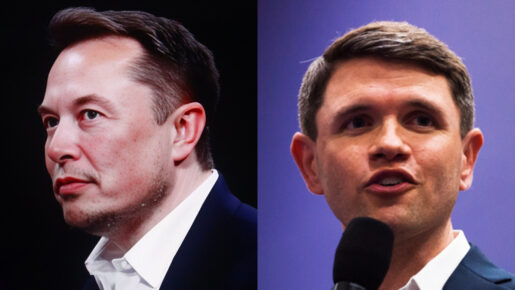
Buckley Institute Founder and Executive Director Lauren Noble said the findings reflect what she described as a continued “ideological imbalance” among Yale’s faculty.
The Buckley Institute said the results stand in contrast to the political composition of the broader public. Nationally, independents have accounted for roughly 40% of voters over the past 15 years, while Democrats and Republicans have each hovered near 30%.
In Connecticut, where Yale University is located, independents and Republicans together make up a majority of registered voters, according to the report.
The study examined faculty across a wide range of disciplines, including humanities, social sciences, physical sciences, engineering, and biological sciences. Several academic fields — particularly within the humanities — showed the highest concentration of Democratic-affiliated faculty and the lowest representation of Republicans.
The report also references Yale’s Woodward Report, the university’s long-standing framework on free expression, which states that the “free interchange of ideas” is essential to the institution’s mission. The Buckley Institute argues that the ideological composition of the faculty raises questions about whether that principle is being fully realized.
To compile the data, researchers relied primarily on the L2 Voter Data database, which tracks registered voters nationwide. When voter registration data was unavailable or when faculty were registered as unaffiliated, the institute used Federal Election Commission campaign donation records and other publicly available information to determine political affiliation. Emeritus faculty were excluded, and faculty members with appointments in multiple departments were counted separately for each departmental listing.
Founded in 2011 and named for Yale alumnus William F. Buckley Jr., the Buckley Institute says its mission is to promote intellectual diversity and free expression on campus.