

A New York judge closed the book Thursday on bruising evidentiary hearings in the Luigi Mangione murder case after a string of prosecution setbacks that defense attorneys say undercut how police gathered and preserved key evidence.
The suppression hearing in Manhattan Supreme Court ended December 18, with Judge Gregory Carro saying he will rule by May 18 on what evidence prosecutors may use at trial in the killing of UnitedHealthcare CEO Brian Thompson.
The nine-day proceeding stretched across nearly three weeks and featured 17 prosecution witnesses, even as defense lawyers ultimately called none.
Outside the court after the final hearing, defense attorney Karen Agnifilo framed the proceeding as a drawn-out reckoning for the government’s case, calling it a “three-week mini-trial” that should have lasted “half a day.” Addressing reporters, she accused police of running recording equipment after Mangione had asked for a lawyer, calling it an “illegal wiretap.”
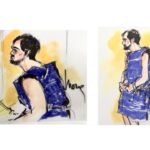
Her remarks, along with courtroom images of Mangione circulated by photographers inside the courtroom, spread widely online after proceedings adjourned for the day.
Mangione, 27, has pleaded not guilty to charges alleging he shot and killed Thompson in December 2024 on a Manhattan sidewalk as the executive walked to an investors’ meeting.
Mangione was arrested five days later at a McDonald’s in Altoona, Pennsylvania, and also faces federal charges, where he could be eligible for the death penalty.
The hearings focused on whether evidence seized in Pennsylvania — including a backpack, a notebook, a gun, and a magazine — and statements Mangione allegedly made in custody should be suppressed. Defense attorneys argued that police lacked a warrant to search his belongings and failed to timely advise him of his Miranda rights.
One of the most consequential moments came earlier this week when prosecutors withdrew certain recorded statements made by Mangione while he was in custody, The Dallas Express reported.
A New York police lieutenant testified that investigators set up audio and video recording equipment in an interrogation room at the Altoona police station and that the recording continued after Mangione requested counsel and officers left the room. Under questioning, the lieutenant conceded he did not know whether Pennsylvania law permits recording someone without their knowledge, testimony that preceded the prosecution’s decision to abandon use of those statements, according to courtroom reporting.
Agnifilo told the court after the withdrawal, “I understand that the DA is withdrawing these statements, so I have no further questions.”
On Thursday, Agnifilo pointed to another surprise for the defense: the absence of the case’s lead detective. She said the defense expected Detective Diaz to testify after testimony from Lt. David Leonardi “about the illegal wiretap of Mr. Mangione in Altoona, Pennsylvania,” but were informed that would not happen after prosecutors withdrew the statements.
“That they withdrew statement notice, and now suddenly we are not going to have the lead case detective in this case. It’s significant,” she said in the post-hearing press conference. Agnifilo said the defense had planned to question Diaz about public statements made by police leadership shortly after the arrest.
She singled out a claim attributed to investigators that Mangione’s mother had suggested she could see her son committing such a crime. Agnifilo flatly rejected that account, calling it “an absolutely false statement that was never said,” and said discovery requests and subpoenas to the San Francisco Police Department had turned up no such remark.
“What Mrs. Mangione said was that she could never see her son being a risk to himself or others,” Agnifilo said, adding that the statement had been repeated “many, many times” without correction. She called on the New York Police Department, the Manhattan district attorney’s office, and the San Francisco police to formally correct the record.
The Dallas Express reached out to the San Francisco Police Department for a response, but did not hear back.
Prosecutors, for their part, have argued that officers acted reasonably under tense circumstances and that much of the evidence was lawfully obtained. Testimony during the hearing detailed surveillance video of the shooting, body-worn camera footage from the arrest in Altoona, and items recovered from Mangione’s person and backpack, including a handwritten to-do list and notes prosecutors characterized as escape routes, according to an ABC News report.
Judge Carro set a briefing schedule that gives the defense until January 29 to submit its final written arguments, prosecutors until March 5 to respond, and the defense two weeks after that to reply. Carro said he expects to issue his decision on May 18, at which point he would also set a trial date, the outlet reported.
Mangione remains in federal custody in Brooklyn as the state and federal cases proceed.