

The Department of Homeland Security may soon receive new authority to significantly increase the number of foreign workers admitted under the H-2B visa program if a comprehensive federal spending bill passes the Senate.
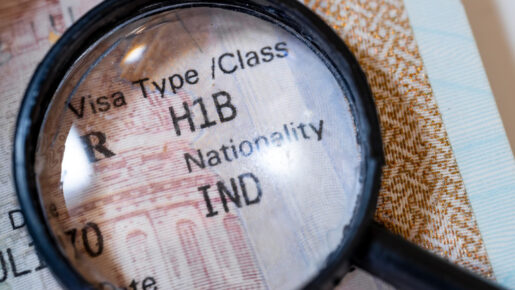
H-2B visas are temporary U.S. work visas designed for non-agricultural seasonal, peak-load, one-time, or intermittent jobs when employers cannot find enough willing, qualified, and available American workers to fill them. They are commonly used for roles in industries like landscaping, hospitality (hotels/resorts), amusement parks, seafood processing, construction, housekeeping, forestry, and other seasonal or short-term non-farm work.
Employers must prove the need is truly temporary, attempt to recruit U.S. workers first, and pay prevailing wages without adversely affecting domestic labor conditions. The program is currently capped at 66,000 visas per fiscal year (with occasional temporary increases authorized by Congress), and workers typically stay for up to one year, extendable to a maximum of three years before departing the U.S.
H.R. 7148: DHS Poised to Expand H-2B Visa Cap for FY2026
The House-passed H.R. 7148, the Consolidated Appropriations Act, 2026, which includes a provision that would allow the Secretary of Homeland Security to raise the statutory cap on H-2B visas during fiscal year 2026, potentially mirroring or exceeding recent Biden-era expansions of the program.
The bill was introduced on January 20 by Rep. Tom Cole, a Republican from Oklahoma, and has not yet been taken up by the Senate.
Section 5016 of H.R. 7148 would permit DHS leadership, after consulting the Department of Labor, to increase that number if the secretary determines that “the needs of United States businesses cannot be satisfied” by domestic workers who are “willing, qualified, and able” to perform the labor.
The increase could reach the highest number of workers who participated in the H-2B returning worker program in any prior fiscal year when returning workers were exempt from the cap, according to the bill text.
The authority mirrors recent executive actions taken under temporary statutory permissions.
In the last months of 2024, DHS and the Department of Labor jointly issued a temporary final rule increasing the H-2B cap for fiscal year 2025 by up to 64,716 additional visas, then-President Joe Biden’s DHS said in a public notice. Of those, 44,716 were reserved for returning workers, while 20,000 were set aside for nationals of seven specific countries, mostly Latin American countries plus Haiti.
That expansion, DHS’s notice said at the time, was based on “time-limited statutory authority that does not affect the H-2B program in future fiscal years.”
The authority proposed in H.R. 7148 would extend similar discretion into fiscal year 2026 through the appropriations process.
H-2B Riders: Wage Surveys, Delayed Enforcement, and Relaxed Worker Guarantees
Beyond the cap increase, the bill includes multiple policy riders affecting how H-2B workers are recruited, paid, and regulated.
Section 109 grants seafood industry employers up to 120 days to bring approved H-2B workers into the country without filing new petitions, while limiting enforcement actions related to “staggering” start dates.
Section 110 directs the Department of Labor to accept private wage surveys when determining prevailing wages unless the methodology is deemed statistically unsupported.
Another provision bars the use of federal funds to enforce certain worker protection rules, including the “three-fourths guarantee,” which requires employers to offer workers a minimum number of hours, according to a Department of Labor fact sheet.
Labor groups and immigration critics have long argued that such measures weaken protections for U.S. workers.
A Center for Immigration Studies report prepared for the House Judiciary Committee in 2008 concluded there was “no evidence of a labor shortage, especially at the bottom end of the labor market,” and pointed to stagnant wages and millions of unemployed or underemployed native workers who could perform seasonal labor.
Organized labor has echoed similar concerns.
In a 2016 fact sheet, the AFL-CIO said the H-2B program “displaces U.S. workers, lowers wages, and exposes foreign workers to exploitation,” arguing that employer recruitment efforts often fail to genuinely test the domestic labor market.
Business advocates and immigration attorneys, however, have argued that the program is essential for industries facing seasonal labor demands.
A legal analysis published by PSBP Law stated that the program “helps U.S. businesses fill labor shortages,” while requiring employers to certify they attempted to recruit U.S. workers first.
Whether DHS would exercise the expanded authority proposed in H.R. 7148 remains uncertain. The bill conditions any increase on a determination that domestic labor needs cannot be met and requires consultation with the Department of Labor.
The Senate has not yet voted on the legislation, leaving the future of the proposed H-2B expansion unresolved, as fiscal year 2026 is already underway.