My wife and I recently had the opportunity to take what, for us, was a once-in-a-lifetime trip through Portugal and Spain.
It was a wonderful trip: beautiful places, remarkable history and time together that I will always treasure.
But strangely enough, one of the impressions I brought home came not from Portugal or Spain, but from our trip through Paris and Charles de Gaulle Airport.
And what struck me was not some catastrophic failure. It was something much less dramatic and perhaps more revealing.
It was the little things.
Escalators that did not work. Moving sidewalks that were broken and remained broken. Equipment that once would have been repaired now sitting idle. In one case, what appeared to be a permanent workaround had replaced what should have been routine maintenance.
A broken escalator is an inconvenience, not a national crisis.
But eventually enough little things become a big thing.
France is not poor. Europe remains home to some of the world’s great cities, universities, companies and transportation systems. But much of what makes these places feel wealthy was built by previous generations.
The airports were built. The railroads were built. The highways, bridges, metros, universities and public buildings were built.
There is an important difference between possessing wealth and continuing to produce enough wealth to maintain it.
And maintaining what previous generations built is neither glamorous nor easy.
As societies age and priorities multiply, government faces more demands on its resources. Existing programs rarely disappear. New needs arise. New projects compete with old obligations.
Something eventually gets squeezed.
And maintenance is remarkably easy to postpone.
Politicians cut ribbons on new bridges. Nobody holds a ribbon cutting because an old bridge was inspected, drainage was cleared and 40 escalators received preventive maintenance.
New projects are visible.
Maintenance is invisible until it is not done.
A society can appear prosperous for a surprisingly long time while slowly consuming the capital inherited from previous generations.
Somewhere between another broken moving sidewalk at Charles de Gaulle and my flight home to Texas, I realized I was not really thinking about France anymore.
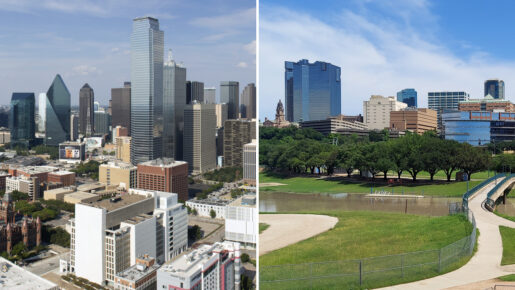
I was thinking about home, Dallas-Fort Worth, heck, all of Texas. Most especially, those who will win the next elections.
Europe offers us a warning. Texas offers us an opportunity.
Texas is growing. The Dallas-Fort Worth Metroplex is growing. People are moving here. Businesses are investing here. Our communities are building infrastructure for populations that would have been unimaginable a generation ago.
But growth creates its own danger.
Growth can hide inefficient government just as inherited wealth can hide decline.
Throughout our state, we are rebuilding and expanding roads, upgrading streetlights and intersections, and improving bridges and railroad crossings.
Those projects may be necessary. But every new thing government builds creates another obligation:
We must maintain it.
That leads to what I have started calling the Escalator Test.
When something ordinary breaks, what happens?
Does somebody know it is broken?
Does somebody own the problem?
Is there money budgeted to fix it?
How long does procurement take?
How long does the repair take?
Does anyone measure the time?
And if it remains broken for six months, does anyone in authority even know?
Those questions work for an escalator.
They also work for a pothole, a broken streetlight, a clogged storm drain, a delayed permit, a dangerous intersection or a government construction project that seems never to end.
And they work just as well for a state agency in Austin.
The individual problem may be small. The government’s response tells you something much larger about the institution.
What do citizens hire government to do?
Before the grand plans and ambitious programs, the responsibilities are remarkably basic: keep people safe. Maintain the streets. Provide reliable water. Deal with drainage. Pick up the trash. Maintain what taxpayers already bought. Respond when something breaks. Spend public money carefully. Make it reasonably easy for citizens and businesses to deal with their government.
None of that means Texas should not dream big. We should.
But aspiration without execution is not progress.
I have spent much of my professional life dealing with government. Sometimes working inside it, sometimes representing people and businesses dealing with it, and sometimes trying to fix problems created by it.
The older I get, the more I think good government comes down to something much simpler than we make it:
Do the basics exceptionally well. Measure results. Maintain what we own. Fix what is broken. Spend carefully. Plan for tomorrow without neglecting today. And remember who is paying the bill.
Great cities and great states announce themselves with skylines, highways, universities, parks and ambitious projects.
But they preserve their greatness in much less glamorous ways.
They fix the street.
They clear the drain.
They finish the project.
They answer the phone.
And when the escalator breaks, they fix the escalator.
John Scott is a former interim Texas attorney general and former Texas secretary of state.