Less than a month after federal prosecutors charged a man with attempting to assassinate President Donald Trump at the White House Correspondents’ Association Dinner at the Washington Hilton, another shooting near the White House, this one fatal, has given Trump’s team a renewed push in its legal battle over the new $400 million White House ballroom project.
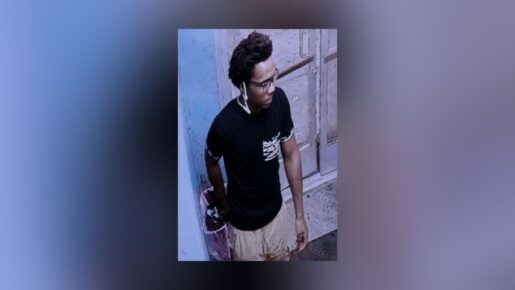
Early Saturday evening on May 23, a 21-year-old man walked up to a Secret Service checkpoint near 17th Street and Pennsylvania Avenue, pulled a gun from his bag, and opened fire on officers. Secret Service Police returned fire and struck the suspect. Officers took him to a hospital, where he later died. Authorities identified him as Nasire Best of Maryland.
A bystander also suffered a gunshot wound. Officials had not released an updated condition for the bystander.
Best had a documented history of previous encounters with the Secret Service. Authorities previously involuntarily committed him to a psychiatric hospital, and police later arrested him on another occasion after he allegedly claimed to be Jesus Christ. Court records and social media posts also showed prior threats and attempts to enter restricted areas near the White House, CNN reported.
Trump Points To Security Concerns
President Donald Trump posted on Truth Social to praise the Secret Service for its quick response while drawing a direct line between the shooting and his case for a more secure White House, including the new ballroom construction plans. Trump noted that the incident came exactly one month after the White House Correspondents’ Association Dinner shooting and called for “the most safe and secure space of its kind ever built in Washington, D.C.” on White House grounds.
The President also described the suspect as someone with “a violent history and possible obsession with our Country’s most cherished structure.”
DOJ Cites Two Security Incidents
After the April 25 shooting at the White House Correspondents’ Association Dinner, where Cole Tomas Allen was charged with attempting to assassinate the President, Trump used the incident to argue for moving forward with the White House ballroom project.
He posted on Truth Social: “This event would never have happened with the Militarily Top Secret Ballroom currently under construction at the White House. It cannot be built fast enough!”
The Justice Department previously cited the April 25 White House Correspondents’ Dinner shooting in an April 27 court filing asking the judge to dissolve the injunction against the ballroom project.
The Justice Department followed with a separate filing after the May 23 checkpoint shooting, renewing its request for the court to lift the injunction and arguing that the incident highlighted the need for enhanced White House security, according to Reuters.
The DOJ’s April 27 brief accused the National Trust for Historic Preservation of suffering from “Trump Derangement Syndrome” and called the ballroom “a gift to the People of the United States.”
The President has also said the ballroom will have bulletproof glass and drone-proof ceilings, and that private donors, not taxpayers, will pay for the project.
Where the Case Stands
The National Trust for Historic Preservation has declined to drop the suit. President and CEO Carol Quillen said the group did not plan to voluntarily dismiss the lawsuit, which she said “endangers no one and respectfully asks the Administration to follow the law.”
“We’re grateful to the Secret Service and DC law enforcement officers for keeping the President and all guests safe at this weekend’s White House Correspondents’ Association Dinner,” Quillen said in an April 27 statement. “We are not planning to voluntarily dismiss our lawsuit, which endangers no one and which respectfully asks the Administration to follow the law.”
Judge Leon ruled that construction could not move forward without congressional approval. The D.C. Circuit temporarily stayed that order, allowing construction work on the ballroom addition to continue until at least June 5, when an appeals panel may hear oral arguments, PBS reported.