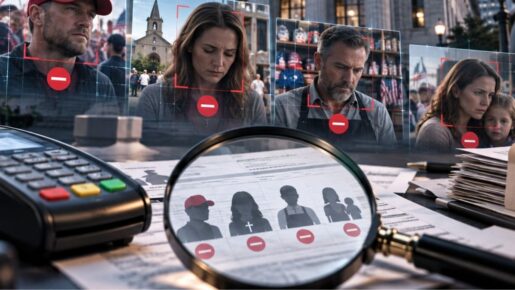
An artificial intelligence system capable of scanning faces through Axon body cameras is being tested for the first time in Edmonton, Alberta, reviving a years-long debate over the accuracy, ethics, and oversight of AI in policing.
The Edmonton Police Service (EPS) said the software has been trained to detect individuals on watch lists for categories such as “violent or assaultive; armed and dangerous; weapons; escape risk; and high-risk offender.” EPS said 6,341 people are currently on the list, with another 724 individuals on a separate warrant list.
The pilot marks the first time Axon has enabled live facial-recognition capabilities on its body cameras in a public setting.
Ethical Concerns Resurface as Axon Defends the Pilot
Barry Friedman, former chair of Axon’s AI ethics board, warned that the company is moving forward without sufficient public vetting, saying “It’s essential not to use these technologies, which have very real costs and risks, unless there’s some clear indication of the benefits.” Friedman, a New York University law professor, led the 2019 effort that convinced Axon to halt development of facial recognition for its body cameras.
Axon CEO Rick Smith defended the Edmonton pilot as research-oriented rather than a product launch. In a blog post, he wrote that “by testing in real-world conditions outside the U.S., we can gather independent insights, strengthen oversight frameworks, and apply those learnings to future evaluations, including within the United States.”
Ann-Li Cooke, Axon’s director of responsible AI, said the company narrowed the program’s scope intentionally, noting “we really want to make sure that it’s targeted so that these are folks with serious offenses.”
Acting Superintendent Kurt Martin said officer safety is a key goal of the pilot and that officers will not receive live alerts during the test. Matches will instead be reviewed later at a police facility.
Accuracy, Bias, and Privacy Remain Central Issues
Research over multiple years has shown that facial-recognition systems often struggle with accuracy, particularly in real-time environments. Axon acknowledged this in a statement, noting that factors such as lighting, distance, and camera angle “can disproportionately impact accuracy for darker-skinned individuals.”
Privacy officials in Alberta said they received the required privacy impact assessment on the same day the pilot was publicly announced and are now reviewing it.
Friedman said Axon should disclose technical evaluations and stressed that decisions about facial-recognition deployment should involve lawmakers and the public, not just police agencies or vendors.
Global Divide Over Real-Time Facial Recognition
Several U.S. states and dozens of cities have restricted or banned police use of facial recognition, while President Donald Trump’s administration is working to discourage states from regulating AI tools used by law enforcement.
The European Union has banned real-time public facial-recognition scanning except in rare cases involving terrorism or kidnapping. The United Kingdom, which is not bound by EU rules, has used the technology for years and reported roughly 1,300 arrests tied to live scans over the past two years.
According to the AP, no U.S. police department currently uses Axon body cameras equipped with facial-recognition capabilities.
Dallas Uses Axon Systems at Scale — But Not Facial Recognition
Dallas is one of the largest Axon customers in the country. A February 2024 city audit confirmed the Dallas Police Department operates 2,365 Axon body-worn cameras and 625 in-car cameras, all supported by Axon’s Evidence.com cloud platform. In 2022 alone, DPD’s cameras recorded more than 2.1 million videos, averaging nearly 5,910 recordings per day.
The audit also noted that DPD is in a multi-year transition to upgrade older in-car systems to Axon’s newer platform, further expanding the department’s reliance on the company for evidence management and camera operations.
More recently, in August 2025, the Dallas Housing Authority announced it is deepening its partnership with DPD by deploying Flock Safety license plate readers and integrating its surveillance feeds into Axon’s Fusus real-time intelligence platform, which connects cameras and license-plate readers to DPD’s “single pane of glass” monitoring system. DPD Chief Daniel C. Comeaux said the expanded system would allow officers to “actively monitor real-time activity, not just on DHA’s properties, but throughout all of Dallas’ communities.”
However, none of Dallas’ Axon systems use facial recognition, and there is no evidence the department has pursued or considered such capabilities. The technologies in use in Dallas involve video capture, evidence management, and real-time integration of cameras and license-plate readers — not biometric identification.
For now, the AI-enabled body camera pilot remains limited to Canada — but it directly involves the same vendor and hardware ecosystem that underpins Dallas’ camera operations.
A Growing Debate for U.S. Cities
As Axon advances AI features abroad, the Edmonton pilot highlights emerging questions for U.S. jurisdictions that already depend on Axon’s hardware, software, and real-time intelligence tools. Any evaluation of facial-recognition capabilities in the United States would require new public-policy decisions, legislative oversight, and community input.
EPS said the pilot will continue through December and will operate only during daylight hours due to Edmonton’s winter conditions.