As a Christian columnist, I have received hundreds of comments and questions over the last decade. Most come from two groups: those who do not believe and have no desire to believe, and those who do believe but are walking through a painful season of doubt.
Taking the house of doubt down to its studs, we learn that a lack of belief does not disprove the existence of God.
Scripture assures us that one day “at the name of Jesus every knee should bow… and every tongue acknowledge that Jesus Christ is Lord, to the glory of God the Father” (Philippians 2:10-11).
I recall hearing as a child that if we reject Him as Savior, we will one day face Him as Judge. That truth has stayed with me, even in seasons when I have doubted my path.
Despite our cynical nature, which flows so effortlessly for many today, we cannot thwart God’s sovereign plan of redemption. He remains faithful even when we are not.
God has the power to move us from doubt into faith that goes beyond human understanding. Far too often, however, ego and apathy keep us from having a sincere relationship with Him. We prefer to remain the rulers of our lives rather than surrender to the One who truly knows what is best for us.
“Trust in the Lord with all your heart and lean not on your own understanding; in all your ways submit to him, and he will make your paths straight” (Proverbs 3:5-6).
Living a life focused on God requires more than willpower; it requires our will surrendering fully to His. Too often, however, we dilute sin through justification. Justification is not the same as confession. We must see sin for what it is: destructive and deadly.
“The wages of sin is death,” scripture warns, “but the gift of God is eternal life in Christ Jesus our Lord” (Romans 6:23).
Our convictions are only as strong as they prove to be under pressure. Satan often appears as a counterfeit savior, tempting us with the very things we lack or desire. His rewards are temporal rather than eternal. This is why we must pay close attention to where our hearts respond.
Instead of thrashing about in self-effort, we are invited to rest in the space of faith, replacing doubt with quiet confidence in God’s perfect ability.
“Be still, and know that I am God” (Psalm 46:10).
From this place of rest, may we practice being honest with our words. Listen to yourself when you speak. Are your words more critical than edifying?
The Bible instructs us: “Do not let any unwholesome talk come out of your mouths, but only what is helpful for building others up…” (Ephesians 4:29).
May we regulate our responses with love and pray for those who irritate us. Many will try to bait us into harsh replies so they can label believers “un-Christian.” Don’t take the bait. Expect rejection, then trust God to handle it.
There is nothing more essential than coming to Jesus, but you and I are not called to save anyone, as that role belongs to Christ alone. Our task is to share the Good News and tell others what Jesus has personally done for us.
Personal testimony carries a power that debates cannot match.
As such, may we live our faith more than we defend it. God knows the wheat from the weeds (Matthew 13:24-30). We are called to grow faithfully in the field where He has placed us, trusting Him with the final harvest, knowing His logic far exceeds ours.
Often our faith grows deepest in the soil of crisis, and it is wise to remember that not all things are as they may appear on the surface.
Still, we can become fixated on physical problems and people, allowing Satan to distract us from the deeper spiritual issue. When we live in reactionary mode, riddled with worry and ready to think the worst, our attention shifts onto ourselves and away from God, dulling our spiritual perception.
“Do not be anxious about anything,” the apostle Paul reminds us, “but in every situation, by prayer and petition, with thanksgiving, present your requests to God. And the peace of God… will guard your hearts and your minds in Christ Jesus” (Philippians 4:6-7).
Through the power of the Holy Spirit, God will train us beyond our natural abilities if we continue leaning into Him.
We are called to exhibit faithful endurance, remembering that faith is not one-size-fits-all. Rather, faith is deeply personal between each soul and a perfect God.
Pray to be usable by the Lord; then watch as He opens and closes doors on your behalf.
You cannot receive Christ through intellect alone. Your heart must be open. Some of the most profound realities have no purely rational explanation. A hardened heart will never be ready to receive Him. Scripture urges us, “Today, if you hear his voice, do not harden your hearts” (Hebrews 3:15).
In a world that measures success by constant busyness, may we strive instead to be spiritually productive. Just as Jesus fed the five thousand men (not counting the women and children) with only a few loaves and fish (Matthew 14:13-21), He begins right where we are, with what we already have. When we give Him our little, He blesses it, multiplies it, and makes it more than enough.
Jesus declared, “I am the bread of life…” (John 6:35).
He is the ultimate Provider who will work through us as we draw near to Him.
Many religious people know the rules well and freely pass judgment, yet they possess little spiritual heart, empathy, or compassion beyond themselves. What a shame to attempt to limit God’s reach by elevating ourselves above God’s love, grace, and mercy.
“Now to him who is able to do immeasurably more than all we ask or imagine… to him be glory… for ever and ever! Amen” (Ephesians 3:20-21).
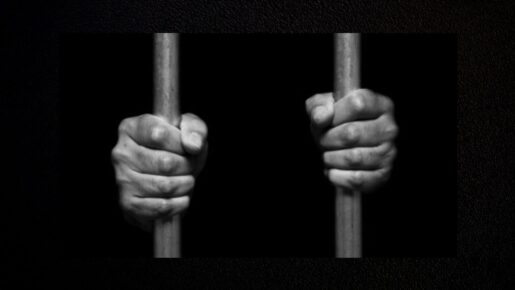
May we release the tight grip of doubt and self-rule, open our hearts to the Savior who meets us in our lack, and step into the magnificent surrender that leads to true life and freedom in Him.
In that place of restful trust, we will discover not only the God who redeems, but the One who multiplies our little into abundance, guards our hearts with His peace, and does immeasurably more than we could ever ask or imagine.
This column was initially published by CherryRoad Media. For more inspirational articles, follow ©Tiffany Kaye Chartier.