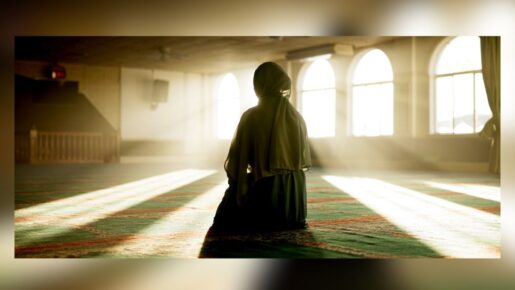


As Americans gather for Thanksgiving on Thursday, research reveals a marked difference in how often people of different religious backgrounds experience gratitude. Evangelical Protestants are among those most likely to report feeling deeply thankful at least once a week, according to Pew Research Center.
The holiday arrives as Christianity faces an uncertain future in the United States and widespread persecution abroad. New projections released November 18 suggest Christians could cease to make up a majority of the U.S. population by 2065, even as some younger Americans report renewed interest in attending church.
Is Gratitude Different For Christians?
In its 2023-24 Religious Landscape Study, Pew found that 62% of American adults reported strong feelings of thankfulness at least weekly. The figure was 78% among evangelical Protestants and Latter-day Saints, compared with 59% among Orthodox Christians and 46% among adults with no religious affiliation.
Gratitude was not exclusive to Christians. In the same study, 61% of Muslims, 52% of Jewish Americans, and 47% each of Buddhists and Hindus reported experiencing it at least weekly.
The survey measured how often respondents said they felt grateful, not how grateful they were compared with one another in identical circumstances. It does not establish that religious belief causes gratitude.
In Christian teaching, thanksgiving is encouraged even when circumstances are difficult. The apostle Paul instructs believers in 1 Thessalonians 5:18 to give thanks in all circumstances.
Thanksgiving And Christmas: More Than Traditions
In the middle of the Civil War, President Abraham Lincoln issued his October 3, 1863, Thanksgiving proclamation, calling on Americans to set aside a day of thanksgiving and praise to God. The proclamation helped establish the annual national observance.
Prayer remains part of many American Thanksgiving celebrations. A 2024 Pew survey found that 65% of U.S. adults said someone typically offered a prayer or blessing at their Thanksgiving dinner, 69% said someone expressed thankfulness, and 56% said both occurred.
Christmas, which commemorates the birth of Jesus Christ, also has a religious meaning for many Americans who observe it alongside cultural traditions.
In Pew’s 2017 Christmas survey, 90% of American adults said they celebrated the holiday, but only 55% described their observance as religious or both religious and cultural, down from 59% in 2013. Among Christians, 72% described their celebration as at least partly religious.
The Cost Of Practicing Christianity
More than 388 million Christians face high levels of religious persecution or discrimination worldwide, according to the Christian advocacy organization Open Doors. Its 2026 World Watch List recorded 4,849 faith-related killings, 4,712 detentions, and attacks on 3,632 churches or other Christian properties.
The number of recorded killings increased from 4,476 in the preceding reporting period, according to the organization’s analysis of persecution trends. Nigeria alone accounted for 3,490 of the deaths.
The subject received renewed attention November 18, 2026, when the Tom Lantos Human Rights Commission held a congressional hearing on global Christian persecution. Witnesses included Timothy Shah, a distinguished research scholar in politics at the University of Dallas. The commission identified armed conflict, political instability, religious nationalism, and weak rule of law as factors exposing Christians to violence and displacement.
“Religious freedom is a universal human right,” U.S. Rep. Chris Smith (R-New Jersey) said in his opening statement, according to a November 19 release from his office. “It belongs to every person, everywhere, regardless of faith or belief.”
In the United States, the First Amendment protects religious exercise. Disputes over the application of that protection, however, continue to arise in public life.
In July, the Department of Justice issued updated religious liberty guidance, addressing religious accommodations in federal employment, church autonomy, parental rights, and participation by religious organizations in government programs. The department said the revisions reflected Supreme Court decisions issued since its 2017 guidance.
On November 24, Rep. Nancy Mace (R-S.C.) posted on X that Christians are being executed inside churches, with worshippers burned alive and young girls abducted, forced into marriage, and pressured to convert. She cited the 2026 Open Doors World Watch List report.
Christians are being executed inside their own churches.
Worshippers are being burned alive, and young girls are being abducted, forced into marriage, and pressured to abandon their faith and convert to Islam.
A 2026 Open Doors report says:
– 388 MILLION Christians across the… pic.twitter.com/y1HVmghaMO
— Rep. Nancy Mace (@RepNancyMace) November 24, 2026
Mace described the violence as the result of radical Islam and said the United States should not allow Sharia law near the nation.
Is A Younger Generation Returning To Church?
The share of U.S. adults identifying as Christian fell from 78% in 2007 to 62% in 2023-24, according to Pew’s Religious Landscape Study. Yet the decline has slowed, with the Christian share relatively steady in recent surveys.
In an October 28 report, Pew found that 34% of U.S. adults surveyed in June 2026 had attended religious services in person in the previous month. A total of 45% had attended in person or watched services remotely. Both figures were the highest since Pew began asking those questions in July 2020.
Meanwhile, September research from Barna and Gloo found that 34% of surveyed Gen Z and Millennial young adults reported attending church more frequently than a year earlier, while 45% reported no change and 21% reported a decrease. Young men and black young adults were among those most likely to report increased attendance, at 41% each.
Prayer was the most commonly selected spiritual motivation for church attendance, cited by 45% of young adults, followed by worshiping Jesus with others at 38%, according to Barna.
A Changing Global Christian Population
The November 18 Pew projections estimate that the worldwide Christian population could grow by about 687 million between 2020 and 2070 while remaining around 29% of the global population. By 2070, an estimated 54% of Christians could live in sub-Saharan Africa.
The projections depend on assumptions about births, deaths, migration, and changes in religious affiliation. They are not a prediction of how individual people will practice their faith.
Putting Service Into Practice In North Texas
One local opportunity to serve others extends from Thanksgiving into the Christmas season. As The Dallas Express reported Tuesday, more than 7,000 children in The Salvation Army’s North Texas Angel Tree program still needed donors as of Monday.
The program connects donors with children, seniors, and adults with special needs. North Texans can select a recipient and return gifts by December 5, according to The Salvation Army.
While surveys can track church attendance and religious identity, they cannot fully measure how individuals live out their beliefs.
The research on gratitude offers one narrower finding: Frequent thankfulness is reported across religious and nonreligious groups, but several Christian traditions report it at substantially higher rates than Americans without a religious affiliation.