

Texas universities are continuing certain H-1B-related employment activities under narrow exceptions despite a statewide freeze ordered by Gov. Greg Abbott.
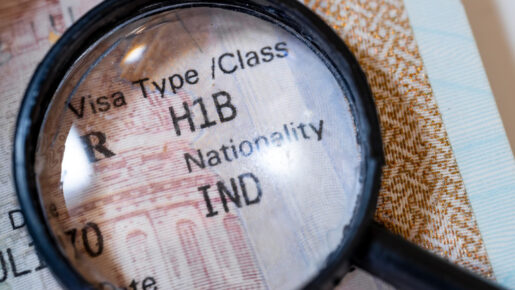
The directive, issued in January 2026, bars new H-1B visa petitions across state agencies and public universities without approval from the Texas Workforce Commission. However, records and university statements indicate some filings are still moving forward under what officials describe as permitted categories.
As previously reported, Abbott ordered all state agencies and public universities to halt new H-1B petitions and submit detailed reports on their use of the program by March 27, citing concerns about alleged abuse and the need to prioritize domestic workers, according to prior reporting by The Dallas Express.
Texas Universities Continue H-1B Filings Under Narrow Exceptions to Abbott’s Freeze
“Governor Abbott expects all state agencies and institutions of higher education to fully comply with his directive to freeze new H-1B visa petitions. Employment opportunities in Texas should be filled by Texans first,” said Andrew Mahaleris, Press Secretary for the governor, in a statement to The Dallas Express.
However, at the University of Texas at Austin, 17 “Notices of Intent to Hire” remain publicly listed, including positions for assistant professors, research associates, and postdoctoral fellows with salaries ranging from roughly $58,000 to more than $200,000.
A university official told The Dallas Express on background that these postings do not represent new hiring in violation of the order.
“The postings on the UT ISSS website are not new positions,” the official said. “They are renewals and requests for change of status, which are outside the scope of the governor’s directive. U.S. Dept of Labor requires us to post them.”
Employers seeking H-1B visas must publicly post Labor Condition Applications, even if a candidate has already been selected. In this most recent instance, the UT official indicated that a foreign candidate had been chosen.
A similar explanation was provided by Texas State University, which confirmed that it had filed required reports before the March 27 deadline and continues to maintain several H-1B-related notices.
“Texas State University submitted its reports to the Texas Workforce Commission prior to March 27, 2026, as required. There are currently four Notice of Filing on the Texas State University website for H-1B extensions. According to Texas Workforce Commission guidance extensions are allowed under the directive, therefore TXST was not required to seek approval for the filings,” Jayme Blaschke, Director of University Communications, said in an email to DX.
The distinction between new petitions and extensions appears central to how universities are continuing certain filings while, they say, remaining in compliance with the governor’s order.
At Texas A&M University, the school’s website outlines procedures for posting H-1B-related labor condition notices, but does not currently display active job postings for new H-1B hires. Representatives for the university did not respond to a request for comment from The Dallas Express.
The Texas Workforce Commission, which Abbott directed to oversee and provide guidance on the policy, declined to answer questions. The agency’s representatives told The Dallas Express to file a request under the Texas Public Information Act.
H-1B Scrutiny Intensifies as Texas Universities Face Questions Over Millions Spent and Hundreds Hired
The continued filings come amid broader scrutiny of H-1B usage in Texas higher education.
Earlier reporting detailed that Texas A&M had spent more than $3.25 million on H-1B-related costs since 2020 and faced delays in releasing records, prompting additional attention from state officials, according to prior reporting by The Dallas Express. At the time of that report, A&M had hired over 600 H-1B workers over a five-year period.
New federal data that could show the extent to which H-1B hiring at public universities has dropped off since the governor’s order is not yet available and is not expected for several months.
The debate has also unfolded alongside political pressure on employers beyond the state government.
In a separate response to The Dallas Express, Abbott’s office emphasized that while visa policy is controlled at the federal level, the governor has encouraged broader changes.
“The private sector should follow that example and prioritize American workers for American jobs,” another Abbott press official said in an earlier statement, referring to the state’s hiring freeze.
The situation highlights a key distinction: while Texas can restrict how state-funded institutions use the H-1B program, federal law still governs the visa system itself, including requirements for public disclosure and ongoing employment authorizations.
With the freeze set to remain in place until the end of the legislative session in May 2027, questions remain about how universities will balance compliance with state directives and federal labor requirements in the months ahead.