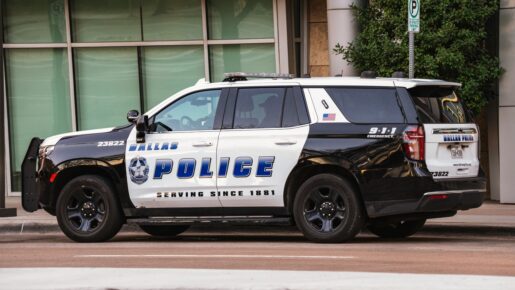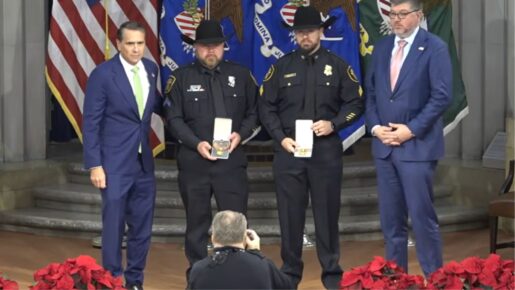


Dallas Police Chief Daniel Comeaux plans to move supervisors and new positions outside the Patrol Bureau to five-day workweeks, drawing opposition from the Dallas Police Association as the city remains hundreds of officers below the staffing minimum voters placed in the charter.
The chief outlined the change in an internal memorandum that WFAA obtained last week. The directive shifts affected employees from four 10-hour shifts to five eight-hour shifts, but it does not immediately end four-day workweeks for all detectives.
Who Must Change Schedules?
Supervisors outside patrol must move to eight-hour days beginning with the second pay period in January 2027, according to WFAA’s account of the memo. New non-patrol assignments will also use eight-hour shifts. Employees without supervisory duties may keep their existing four-day schedules while they remain in their current assignments.
The department extended the voluntary period for specialized officers who want to return to patrol through December 7. Dallas police told WFAA that conversations with union representatives and command staff led to the change and that the shift aims to improve efficiency and support patrol.
The Dallas Police Association objected to the policy and disputed its benefit to detectives, according to WFAA. The available account does not establish how many employees will change schedules, how many will transfer to patrol, or whether investigators will handle more cases.
Fort Worth Keeps Four-Day Shifts
Fort Worth, by contrast, continues to advertise four 10-hour shifts as a benefit for prospective police officers on its official recruitment page. Its April 2026 general orders recognize both eight- and 10-hour duty schedules and permit adjustments to department needs.
What National Police Research Says
A national Police Foundation survey conducted in 2005 found that 40.1% of responding agencies used eight-hour patrol shifts, 27.2% used 10-hour shifts, and 24% used 12-hour shifts. Among larger departments, 10-hour shifts were most common at 35%, followed by eight-hour shifts at 32.5%. The study describes historical practice.
A National Institute of Justice-funded experiment published in 2012 involving 275 police officers in Arlington, Texas, and Detroit found no statistically significant differences in measured job performance between eight-, 10-, and 12-hour shifts.
Officers on 10-hour shifts averaged more sleep, reported better quality of work life, and worked less overtime than the eight-hour group. Researchers did not conclude that 10-hour schedules produce lower city crime rates.
Dallas Remains Short Of Proposition U Minimum
Dallas police counted 3,443 sworn officers on November 12, leaving a gap of 557 against the 4,000-officer minimum, according to a November 13 email that department spokesperson Corbin Rubinson sent directly to The Dallas Express.
Voters approved Proposition U in November 2024. The city charter establishes a minimum of 4,000 sworn officers and requirements concerning qualifying revenue growth and public safety funding. It does not impose an explicit deadline to first reach 4,000.
Dallas police documented 378 sworn hires during fiscal 2025–2026, compared with 211 departures, including 75 retirements. The city’s October 13 hiring report also identified eight planned academy classes for the new fiscal year. Hiring and attrition totals do not, by themselves, show the precise net staffing change because academy timing and other personnel categories affect headcounts.
The adopted city budget projects 3,651 sworn officers by September 2027 and 3,800 by September 2028, according to figures previously examined by The Dallas Express. Those projected totals remain 349 and 200 officers, respectively, below the charter minimum.
Downtown Dallas Still Records More Offenses Than Fort Worth
The most recent downtown-to-downtown monthly comparison located for this article covers October 2026. Downtown Dallas recorded 240 offenses in the categories covered, down 28% from 333 in October 2025, while downtown Fort Worth recorded 29. Through October, the respective totals reached 2,535 and 301. The Dallas Express obtained the underlying comparative reports for its November 5 coverage.
The October Dallas count was about 8.3 times Fort Worth’s, but it would be misleading to call that an 8.3-times-higher crime rate. The Dallas study area covers 1.40 square miles, versus 0.92 square miles in Fort Worth; the comparison also excludes certain offense categories and estimates Fort Worth sex-crime figures. The totals do not adjust for residents, commuters, visitors, or other exposure.
Will The Change Improve Police Service?
Comeaux previously pursued changes to overtime management and detective deployment. In September, he described plans to adjust schedules and reduce unnecessary overtime, while Dallas Police Association President Sean Pease raised concerns about the effects on officers, NBC 5 examined.
The new directive tests whether administrative changes can strengthen patrol operations without reducing investigative capacity or encouraging departures. The department has not provided publicly verified estimates of savings, reassigned officers, detective caseload changes, or response-time improvements.
Dallas residents can measure the initiative against future staffing totals, patrol assignments, investigative outcomes, and the December 7 transfer deadline. Without those figures, a shift from four longer days to five shorter days does not demonstrate progress toward the voter-approved 4,000-officer minimum.