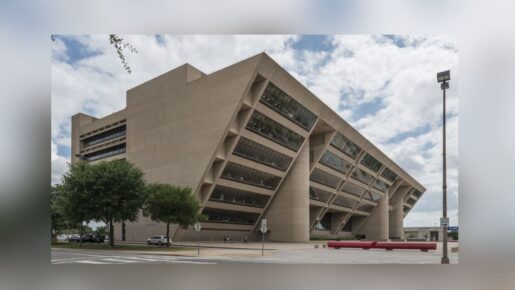
Dallas City Council is set to review new City Hall repair materials Wednesday that place consultant repair estimates above earlier public baselines, sharpening the debate over taxpayer costs, city operations, historic preservation, and the future of the downtown site.
The Phase II briefing materials show repair estimates ranging from $531.6 million to $610.8 million. That compares with a previous AECOM facility condition assessment estimate of $329.4 million and an earlier staff estimate range of $152 million to $345 million.
The repair figures do not capture the full long-term cost picture.
When modernization, financing interest, temporary swing space, fit-out costs, and 20 years of operating expenses are included, the broader 20-year total occupancy cost ranges from about $1.49 billion to about $1.6 billion under the new consultant scenarios.
The June 3 briefing, titled “Proposed City Hall Repair Program: Phase II,” is intended to present repair strategies, phasing options, planning-level cost estimates, and modernization cost estimates while supporting future policy discussions regarding City Hall.
As previously reported by The Dallas Express, the May 20 briefing focused on existing conditions, methodology, assumptions, constraints, and prioritization. The second phase was expected to include phased repair scenarios, preliminary cost estimates, implementation considerations, and a comparison of repair options.
The new materials provide that fuller cost picture, but they also leave Dallas with a larger policy question: how the cost of repairing, modernizing, financing, and temporarily relocating operations compares with other long-term options for City Hall and the downtown site.
Repair Estimates Increase
The Phase II presentation compares earlier estimates with four new consultant scenarios from Gresham Smith and WM2 Company.
The staff repair estimate was listed at $152 million to $345 million. The AECOM facility condition assessment estimate was listed at $329.4 million.
The new Gresham Smith repair scenarios are listed at $531.6 million for a 6.4-year phased plan and $556.8 million for a 10-year phased plan. WM2’s scenarios are listed at $591.2 million for a five-year phased plan and $610.8 million for a 10-year phased plan.
The presentation describes the figures as planning-level estimates.
The repair scenarios include ADA upgrades and code upgrades, but the summary table shows that technology, interiors, swing space, operating costs, and interest expense are not included in the repair estimate comparison.
20-Year Cost Nears $1.6B
A separate “Total Repair and Ownership Costs” table expands the analysis beyond the repair-only estimate.
That table adds modernization costs for interiors, furniture, fixtures and equipment, technology, soft costs, and contingency. It also adds financing interest expense, temporary lease swing space, swing space fit-out, and 20 years of operating expenses.
Under the consultant scenarios, the lowest 20-year total occupancy cost shown is about $1.49 billion for the Gresham Smith 6.4-year plan. The highest is about $1.6 billion for the WM2 10-year phased plan.
The table lists 20-year operating expenses at $229 million across all scenarios.
The briefing materials also show significant financing costs. Interest expense is listed at $450 million for the Gresham Smith 6.4-year plan, $456 million for the Gresham Smith 10-year plan, $486 million for the WM2 five-year plan, and $498 million for the WM2 10-year plan.
Repair Options Carry Trade-Offs
The presentation frames the choice around two major priorities: construction efficiency and operational flexibility.
One option emphasizes “highest construction efficiency,” with a 6.4-year schedule, fewer phases, lower cost, faster completion, and fewer mobilizations. The trade-off is larger displacement at once, higher disruption per phase, and less funding flexibility.
Another option emphasizes “most flexibility for operations,” with a 10-year schedule, smaller displacement, lower disruption per phase, and the ability to fund or pause work incrementally. The trade-off is a longer schedule and more escalation.
The presentation identifies several city functions that cannot go dark during repairs, including 911 operations, 311 services, fire dispatch, City Council meetings, and public-facing services.
The materials also say City Hall has about 2,200 occupants assigned to the building and between 1,100 and 1,800 average daily users.
The briefing lists other constraints, including no disruptive work on Wednesdays because of council session noise sensitivity, loading dock detours for major events, original cast iron plumbing on floors four and five, unlabeled electrical panels building-wide, and historic preservation designation under review.
Downtown Questions Remain
As previously reported by The Dallas Express, City Hall has become the center of a broader public debate over repair costs, historic preservation, downtown redevelopment, and access to city services.
The Dallas Express previously asked readers to weigh in through a 16-question poll about whether Dallas should repair City Hall and keep city operations there, preserve the building while moving some services elsewhere, relocate operations and redevelop the site, or consider selling or leasing the property for private development.
The new Phase II briefing provides more detail about the cost of repairing and continuing to occupy the current building. It does not resolve the larger question of whether Dallas should stay in the building, relocate city operations, preserve the structure in another form, redevelop the site, or pursue another long-term option.
The discussion also comes as Dallas faces broader questions about major civic assets and future development patterns.
As previously reported by The Dallas Express, the Dallas Mavericks are exploring a new arena and entertainment district at the former Valley View Mall site in North Dallas. Beck Ventures Chairman Scott Beck told The Dallas Express that the project could have broader implications for Dallas, including potential benefits tied to the Dallas Midtown and Valley View Tax Increment Financing districts.
The City Hall briefing does not address that project. But both debates reflect a larger question now facing Dallas: how public assets, private investment, taxpayer costs, and long-term development strategy should shape the city’s next chapter.
For now, Wednesday’s briefing gives council members and taxpayers a more complete repair-cost picture.
The policy decision remains ahead.
Readers can take The Dallas Express poll here.