President Donald Trump’s administration announced a $25 million fraud whistleblower initiative Tuesday as Texas Attorney General Ken Paxton’s investigation into suspected H-1B visa abuses puts nearly 30 North Texas businesses under scrutiny.
The Justice Department’s Fraud Whistleblower Incentive Program offers discretionary awards of $10,000 to $30,000 for original tips that lead to criminal charges in covered cases. The Treasury Department committed $25 million to support the initiative, the department announced on Tuesday.
The initiatives involve separate legal authorities. The new rewards program does not expressly include ordinary H-1B petition fraud among its qualifying offenses. It addresses specified health care fraud and fraud involving covered federal benefits or programs.
Paxton Targets Suspected North Texas ‘Ghost’ Offices
Paxton’s office expanded its H-1B investigation from an initial three North Texas companies in January to nearly 30 businesses by April 30, according to state announcements. Investigators issued civil investigative demands seeking employee records, financial documents, descriptions of business services and company communications.
The April announcement named Tekpro IT LLC, Fame PBX LLC, 1st Ranking Technologies LLC, Qubitz Tech Systems LLC, Blooming Clouds LLC, Virat Solutions Inc., Oak Technologies Inc., Techpath Inc. and Techquency LLC. His office cited suspected “ghost offices,” where businesses allegedly claim active operations at locations that do not support those representations.
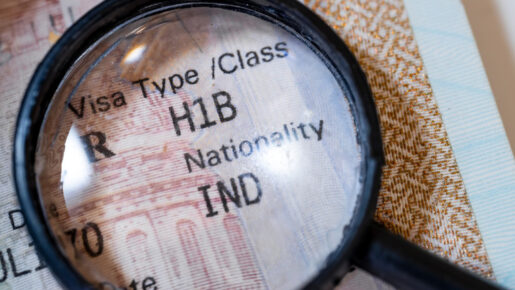
The H-1B program permits employers to petition for temporary foreign workers in specialty occupations, subject to federal requirements. Lawful sponsorship alone does not establish misconduct.
Paxton took another step May 12, filing a civil lawsuit against Golden Qi Holdings LLC and Yuan Yao. His office alleged that businesses advertising childcare and therapy services in Allen lacked legitimate operations and used those representations to sponsor H-1B workers. The allegations remain allegations; the government announcement alone does not establish a court finding or final disposition.
How The Dallas Express Continues To Cover The Crackdown
The Dallas Express documented Paxton’s initial private-sector investigation in January, then examined his April expansion and named some of the companies receiving investigative demands. Reporting also compared several employer names against federal petition-approval records, underscoring the difference between a visa approval and evidence of wrongdoing.
DX followed the investigation in May with coverage of the Allen childcare-business lawsuit. The May story outlined Paxton’s allegations concerning Golden Qi, Allen Infant Care Center and DFW ABA Center.
On October 4, DX covered Vice President JD Vance’s support for eliminating H-1B and U.S. Rep. Beth Van Duyne’s (R-Texas) proposal to increase penalties for serious employer violations. The bill remains a proposal, rather than an enacted law.
DX reported October 9 that federal officials restricted Microsoft, Adobe, Cognizant, Infosys, Tata, Wipro, HCL and Capgemini from the Permanent Labor Certification process, or PERM, an employment-based green-card pathway. The separate action did not cancel existing H-1B visas or abolish the program.
What Federal Records Show About Employers
A DX analysis of U.S. Citizenship and Immigration Services data found large numbers of H-1B petition approvals for Cognizant and Infosys in Texas during 2020-2025. The review also identified AT&T Services, American Airlines, UT Southwestern Medical Center, Dallas ISD and Texas Instruments among employers using the program.
Petition approvals do not equal current employee totals or establish fraud.
Another DX review identified 193 requested H-1B positions in 46 certified labor applications from private employers listing Texas Department of Transportation worksites or addresses. Those filings did not establish that every position led to a visa, employment or a violation of Texas policy.
A North Texas prosecution shows how H-1B fraud can work.
In 2016, a federal judge sentenced brothers Atul and Jiten “Jay” Nanda to 87 months in prison each after a jury convicted them in a scheme involving Carrollton-based Dibon Solutions.
Prosecutors said the brothers claimed prospective workers had salaried, full-time jobs but only paid them when outside clients provided assignments. They also shifted employer-required visa fees onto workers. The practice of keeping sponsored workers without paying them between assignments is known as “benching.”
In 2017, the U.S. Court of Appeals for the Fifth Circuit affirmed their convictions and sentences.
Who Can Earn The New Federal Rewards?
Under the Justice Department’s written rules, eligible whistleblowers must voluntarily provide original, truthful, complete and timely information that leads to public criminal charges in a covered area. Awards remain discretionary. The rules do not guarantee a payment or automatically promise the 1% commission Trump discussed publicly.
The program prioritizes hospice, home health care, day care and special services fraud. It also covers specified fraud involving programs or benefits administered by federal agencies including Labor, Education, Veterans Affairs and the Small Business Administration.
The department directs tips to america.gov/fraud.
The federal rewards initiative and Texas’ H-1B investigations operate separately, but both place greater scrutiny on suspected fraud involving government programs and employer representations.