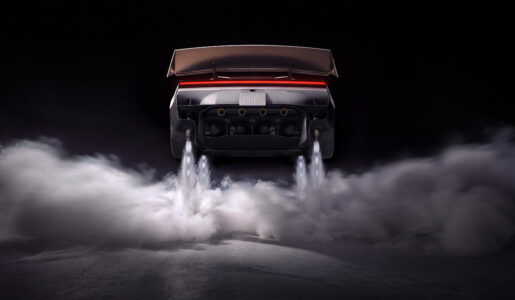


Tesla has introduced what could be its most ambitious product to date: the new Cybercab. CEO Elon Musk confirmed that the first Cybercab has rolled off the production line at the Gigafactory in Austin, Texas.
The Cybercab is a unique vehicle with no steering wheel or pedals. This two-seat electric vehicle is designed from the ground up to operate autonomously, relying entirely on Tesla’s Full Self-Driving software.
Musk made the production timeline clear in a post on X, writing: “Cybercab, which has no pedals or steering wheel, starts production in April.”
Musk has been candid that the road from first unit to full-scale production won’t be a quick one.
“With the important caveat that initial production is always very slow and follows an S-curve. The speed of the production ramp is inversely proportionate to how many new parts and steps there are. For Cybercab and Optimus, almost everything is new, so the early production rate will be agonizingly slow, but eventually end up being insanely fast,” he said in a previous post on January 20.
Musk offered more details on the Cybercab project for shareholders at Tesla’s 2025 Annual Meeting, where he first confirmed the April timeline target for mass production. The manufacturing approach, he explained, is “sort of… it’s closer to a high volume consumer electronics device than it is a car manufacturing line. So we should be able to achieve a net result of less than a ten-second cycle time, basically a unit every ten seconds.”
For comparison, Tesla’s most popular car – the Model Y, is produced on a line with roughly a one-minute cycle time.
Musk also confirmed that Tesla will start selling Cybercab to customers for $30,000 or less before 2027.
The CEO has previously claimed that Tesla will one day run the biggest fleet of self-driving cars. This vision ties into his pay-structure deal (approved by shareholders last year), which could be worth up to $1 trillion for Musk if Tesla hits production goals.
Yet, obstacles remain.
Regulatory approval for fully driverless cars varies by state, which could create red-tape-related headaches, and public trust in cars with no manual override still needs to be earned.
In August of 2025, a Florida jury sided against Tesla, saying the company shared blame for a 2019 crash where a distracted driver using Autopilot slammed into a parked car at high speed, killing a young woman and badly hurting her boyfriend – as previously reported by DX.