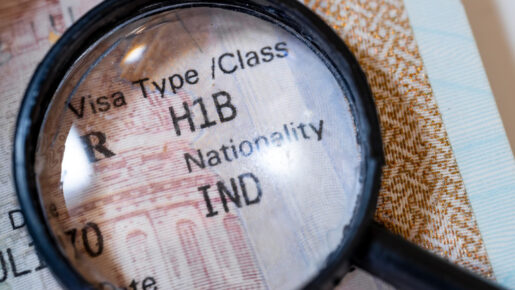
According to a recent survey conducted by Blind, nearly half of Indian professionals working abroad report having experienced discrimination related to their race or identity. This finding comes at a time when U.S. agencies and courts are increasingly dealing with a surge of bias complaints involving the H-1B visa system.
Blind, an anonymous platform for verified professionals, reported on December 3 that 44% of Non-Resident Indians (NRI) said they had been unfairly evaluated or treated because of their race. The poll, conducted on November 28 among 1,087 respondents, also found widespread reports of regional, caste, and internal diaspora bias layered atop concerns about the exploitation of migrants in the high-skilled visa pipeline.
The survey results arrive amid mounting allegations across the country that the H-1B labor system enables discriminatory practices against both Americans and foreign workers.
A California federal jury last year found Cognizant Technology Solutions engaged in a “pattern or practice” of intentionally discriminating against non-Indian and non-South Asian employees, according to a legal analysis published by the Duane Morris law firm. The jury concluded the company terminated those workers at dramatically higher rates while favoring H-1B holders from India for staffing opportunities.
The Blind data suggests, however, that many Indian professionals abroad face their own set of internal pressures. Respondents reported racial bias from non-Indians but also cited sharp divisions within the Indian diaspora itself.
“In my experience, issues don’t always stem from race,” a verified Google employee said in the survey release. “Sometimes they come from cultural or regional biases within the same country. Being Indian myself, I’ve actually had more challenges working with other Indians because of micro-management or favoritism.”
Some findings focused on the professional consequences.
Blind reported that 44% of respondents said discrimination affected promotions or performance evaluations, and 21% said they faced what they described as subtle social exclusion. Despite this, 72% did not report the issue, and only 1% pursued a formal complaint or legal action.
A Blind participant employed at General Motors pushed back on recent online criticisms of Indian-origin visa holders, stating: “It is not racist to point out that (the) majority of these visas go to Indians. That is fair and valid. It is racist to however hating [sic] on individual Indians instead of blaming the systems, laws, and corporations that all enable it.”
The surge in bias claims is not limited to internal industry culture.
Caste discrimination has become a prominent issue in the United States, particularly in California, where a July 18 ruling affirmed the state’s authority to investigate and prosecute caste-based misconduct. The United States District Court for the Eastern District of California dismissed a lawsuit brought by the Hindu American Foundation, which argued that caste protections violated religious freedoms, according to reporting published by The News Minute. Anti-caste advocates, including Karthikeyan Shanmugam, reportedly called the ruling “a historic win” for civil-rights enforcement.
Similar concerns have surfaced in ongoing labor-trafficking allegations involving the H-1B system.
A lawsuit filed by H-1B worker Amrutesh Vallabhaneni alleges “forced labor, labor trafficking, and withholding visa documents,” asserting that an Indian-origin CEO used the visa system to coerce migrant employees. “[For the Indian workers,] ‘this is a Squid Game … where the ultimate goal is to stay in America,’” consultant Jay Palmer said, according to reporting published by Breitbart News.
Palmer later added that some Indian CEO’s import “caste-discrimination politics to their workplaces in the United States,” despite having left their home countries.
The court docket for Vallabhaneni’s case indicates that the company’s lawyers have not yet responded to the allegations, which have only begun working their way through the legal system in the past two months.
The Blind poll reveals significant divisions within the NRI community regarding the issue of racism. Specifically, 30% of respondents believe that concerns about racism are exaggerated, while 26% acknowledge that bias exists but argue that it does not significantly impact career outcomes.
Still, the findings land at a time when the H-1B program faces sharp political scrutiny.
Public comments submitted to federal officials in recent days reflect growing frustration among U.S. citizens who claim the system disadvantages American workers, The Dallas Express reported.
Nevertheless, some officials believe the H-1B program is valuable and should be expanded.
Rep. Raja Krishnamoorthi (D-IL), who was born in New Delhi, India, has reintroduced a bill that would raise the annual cap on H-1B visas from 65,000 to 130,000, DX reported. Krishnamoorthi’s most recent re-election bid was backed by a corporate network that included Google, one of the largest users of H-1B visas in the United States.