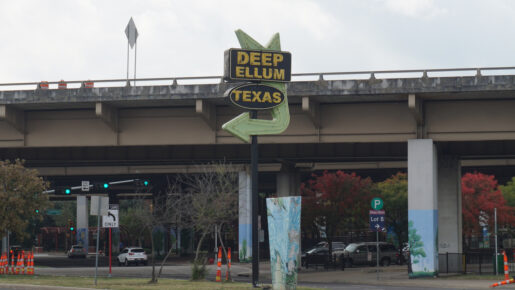
Authorities have identified two of the four people who died in three Deep Ellum shootings early Sunday, as Dallas faces renewed questions about how quickly it will meet the police staffing requirements voters added to the city charter in 2024.
The Dallas County Medical Examiner’s Office identified the victims as Kaniesa Scott, 21, and Unique Elise Benjamin, 28, according to information FOX 4 obtained from medical examiner records Monday. The outlet said Scott died at Baylor University Medical Center and listed Benjamin’s location as the 200 block of South Crowdus Street.
Dallas police documented three shootings on November 1: one around 12:20 a.m. in the 2600 block of Elm Street, another around 1:05 a.m. in the 2600 block of Main Street, and a third around 1:35 a.m. in the 200 block of South Crowdus Street. Four people died, and 15 others suffered injuries, according to the department’s preliminary account.
The department said suspects remained outstanding when it posted that update Sunday.
Police Chief Daniel Comeaux said officers had taken additional assignments in Deep Ellum for the Halloween crowds. “We were fully staffed out here,” he said at a November 1 news conference, as The Dallas Express previously reported. His statement addressed staffing at the entertainment district during the incidents, rather than the citywide officer total.
Dallas Mayor Eric Johnson called the shootings unacceptable, while the Deep Ellum Foundation announced plans for community listening sessions and assistance for grieving families, according to FOX 4.
Dallas City Council Member Cara Mendelsohn called Sunday for a review of police staffing and preparations following the Deep Ellum shootings. Her request covers staffing, deployment, threat intelligence, crowd and traffic management, and coordination with businesses and private security.
“We need to understand how three separate shootings occurred within approximately 75 minutes in such a concentrated area,” Mendelsohn posted on social media, The Dallas Express reported at the time.
Police Staffing Remains Below Charter Minimum
Dallas had 3,447 sworn officers according to an October 13 city hiring memorandum, leaving the department 553 officers below the 4,000 required by Proposition U. The department hired 378 officers in fiscal year 2025-26, exceeding its goal of 350, but lost 211 sworn officers during the same period.
The city’s adopted budget projects 3,651 sworn officers by September 2027 and 3,800 by September 2028, still short of 4,000 in either year. The city has not set a date for reaching that initial threshold in those projections. The Dallas Express previously examined the staffing gap ahead of the new fiscal year.
What Voters Required Under Proposition U
The city charter directs the City Council to allocate at least 50% of qualifying growth in annual city revenue first to the Dallas Police and Fire Pension System. Any money remaining in that allocation must support other enumerated public-safety objectives, including raising sworn police staffing to at least 4,000 and maintaining the required officer-to-population ratio.
Proposition U also requires starting police salary and non-pension benefits, excluding signing bonuses, to rank within the top five among qualifying city police departments in Dallas, Collin, Tarrant, Denton, and Rockwall counties. The charter requires a third-party compensation survey each year.
Texas Attorney General Ken Paxton sued Dallas officials on February 13, alleging that they miscalculated qualifying revenue and failed to conduct the required compensation survey. Those claims represent the state’s allegations, not an established judicial finding. The Dallas Express covered the filing.
City Manager Kimberly Bizor Tolbert said in an August 4 statement that the city is “100% in compliance with Proposition U on contributions to the Dallas Police and Fire Pension System.” Her comment addressed only the pension-funding portion of the measure.
The city’s September budget announcement raised starting police compensation to $83,822 and said that amount, when combined with non-pension benefits, places Dallas among the region’s highest-paying departments. The announcement did not include the independent third-party ranking of starting pay that the city charter requires under Proposition U.