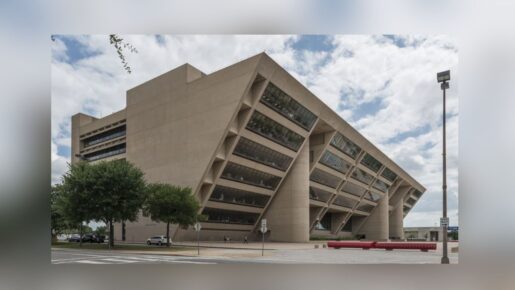
Texas Attorney General Ken Paxton has sued the City of Dallas, alleging city officials violated Proposition U, the voter-mandated charter amendment requiring increased police funding and staffing.
The lawsuit, filed in Dallas County district court, alleges officials failed to follow requirements approved by voters in November 2024, including properly calculating revenue and completing a required police compensation study.
Paxton filed the case alongside Dallas residents Jeff Hauschild and Matt Trammell, who seek to enforce the charter provisions.
Dallas filed its response on March 26, asking the court to dismiss the case before any factual issues are considered.
Lawsuit Alleges Failure to Follow Mandatory Charter Requirements
The lawsuit claims Dallas officials failed to carry out required duties under Proposition U.
The filing states the charter leaves “no discretion” and requires the City to follow a funding formula tied to year-over-year revenue growth.
Plaintiffs argue that those duties are ministerial, meaning officials must follow them as written and cannot apply alternative interpretations.
Dallas argues the claims fail as a matter of law and asserts that plaintiffs have not established a valid basis for relief.
Dispute Centers on Definition of “Revenue”
The case turns on how Dallas defines “revenue” under Proposition U.
The charter defines revenue as all funds not restricted by state or federal law.
The lawsuit states Dallas reported about $61 million in excess revenue. Plaintiffs contend the figure reaches roughly $220 million when applying the charter’s definition.
The filing alleges officials excluded categories of revenue without identifying any state or federal law restricting those funds and instead relied primarily on general fund comparisons.
Dallas has argued in budget materials that most funds outside the general fund are restricted and should not be included, describing the general fund as “mostly unrestricted.”
Lawsuit Targets Officials Acting Outside Authority
The lawsuit proceeds as an “ultra vires” claim, alleging city officials acted outside their legal authority.
Under Texas law, courts treat such claims as actions against officials rather than the government itself. The filing states these claims “do not implicate sovereign immunity because they are not claims against the government… Rather, they are against the official acting without authority.”
Dallas argues governmental immunity still applies and contends plaintiffs have not identified a law that “clearly and affirmatively waive[s] immunity.”
Separate Claim Targets Required Police Pay Study
The lawsuit also claims Dallas failed to complete a required annual compensation study.
Proposition U states the City “shall hire a third-party firm to conduct a survey” comparing police pay across the region.
Plaintiffs say public information requests produced no responsive records, which they argue shows the City did not perform the required study.
Dallas does not address that allegation in its initial filing and instead seeks dismissal on jurisdictional grounds.
State Asserts Authority to Enforce Law
The State argues it has independent authority to bring the case.
The filing states: “As a sovereign entity, the State has an intrinsic right to enact, interpret, and enforce its own laws.”
It further states the State “is not required to show any ‘particularized harm arising from a local official’s specific unauthorized actions.’”
The lawsuit also claims the State suffers harm when local officials fail to meet public safety obligations and may need to allocate additional resources to protect residents.
Dallas disputes that authority, arguing the Attorney General is not authorized to sue a municipality for alleged violations of its own charter.
Residents’ Standing Tied to Charter Amendment
The lawsuit also relies on provisions added through Proposition S.
The charter states that “any resident may sue to require the city to comply with the provisions of the charter.”
Dallas challenges that provision, arguing that municipalities lack authority to create standing and that plaintiffs must still demonstrate a specific legal injury under state law.
City Seeks Dismissal Before Case Proceeds
Dallas is attempting to end the case before the court considers the underlying claims.
The City argues:
- Governmental immunity has not been waived
- Plaintiffs lack standing
- The Attorney General lacks the authority to bring the claims
- The court lacks jurisdiction
What Happens Next
The court has not yet set a hearing on the City’s motion to dismiss.
Attorneys for the plaintiffs are expected to file a response within roughly 30 days, or on a timeline agreed to by both sides, before the court schedules a hearing on the City’s jurisdictional challenge.
Under Texas procedure, a plea to the jurisdiction takes priority over other matters and may be heard before the case proceeds on the merits.
If the City appeals any ruling on jurisdiction, the case could be paused while that appeal is resolved.