Look down while walking through parts of Houston, Austin, or Fort Worth and an unexpected piece of the global economy may be underfoot.
The markings are real, and they are not unique to one Texas city.
Fort Worth officials have acknowledged using Indian-made covers for decades, while independently documented examples have appeared in Houston and Austin. The reason is less mysterious than the markings might suggest as imported municipal castings have long competed for American public-works contracts on price while still meeting local specifications.
Houston, Austin And Fort Worth Have Used Imported Covers
A Houston sanitary sewer cover photographed in 2022 near 2508 Ralph St. is cataloged as an Indian-made municipal cover. The same archive also documents an unusual Austin installation at 1111 E. 6th St. in which the inner lid is marked “Made in India” while the surrounding outer ring is marked “Made in USA.”
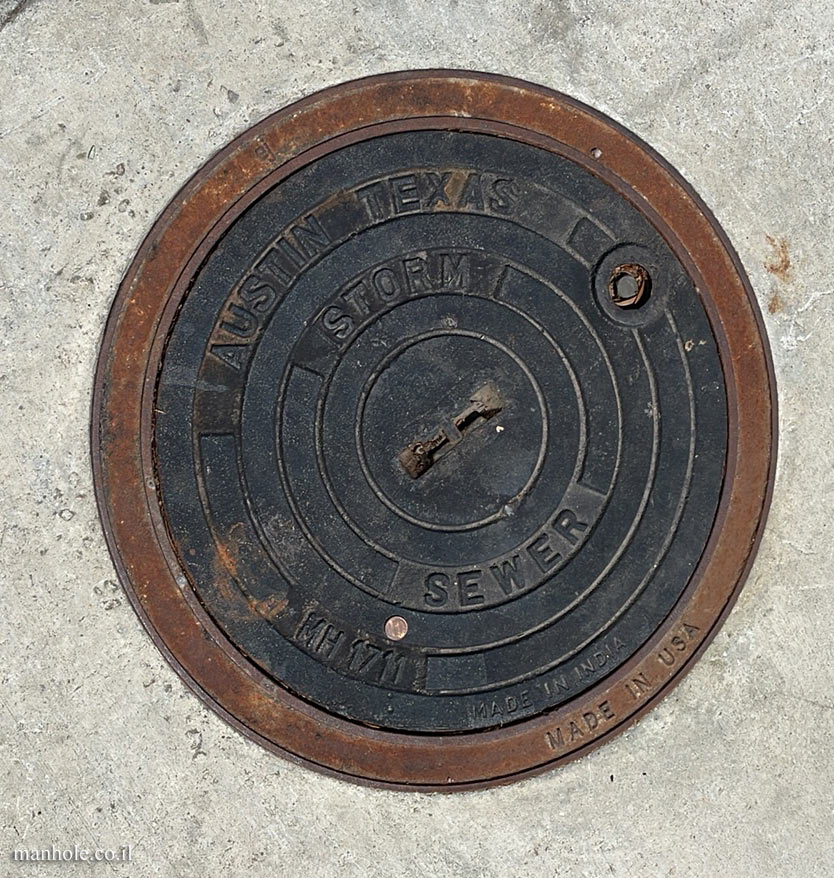
1111 E 6th St, Austin, TX 78702, USA/Manhole Covers Site
Just 52 meters away, another Austin storm-drain cover photographed the same year is marked “Made in USA,” revealing how imported and domestically produced castings can coexist within the same city infrastructure system.
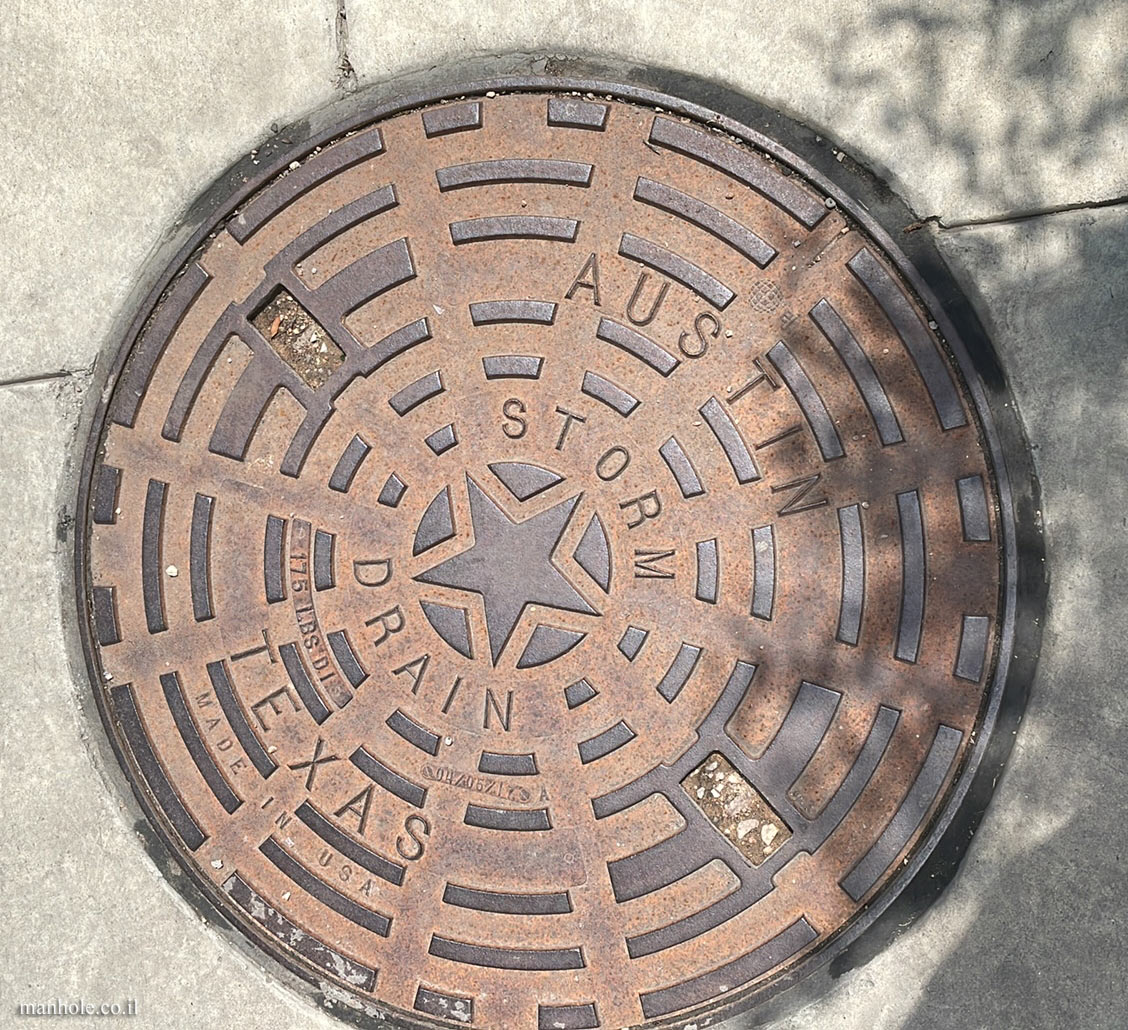
1108 E 6th St, Austin, TX 78702, USA/Manhole Covers Site
Fort Worth’s use of Indian-made covers dates back more than two decades.
An official City of Fort Worth approved-products record lists India-based SIP Industries Private Ltd. as an approved supplier of a 24-inch manhole ring and cover beginning April 20, 2001.
A 2016 Fort Worth Weekly report later said Fort Worth officials had switched from U.S.-made covers to Indian versions in 2001 and quoted at the time city spokesman Kevin Neal as saying imported covers were 37% cheaper in a 2013 bid process. The report described newer covers bearing the city’s name, a longhorn, and a “Made in India” marking.
Why Is ‘Made In India’ Printed On Top?
The country-of-origin wording is not merely decorative.
Federal law specifically addresses imported municipal castings.
Under 19 U.S.C. § 1304, most imported goods must identify their country of origin, and Congress established an even more specific rule for certain municipal castings.
The law names manhole rings, frames, covers, utility boxes, hydrants, grates, bollards, and related assemblies and requires the country of origin to be permanently marked on the top surface in a place where it will remain visible after installation.
That is why someone walking down a Texas street can encounter “Made in India” cast directly into infrastructure that may have been installed years earlier.
New York Has Been Buying Indian Covers For Decades
The Texas examples are part of a broader national pattern.
A 2007 New York Times report republished by Mint documented workers at a Howrah foundry producing manhole covers for Con Edison, New York City’s Department of Environmental Protection, New Orleans, and Syracuse.
Con Edison said at the time that roughly one-quarter of the approximately 11,000 manhole covers it purchased annually came from India.
An American Foundry Society representative quoted in the report estimated that Indian-made covers could be 20% to 60% cheaper than U.S.-made versions.
The report also raised questions about working conditions at one Indian foundry after workers were photographed handling molten metal with limited protective equipment. Con Edison subsequently said it was adding workplace-safety requirements to its international contracts.
Texas Once Made More Of Its Own
Imported municipal castings are not the whole story.
Texas cities historically relied more heavily on domestic and sometimes local foundries.
San Antonio still has surviving covers made roughly a century ago by W.H. Winterborne & Sons, a local machine shop and foundry.
The company produced more than 500 manhole covers and rings for San Antonio between 1923 and 1925, according to historical records reviewed by the San Antonio Express-News. Some remain visible in older neighborhoods today.
American-Made Covers Are Still Produced In North Texas
Domestic manufacturing has not disappeared.
Bass & Hays Foundry in Grand Prairie says it has manufactured American-made municipal castings since 1958.
The family-owned company supplies manhole covers, drain grates and frames, water-meter boxes, valve boxes, and other infrastructure products using certified U.S.-sourced materials.
The company also advertises products designed to comply with federal domestic-content requirements used on certain publicly funded infrastructure projects.
Arlington’s approved municipal-products list further demonstrates that domestic manufacturers remain part of the Texas market.
For manhole rings and lids, Arlington lists manufacturers including East Jordan Iron Works, Neenah, Bass & Hays, AccuCast, Sigma, and others, with products required to meet specifications such as ASTM A48 Class 35B and AASHTO M306.
Imported covers therefore do not mean American alternatives are unavailable.
Federal Funding Can Change The Rules
Whether imported iron can be used on a particular infrastructure project can depend on how that project is funded.
Federal Build America, Buy America requirements apply domestic-content rules to many federally assisted infrastructure projects.
EPA guidance identifies manhole covers and other municipal castings among products generally classified as iron and steel for purposes of those requirements. Separate American Iron and Steel requirements can also apply to certain federally assisted water and wastewater projects.
Those rules do not mean every manhole cover purchased by every city must be made in the United States. Applicability depends on the funding source, project, statutory requirements, and any available exceptions or waivers.
This helps to explain the mixed inventory visible on Texas streets: older locally made covers, imported covers, newer U.S.-made castings, and in Austin’s case, even one documented installation combining an Indian-made lid with a U.S.-made surrounding ring.
The Bottom Line
The next time a Texas resident notices “Made in India” stamped into the pavement, the inscription tells a much larger story about municipal budgets, international manufacturing, public procurement, federal sourcing rules, and how even one of the heaviest and seemingly most local objects on an American street can travel halfway around the world before being put into service.