



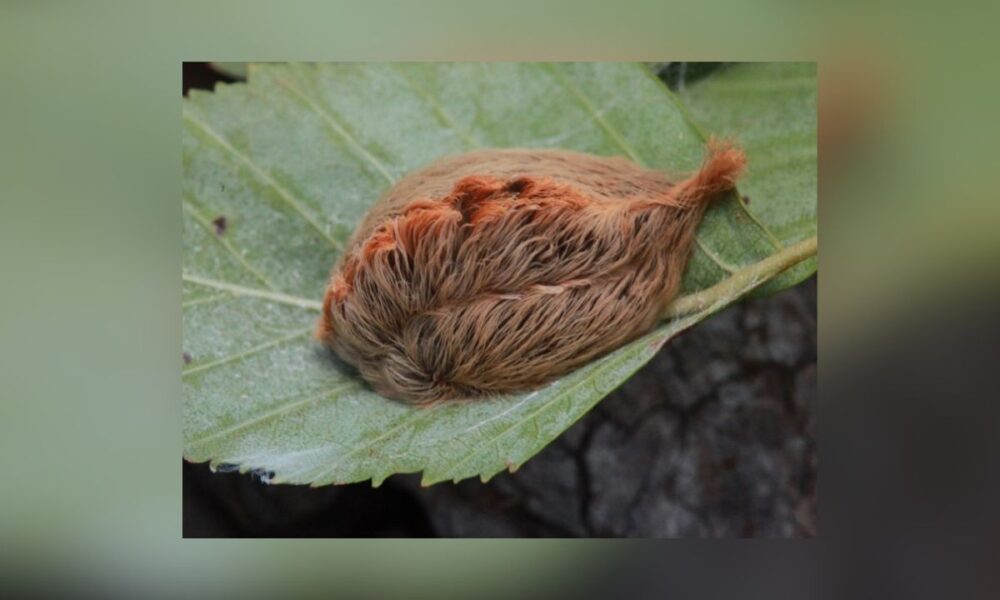
Texas residents are seeing more southern flannel moth caterpillars, commonly called “asps,” as fall brings the fuzzy but highly venomous insects out in greater numbers.
The teardrop-shaped larvae of Megalopyge opercularis are covered in long, silky hairs that hide sharp, toxin-filled spines. Colors range from yellow and gray to reddish-brown. Adults emerge in late spring or early summer, laying hundreds of eggs on oaks, pecans, elms, hackberries, and shrubs. Though one or two generations occur yearly, the caterpillars are most common in autumn.
Contact with the concealed spines triggers intense, throbbing pain within minutes, often compared to a bee sting or broken bone. Red spots, swelling, headaches, nausea, vomiting, and swollen lymph nodes can follow. In rare cases, victims experience shock or breathing difficulty. Pain typically eases within an hour, and marks fade in a day or two.
Texas A&M AgriLife Extension entomologist Wizzie Brown said the caterpillars “look touchable, but they are not,” the Chron reported. Reaction severity depends on the sting location and individual sensitivity.
Recent sightings include Lake Livingston and Sheldon Lake state parks, where rangers posted photos and videos warning visitors to look but not touch.
In Austin, a toddler suffered a mild sting after picking one up; the child recovered quickly after antihistamines and pain relief.
For stings, experts recommend applying ice and taking oral antihistamines. Cellophane or duct tape can help remove embedded spines. Anyone with severe pain, widespread itching, or breathing trouble should seek immediate medical care.