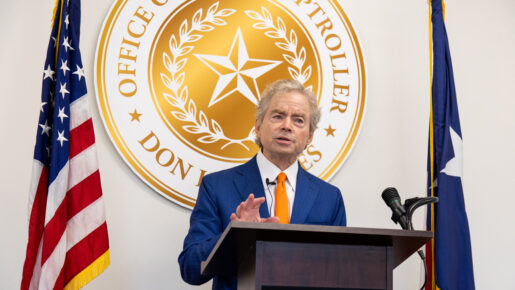
State Rep. Josey Garcia (D-District 124) filed House Bill 294 on Monday, proposing a state-coordinated program to bring temporary workers from Mexico into Texas businesses even as officials scrutinize the use of foreign labor and H-1B visas. The bill would instruct the governor to seek federal permission before pursuing an agreement with a Mexican state.
HB 294 would not create a new visa category or authorize employment without federal approval. Instead, it would allow Texas to facilitate recruitment through existing federal nonimmigrant visas for skilled and unskilled positions the Texas Workforce Commission identifies as needing workers.
What Employers Would Have To Prove
The proposal says participating businesses must demonstrate that sufficient able, willing, qualified, and available workers cannot fill the jobs in the relevant labor market. They must also certify that hiring temporary guest workers would not harm wages or working conditions for similarly employed Texas workers.
The participating Mexican state would have to supply workers who meet federal visa requirements, pass criminal background checks, and undergo standardized education or skills testing. The workers would receive tamper-proof identification containing personal information, a photograph, a fingerprint, their visa number, and the expiration date. Mexican officials would notify the employer, governor, and U.S. Immigration and Customs Enforcement if a worker failed to return to Mexico before visa expiration.
The bill does not specify a new Texas audit system, public employer registry, or state penalty for an inaccurate labor-shortage certification. It also does not appropriate a specific dollar amount to administer the program. Those omissions create questions about how Texas would monitor any future agreement.
A Similar Bill Failed In 2025
The measure revives a concept lawmakers rejected last session. House Bill 2858, authored by state Reps. Ray Lopez (D-District 125) and Drew Darby (R-District 72), with Garcia and Suleman Lalani (D-District 76) as coauthors, failed in the House by a 65-76 vote on May 12, 2025. The earlier bipartisan sponsorship also means the guest-worker concept does not belong exclusively to Democrats. Records document that vote.
H-1B Scrutiny Adds A Texas Dimension
The guest-worker proposal reaches beyond H-1B visas. H-1B generally covers specialty occupations, while H-2A and H-2B cover qualifying temporary agricultural and nonagricultural jobs.
Texas ranked second nationally with 109,130 positions in certified H-1B, H-1B1, and E-3 labor condition applications during the first nine months of fiscal 2026, as The Dallas Express previously documented. Those certifications do not equal visas issued or people actually employed.
An earlier Dallas Express investigation identified 193 requested H-1B positions across applications associated with Texas Department of Transportation worksites or addresses. The filings alone did not establish that workers received visas or worked at the agency.
Gov. Greg Abbott’s January 27 directive restricted new H-1B petitions by certain state agencies and public universities through May 31, 2027, unless the Texas Workforce Commission grants written permission.
Garcia’s proposal addresses a different route: state coordination to help private employers recruit temporary foreign workers after federal approval. The two approaches leave a central oversight question about how Texas would distinguish genuine labor needs from attempts to avoid recruiting available American workers.
Texas Agriculture Commissioner Sid Miller has separately moved to restrict certain state grants to businesses employing H-1B workers, although the specific grant eligibility rules and implementation remain unclear, as The Dallas Express examined. Federal regulators are also considering a proposal to end the discretionary grace period of up to 60 days for certain foreign workers who lose their jobs. Comments close November 10; the proposal has not taken effect.
The Question For Lawmakers
HB 294 would require the governor to seek federal authorization promptly if lawmakers enact it. The governor could then choose whether to negotiate a memorandum of understanding with a Mexican state. The measure would take effect immediately with a two-thirds vote in each chamber or on September 1, 2027, without that supermajority.
Before Texas pursues such an arrangement, lawmakers could ask which occupations face documented shortages, who checks employers’ certifications, what oversight taxpayers would fund, and how investigators would detect false statements or visa abuse. The proposed safeguards provide a framework, but the bill does not answer each enforcement question.