After U.S. forces captured Venezuelan dictator Nicolás Maduro, a former regime prisoner is calling on President Donald Trump to save the remaining Americans.
Matthew John Heath is an American who spent more than 2 years in a Venezuelan prison. U.S. officials later classified Heath as wrongfully detained and handled his case through the State Department’s hostage affairs office.
Now, he told The Dallas Express he is calling on Trump and Secretary of State Marco Rubio to urge interim Venezuelan President Delcy Rodríguez to free the remaining American prisoners.
“There are still five Americans being held wrongly in Venezuela today,” Heath said to DX. “I’d like Secretary Rubio to call Delcy Rodríguez and ask her, as a gesture of goodwill, to immediately release those five Americans.”
After Heath’s release from Venezuelan prison, he began advocating for American prisoners with the nonprofit Hostage US. He confirmed five citizens are still being held, but said there may be more.
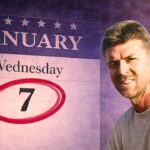
Heath spent September 2020 to October 2022 in one of Maduro’s prisons. Now, he is free – and the dictator is not. Maduro was arraigned in the Southern District of New York on January 5.
“Maduro, the tables have turned. I’m free and you’re not,” Heath said. “Seeing Maduro in handcuffs and flip-flops has made my year.”
‘Threatened To Kill Me’
Heath was passing through Venezuela in 2020, on his way from Colombia to Aruba. He said officials stopped him at a police checkpoint – a standard procedure in Latin America.
“I was asked to show my passport,” he said. “I was immediately arrested and wrongfully detained.”
Heath is a Marine veteran who worked in communications and signals intelligence, he said, from 1999 to 2003. Maduro’s regime took this as a sign he was spying for the American government.
“I was immediately physically detained. I was stripped naked,” he said. “The interrogation started pretty quickly.”
Officials handed him off to the General Directorate of Military Counterintelligence for questioning.
“That’s the bad guys, that’s the secret police,” Heath said. “They electrocuted me, they beat me, they threatened to kill me. They wanted me to admit that I was a CIA spy.”
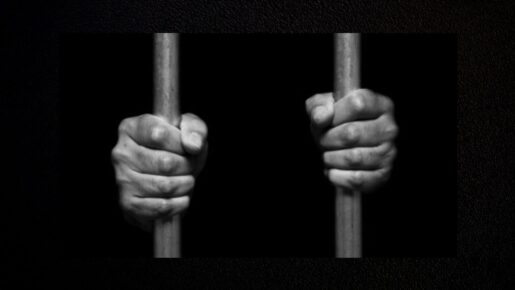
They transferred Heath to what he called a “V.I.P. prison” – for cases of national interest. He said he lost a significant amount of weight.
“It’s not V.I.P. in the treatment,” he said. “When there is water, the water is dirty. There might not be a toilet. There’s not normally running water, the food is intermittent… It’s a tough place to be.”
Guards would not allow Heath to speak English, but he didn’t speak Spanish either.
“Anybody in the prison who spoke English, they would move to another part of the prison so I couldn’t be anywhere near,” he said. “I was very quiet for about three months until I learned some basic Spanish.”
Heath said guards treated him very poorly. They did not allow him to make phone calls, and refused him a lawyer for 10 months.
“They treated me really poorly,” he said. “Emotionally, it was really difficult… Eventually I went on a hunger strike, and I said ‘I’m not going to eat until I go to the hospital or you give me a phone call.’”
After five days, the guards finally let Heath make a phone call.
“I called my family. It was my son’s birthday, and unfortunately he wasn’t near the phone. He didn’t know I was going to be able to call – of course, I hadn’t called in 10 months,” he said. “I was able to talk to my mom and my dad and my aunt.”
Finding Freedom
One and a half years passed, and Heath finally crossed paths with another American – a 25-year-old man from Orlando, Florida.
“He was just traveling near the border between Colombia and Venezuela, and he was detained,” Heath said. “Really nice kid. We became friends… He wouldn’t talk for about a week, and I finally got him to talk a little bit.”
Heath said he reassured him he was working with officials in the State Department, and that everything would be okay.
“There’s some really great people working on this problem,” he said at the time. “It’s not going to be today, it’s not going to be tomorrow, but the U.S. government’s going to get us out.”
American officials worked around the clock to free Heath from custody, he said. He specifically pointed to Special Presidential Envoy for Hostage Affairs Roger Carstens, working under then-President Joe Biden’s National Security Advisor Jake Sullivan and Secretary Anthony Blinken.
“Carstens directly negotiated with President Maduro for my release,” Heath said.
Heath was separated from his American friend when he was taken to another facility, he said. But in October 2022, they were released together in exchange for two of Maduro’s nephews.
After being freed, Heath said he returned home to Knoxville, Tennessee. Since then, he began working with groups like Hostage US to save Americans trapped abroad. He also works as an intelligence analyst and crisis management consultant, hoping to help others avoid his former fate.
“There’s a lot of Americans in bad places all around the world,” he said.
Heath offered a message for families of Americans being held across the world.
“The Department of State has a team of amazing foreign service officers working on these cases around the clock,” Heath said. “I know this is difficult, but do not doubt that the United States government is working around the clock to get your family members home.”
He also encouraged travelers – especially executives – to be cautious in Latin America, since Maduro’s arrest escalated the security situation. Heath also urged them to review their crisis management plans.
“I wish President Maduro the best as he faces a just trial in New York,” Heath said. “I’m feeling a deep sense of justice.”