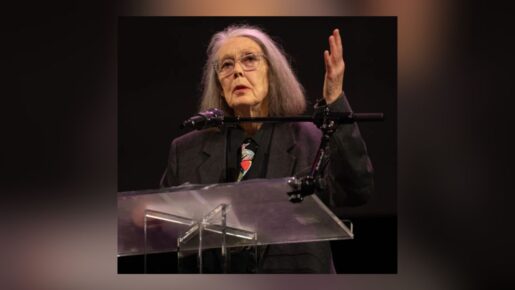


The Norwegian Nobel Committee awarded the 2026 Nobel Peace Prize to former United Nations human rights chief Navanethem “Navi” Pillay on October 9, drawing criticism from UN Watch over her record on Israel.
The committee awarded the prize to the South African jurist “for her efforts to promote peace and international law,” recognizing her work to advance accountability for war crimes, crimes against humanity and genocide.
The decision honors a career spanning South Africa’s courts, international criminal tribunals and the U.N. human rights system. It also renews a dispute over the impartiality of the commission she chaired investigating Israel and the Palestinian territories.
The committee argued that international legal institutions face mounting political pressure and that peaceful conflict resolution depends on respect for the rule of law.
“Peace requires justice,” it said in its award announcement.
UN Watch Executive Director Hillel Neuer condemned the selection in an October 9 statement, accusing Pillay of bias against Israel and defending antisemitic remarks by a fellow commissioner.
“We are shocked that the Nobel committee honored Navi Pillay,” Neuer said. His organization argued that her public positions on Israel before she accepted the inquiry role compromised its impartiality. Those accusations represent UN Watch’s assessment.
Pillay chaired the U.N. Independent International Commission of Inquiry on the Occupied Palestinian Territory from 2021 to 2025. AFP reported that the panel concluded last year that genocide was occurring in Gaza. Israel rejected those findings.
The commission’s conclusion represents its assessment, not a court judgment. AFP reported that the Nobel committee said an international court must decide whether Israel’s actions constitute genocide.
Pillay defended the report’s work after the award announcement, according to AFP, asking: “Why would you need courage to speak the truth?”
The Nobel committee’s biography documents Pillay’s earlier legal career: She founded a law firm in Durban in 1967 and earned a doctorate at Harvard University in 1988. She later served on South Africa’s High Court and the International Criminal Tribunal for Rwanda before joining the International Criminal Court.
She served as U.N. high commissioner for human rights from 2008 to 2014 and now serves as an ad hoc judge at the International Court of Justice in the case involving genocide allegations against Myanmar.