


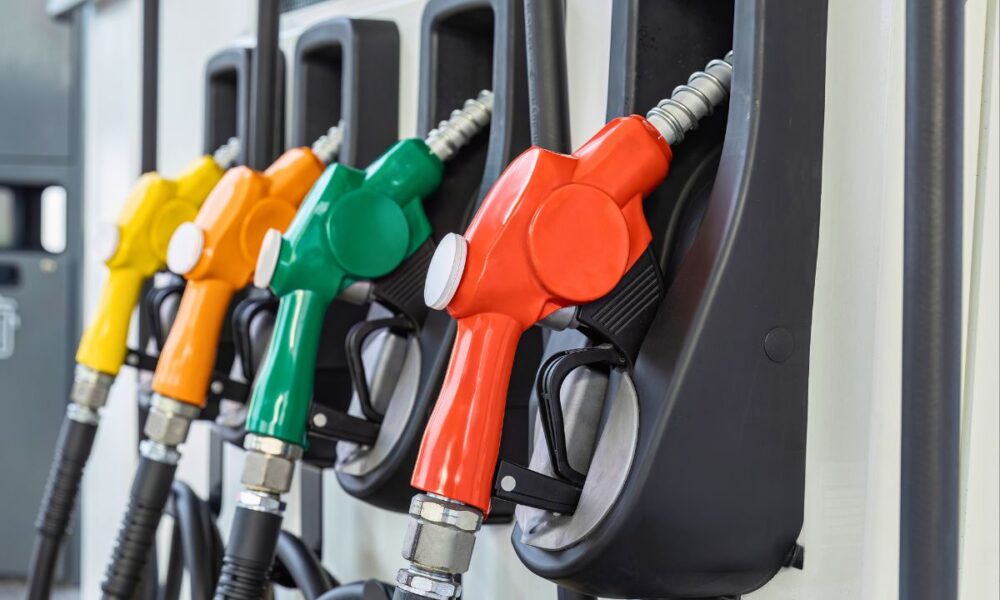
After Israeli forces launched strikes on Iranian oil depots, Americans are bracing for a potential jump in gas prices.
The Israel Defense Forces bombed 30 Iranian oil facilities on late March 7/early March 8, sparking concerns from American officials who said this went far beyond initial expectations, according to Axios. Oil prices soon topped $100 per barrel – signaling a potential jump in American gas prices.
“Short term oil prices, which will drop rapidly when the destruction of the Iran nuclear threat is over, is a very small price to pay for U.S.A., and World, Safety and Peace,” President Donald Trump posted March 8 on Truth Social. “ONLY FOOLS WOULD THINK DIFFERENTLY!”
American officials reportedly expressed concerns that Israeli strikes on Iranian infrastructure could drive up oil prices and rally support for the regime, according to Axios. The IDF said in a statement that the depots were “used by the Iranian regime to supply fuel to different consumers including its military organs.”
Viral videos quickly spread across the internet, showing apocalyptic scenes across Tehran.
🚨 HOLY SMOKES. Massive fires breaking out in Tehran after strikes on oil depots causes oil to FLOOD along the sewer system
The regime is furious. Their key infrastructure is now a target.
It gets worse EVERY HOUR for Iran. SURRENDER!pic.twitter.com/CrwMwjr6g3
— Eric Daugherty (@EricLDaugh) March 8, 2026
The price per barrel of crude oil surpassed $100 on March 8, rising rapidly after strikes on Iran, according to Business Insider. This could translate to $3.75 or $4 across America, as The Denver Post reported.
In 2025, the average was just over $69.14 per barrel, Brent crude oil data shows. This translates to roughly $3.10 on average.
Federal officials expect the jump in oil prices will be temporary, White House Press Secretary Karoline Leavitt said on Fox News’ “Sunday Morning Futures.”
“This is a short-term disruption for the long-term gain of taking out the rogue Iranian terrorist regime and finally ending their restriction of the free flow of energy in the Middle East and in the Strait of Hormuz,” she said.
Trump has announced political risk insurance for cargo vessels and oil tankers in the Strait of Hormuz, which handles roughly 20% of global oil shipments, Leavitt reportedly said.
She also said federal officials are tapping into other oil supplies, like in Venezuela, after the collapse of Maduro’s government. The Navy is also prepared to escort tankers if needed to keep oil flowing across the region.
“Look at the success,” she said. “We are working in a cooperative manner with the interim authorities to bring that oil into the market as expeditiously as possible.”
Middle Eastern Oil And American Gas
The United States has historically depended on oil and gas from the Middle East. Thus, when conflicts disrupt the region, the effects often hit Americans’ wallets.
In the 1970s, America faced two major gas shortages.
The first began in 1973, when the Organization of Petroleum Exporting Countries raised the price of crude oil by 70%, according to Smithsonian Magazine. Arab nations also embargoed the U.S. during the Yom Kippur War, when Syria and Egypt invaded Israel. Oil and gas prices jumped, and photos show cars wrapped around the block near gas stations.
After Israel and Syria made progress in negotiations, OPEC lifted the embargo in 1974.
But after the Iranian Revolution toppled the Persian shah, the tumultuous environment caused another oil shock in 1979, according to Smithsonian Magazine. For the second time in a decade, Americans saw gas lines, rationing, and panic buying.
I remember taking each entire Saturday to sit in gas lines with my dad. But you could only fill half a tank. And only if your license plate ended with an odd number.
And this was an entirely Carter manufactured crisis.
America has always had plenty of gas. pic.twitter.com/CTsIWyZtUh
— Mila Joy (@Milajoy) December 30, 2024
Since then, gas shortages have been much rarer – but conflicts in the Middle East still hold significant sway.
In 1990, when Iraq invaded the oil-rich nation of Kuwait, oil prices soared once more, as reported by NPR. Under the leadership of former President George H.W. Bush, the United States intervened and successfully expelled Iraqi forces. The swift nature of this conflict led to only minimal, short-lived increases in gas prices.
Under former President Barack Obama, tensions in Iran continued to flare – raising oil and gas prices again, and sparking frustrations among consumers. Traders began bidding prices up in worries of supply cuts.
The prices ultimately came back down and stayed down under Trump’s first administration, according to Forbes.
“This is a short-term disruption,” Leavitt said, per Fox News. “We’re seeing a slight increase in oil and gas prices, but ultimately taking out the rogue Iranian regime is going to be a good thing for the oil industry, and those prices are going to come back down just like they have over the course of the past year because of President Trump’s American energy dominance agenda.”