Google is facing renewed scrutiny over the accuracy of its artificial intelligence tools after its search results produced conflicting, unsupported claims about the citizenship status of a current member of Congress.
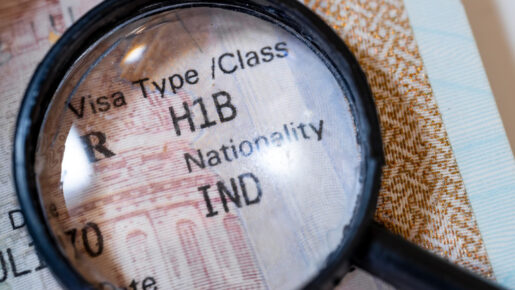
Google’s AI Overview recently asserted that Rep. Raja Krishnamoorthi (D-IL) is a “natural-born citizen” despite his official congressional biography stating he was born in New Delhi, India.
The tool also claimed Krishnamoorthi was not a dual citizen, citing sources that did not support the statement.
The disputed output adds a new example to a string of incidents in which Google’s AI products generated false claims about public figures, a pattern that has drawn scrutiny from lawmakers and legal experts.
In a search for “is Raja Krishnamoorthi a dual citizen,” Google’s AI Overview stated: “No, Congressman Raja Krishnamoorthi is not a dual citizen; he is a natural-born citizen of the United States, as the biography states he was born in New Delhi, India, but graduated from high school and attended university in the US and has served in the US government since 2017.”
The sources listed were the Congressional Biographical Directory, which states only that he was born in New Delhi on July 19, 1973, and his House webpage, which notes that he was born to immigrant parents. Neither document refers to him as natural-born or addresses dual citizenship.
After clicking “Dive Deeper,” Google’s tool reversed itself, stating that Krishnamoorthi “is a naturalized United States citizen” who immigrated as an infant. It again provided no relevant documentation for its claim that he does not hold dual citizenship.
Other members of Congress born abroad, including Rep. Pramila Jayapal and Rep. Shri Thanedar, generated plausible but imprecise answers.
When asked whether Jayapal is a dual citizen, Google stated, “She became a U.S. citizen in 2000 and renounced her Indian citizenship at that time.”
When asked about Thanedar, Google said, “He came to the U.S. in 1979 … Thanedar became a U.S. citizen in 1988,” an account apparently drawn from Wikipedia.
The citizenship issue has drawn renewed political attention this year after Sen. Bernie Moreno (R-OH) introduced the Exclusive Citizenship Act of 2025.
“Being an American citizen is an honor and a privilege—and if you want to be an American, it’s all or nothing. It’s time to end dual citizenship for good,” Moreno said in announcing the proposal in Washington. The bill would require Americans with dual citizenship to forfeit foreign nationality.
The Constitution requires that presidents be “natural born” citizens, a term not defined in statute and historically debated by scholars. Some legal commentators, including attorney Paul Ingrasia, who discussed the issue on the Cowtown Caller podcast in 2024, argue that the founders intended the phrase to mean birth to “two citizen parents,” a claim some constitutional scholars dispute.
“In order to run or serve as president, you have to have been born to two citizen parents,” Ingrasia said at the time, disputing then-presidential candidate Nikki Haley’s constitutional eligibility to hold the office of the President.
The Krishnamoorthi misstatement follows two other high-profile errors involving Google’s AI platforms.
In November, Sen. Marsha Blackburn alleged that Google’s “Gemma” model fabricated a detailed rape allegation against her when asked whether she had ever been accused of such a crime, The Dallas Express reported. She also said the system invented links to nonexistent news articles and falsely claimed she had defended activist Robby Starbuck against child rape allegations that she said were fabricated by the model.
“This is not a harmless ‘hallucination.’ It is an act of defamation produced and distributed by a Google-owned AI model,” Blackburn wrote in a letter to CEO Sundar Pichai. “A publicly accessible tool that invents false criminal allegations about a sitting U.S. Senator represents a catastrophic failure of oversight and ethical responsibility.”
Google later removed Gemma from AI Studio, saying users were “trying to use Gemma … and ask it factual questions,” according to a report published November 2 by TechCrunch. Markham Erickson, a Google vice president, told lawmakers during an October Senate Commerce hearing that “LLMs will hallucinate” and said the company is working to mitigate the issue.
Google also acknowledged in August that its AI Overview feature wrongly claimed singer Diana Ross had been arrested for cocaine possession in 1992 and had entered rehab, an account not supported by any public record, DX exclusively reported. The system cited unrelated articles, including one about George Floyd’s former girlfriend, and later contradicted itself about where Ross lived.
Legal dispute whether such automated outputs could affect whether companies like Google retain protection under Section 230 of the Communications Decency Act. Courts have split on whether AI-generated content counts as a platform’s own speech, a question still being tested in cases such as Anderson v. TikTok and Walters v. OpenAI.
Neither Krishnamoorthi nor Google responded to requests for comment from The Dallas Express.