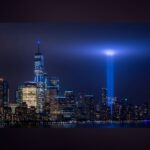
Twenty-five years have passed since a clear September morning became one of the darkest days in American history.
For those who lived through September 11, 2001, the date can still summon precise memories: where they were, who called, what they saw on television, and the moment they understood that the United States was under attack.
For millions born afterward, 9/11 is inherited history. They know the images, the timeline, and the number of people killed. The challenge now is ensuring they also know the names and the choices people made for one another when fear and confusion could have overwhelmed everything else.
The attacks killed 2,977 people: 2,753 in New York, 184 at the Pentagon, and 40 aboard United Airlines Flight 93, according to a 2026 backgrounder from the National September 11 Memorial & Museum. The victims were office workers, restaurant employees, military personnel, travelers, flight crews, police officers, firefighters, paramedics, and people simply passing through an ordinary Tuesday morning.
The numbers establish the scale. The stories reveal what was lost — and what endured.
The Man Behind the Red Bandanna
Welles Remy Crowther was a 24-year-old equities trader working on the 104th floor of the South Tower. He also had training as a volunteer firefighter.
After United Airlines Flight 175 struck the building, survivors on the 78th-floor sky lobby later recalled a man emerging through smoke and wreckage with a red bandanna covering his nose and mouth. He spoke calmly, found a usable stairway and guided people toward safety.
Then he went back.
Crowther made three trips to help others before the tower collapsed, according to the 9/11 Memorial & Museum. Survivors initially did not know his name. Months later, after reading their descriptions of the man with the red handkerchief, his mother recognized a habit her son had carried since childhood.
His red bandanna became evidence of who he had been in his final moments: not merely a victim caught in a disaster, but a person who repeatedly chose to return for strangers.
A Voice Singing in the Stairwell
Richard Cyril Rescorla understood the danger of the World Trade Center long before September 11. A retired U.S. Army colonel and Vietnam veteran, he served as Morgan Stanley’s vice president of security and had developed and rehearsed an evacuation plan after the 1993 bombing of the complex.
When the South Tower was struck in 2001, Rescorla supervised the evacuation of Morgan Stanley’s employees. Survivors remembered him using a bullhorn and singing “God Bless America” as people descended, according to the 9/11 Memorial & Museum.
Rescorla did not leave with them. He was last seen climbing back up the stairs to search for others before the tower fell. He was 62.
His story is a reminder that courage that morning was not always loud or spontaneous. Sometimes it looked like preparation, discipline and a steady voice telling frightened people to keep moving.
A Vote Aboard Flight 93
The passengers and crew aboard Flight 93 had only minutes to understand what was happening.
After hijackers seized the cockpit, people in the back of the airplane used phones to contact relatives, friends and authorities. They learned that other aircraft had struck the World Trade Center and the Pentagon and realized their flight was part of the same attack.
They took a vote and made a collective decision to fight back, according to the National Park Service’s account.
Their struggle began shortly before the aircraft crashed near Shanksville, Pennsylvania, at 10:03 a.m. Investigators determined that the hijackers’ intended target was most likely the U.S. Capitol, where lawmakers were in session.
Everyone aboard died, but the aircraft was the only one of the four hijacked planes that failed to reach its intended target. The passengers and crew could not save themselves. Their actions may have saved people they would never meet.
The Living Scars of September 11
The cost of 9/11 did not end when the smoke cleared.
Survivors, first responders and recovery workers have faced illnesses associated with exposure to toxic debris. The Memorial Glade at the World Trade Center site honors those who became sick or died in the aftermath.
The site also contains a living symbol of survival.
In October 2001, workers discovered a severely damaged Callery pear tree at Ground Zero. Its roots were snapped and its branches burned and broken. The tree was removed, rehabilitated by the New York City Department of Parks & Recreation and returned to the memorial in 2010.
Today, the Survivor Tree has smooth new limbs extending from its gnarled stumps. The line between injury and new growth remains visible.
This is an honest symbol of what it means to remember September 11: remembrance does not erase damage, reduce the dead to statistics or pretend that time restores what was taken.
It preserves the names.
It tells the stories.
It carries forward the choices made by people such as Crowther, Rescorla and the passengers and crew of Flight 93.
Twenty-five years later, “never forget” is no longer only a promise made by those who remember the day. It is a responsibility passed to those who do not.