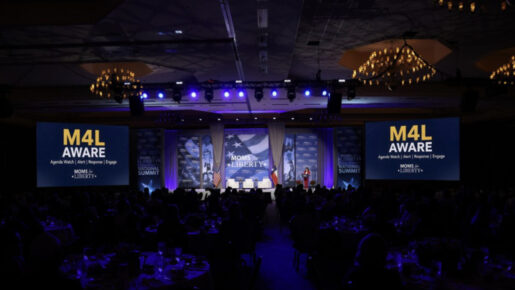
The White House convened its third Artificial Intelligence (AI) Education Task Force meeting on Thursday, bringing together senior administration officials, educators, and parents to discuss the role of AI in K-12 classrooms.
Assistant to the President and Office of Science and Technology Policy (OSTP) Director Michael Kratsios chaired the meeting, which featured presentations from Chris Woolard of the Ohio Department of Education, Magic School founder and CEO Adeel Khan, and Moms for Liberty co-founder Tina Descovich.
According to the White House, the session was intended to connect administration officials with educators and families to examine both the opportunities and challenges created by AI tools in schools.
“The goal in all of our AI education efforts is to demystify these amazing technologies. If America’s families, young people, and educators know how AI works, then they can understand what the technology is good at, and good for, and what it’s bad at, and bad for, and why. When they understand these tools, then they can fully take advantage of AI applications with confidence and responsibility,” Kratsios said.
Task Force Membership and Mandate
The Task Force includes the Director of OSTP, the Secretary of Agriculture, the Secretary of Labor, the Secretary of Education, the Secretary of Energy, the Director of the National Science Foundation, the Assistant to the President for Domestic Policy, the Special Advisor for AI & Crypto, and the Assistant to the President and Chief of Staff to the First Lady.
Its work stems from President Donald J. Trump’s April 2025 executive order, “Advancing Artificial Intelligence Education for American Youth,” which directs federal agencies to expand AI literacy, integrate AI tools into education where appropriate, and increase educator training.
The order also established the Task Force and required the creation of a national Presidential AI Challenge for students and teachers.
The executive order states that early exposure to AI concepts “demystifies this powerful technology” and helps prepare students to “become active and responsible participants in the workforce of the future,” emphasizing both student learning and educator training as federal priorities.
Presidential AI Challenge Engagement
Kratsios highlighted participation levels in the Presidential AI Challenge, which encourages students to design projects using AI methods or tools to address community challenges. Educators are invited to submit approaches for teaching or integrating AI into K-12 instruction.
Since its launch, more than 5,000 students and 1,000 educators have registered across all 50 states, according to the White House.
The Challenge, required under Section 5 of the April 2025 executive order, is designed to promote AI literacy, showcase student and educator innovation, and support broad geographic participation in emerging technology fields.
Public-Private Partnerships for AI Education
As part of its broader mandate, the Task Force is establishing public-private partnerships with AI companies, academic institutions, nonprofits, and other organizations to develop online AI education resources for K-12 students.
According to the White House’s AI education initiative, the goal is to help students and lifelong learners “develop new skills for a changing workforce” and ensure “every American has the opportunity to learn about AI.”
These partnerships are also required under Section 6 of the April 2025 executive order, which instructs federal agencies to collaborate on producing foundational AI literacy materials and to identify federal funding mechanisms that can support AI education.
Related federal policy guidance and programs — including workforce and training components — are further outlined in America’s AI Action Plan, released in July 2025, which emphasizes AI skill development, early exposure, educator training, and workforce preparation as part of the national AI strategy.
Context: Federal Push for Early AI Competency
The AI Education Task Force is a core element of Trump’s broader AI initiative, which includes:
- promoting the “appropriate integration of AI into education”
- providing “comprehensive AI training for educators”
- fostering “early exposure to AI concepts and technology” to develop an “AI-ready workforce”
According to the White House, upcoming AI education resources will be released as partnerships advance.