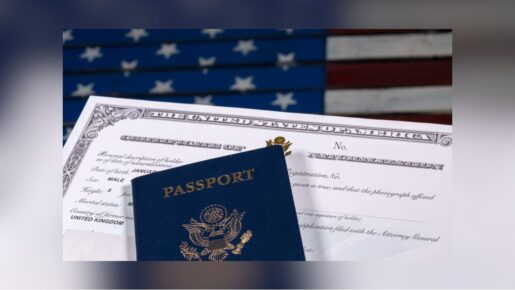
The Department of Homeland Security announced Wednesday a proposed rule that would require U.S. schools to pay $70,000 before recommending an F-1 foreign student for Optional Practical Training for the first time, followed by a $30,000 fee for each subsequent OPT recommendation.
The Federal Register lists the proposal for publication October 8. The fees would not take effect unless DHS completes the rulemaking process and issues a final rule.
OPT allows eligible F-1 students to work in positions directly related to their major field of study. Students may receive up to 12 months of OPT at each education level, while qualifying science, technology, engineering and mathematics graduates may receive an additional 24-month extension, according to ICE.
Schools would carry the payment obligation
Under the proposal, schools certified by the Student and Exchange Visitor Program would have to pay the applicable fee before a designated school official could enter an OPT recommendation into the Student and Exchange Visitor Information System. U.S. Citizenship and Immigration Services also could not approve employment authorization unless the school paid the fee.
The fee would apply to the school’s recommendation rather than a particular employer. DHS states that the proposal would not restrict how schools collect or source the money, and schools could pass the cost to F-1 students, other students or employers, subject to other applicable laws.
DHS said it designed the fees to combat fraud, strengthen immigration-system integrity and protect U.S. workers. The department cited problematic worksites and “pay-to-stay” schemes involving schools, school officials, employers and F-1 students.
“Optional Practical Training was never meant to be a back door into the American workforce, a subsidy for cheap labor, or a prize for those who game the system,” a DHS spokesperson said in the October 7 release.
“DHS is upskilling OPT to require foreign students to justify their worth to employers. American workers should not have to compete against a program that has been turned into a pipeline for cheap foreign labor.”
DHS projects billions in annual collections
DHS estimates annual OPT fee collections after the transition period would range from $8.4 billion to $16.5 billion, with a primary estimate of $12.4 billion.
The department also acknowledged that schools unable or unwilling to pay could stop recommending students for OPT, creating costs for schools, foreign students and employers. Its analysis says some institutions could also face lower enrollment and revenue.
Fanta Aw, CEO of NAFSA: Association of International Educators, argued that discouraging international students would hurt U.S. innovation, economic growth, workforce development and global leadership, according to the Associated Press.
Texas schools have faced scrutiny over foreign-worker programs
The proposal comes during broader scrutiny of foreign-student and foreign-worker programs.
The Dallas Express previously covered concerns about OPT’s effects on U.S. workers, including claims that tax exemptions can make foreign student labor less expensive for employers.
More recently, The Dallas Express reported on Texas A&M University’s delayed release of records related to OPT and H-1B costs, including H-1B files produced after a complaint to the Texas Attorney General
The proposed rule provides a 30-day public-comment period after publication in the Federal Register. The separate Paperwork Reduction Act information-collection portion carries a 60-day comment period. DHS proposes that any final rule take effect 60 days after its publication, with the new fees applying prospectively to qualifying OPT recommendations made on or after that effective date.