Dallas officials will review more than $5 million in funding for The Bridge Homeless Recovery Center Tuesday morning while also examining the city’s street-response operations and several additional contracts for people experiencing homelessness.
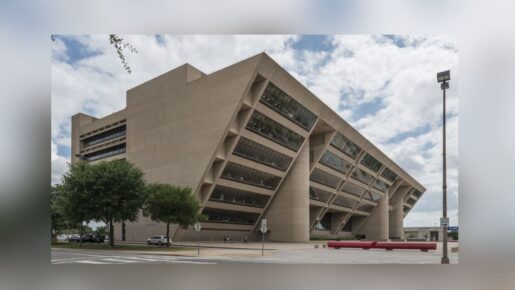
The Dallas City Council’s Housing and Homelessness Solutions Committee is scheduled to meet at 9 a.m. September 22 in the City Hall Council Chambers, two hours after this article’s scheduled publication.
The committee’s final agenda includes an update on the Dallas is Home initiative, a briefing on Dallas Street Response and the City Action Strike Team, and several homelessness-related contracts scheduled for future City Council consideration.
Among the largest items is a proposed $5.1475 million facility-management agreement with Bridge Steps, which operates The Bridge Homeless Recovery Center downtown.
The full Dallas City Council is scheduled to consider that item Wednesday, September 23.
$5.15 Million Proposed For The Bridge
Under the proposal, Dallas would exercise the fourth and final one-year renewal option on its facility-management services agreement with Bridge Steps.
The underlying annual management fee is $4.519 million.
City records show the proposal would add $328,500 for pay-to-stay shelter beds and $300,000 to the facility-management agreement, bringing the General Fund-backed annual amount to $5.1475 million.
The money would come from Dallas’ General Fund and remains subject to appropriations.
The committee will review the item Tuesday, but the final authorization is scheduled for the September 23 City Council consent agenda.
The figure should not be interpreted as a straightforward increase over all funding authorized for The Bridge last year.
In September 2025, Dallas authorized up to $5.9169 million for the facility-management agreement when separate Texas Department of Housing and Community Affairs grant funding was included. Of that amount, $5.1475 million came from the General Fund — the same General Fund amount proposed for the upcoming contract year.
Demand At The Bridge Has Grown
The Bridge is one of Dallas’ largest homeless-service facilities and provides overnight shelter, meals, showers, case management and connections to medical, mental-health and other services.
The Dallas Express reported in June 2025 that the number of people seeking services from The Bridge had been increasing, with then-President and CEO David Woody telling DX that the organization served 6,350 “unique individuals” in fiscal year 2023 and 7,234 in fiscal year 2024.
By May 2025, Woody said The Bridge was on pace to serve as many as 8,000 people that year.
“We’ve only seen increases every year in the number of folks that we’re engaging,” Woody told DX at the time.
The growth showed a distinction that has repeatedly emerged in Dallas’ homelessness debate: fewer visible encampments downtown do not necessarily mean fewer people need shelter and supportive services across the city.
Dallas Street Response Gets A Closer Look
Tuesday’s committee meeting also includes a presentation titled “Dallas Street Response and City Action Strike Team Overview.”
Kevin Oden, director of Emergency Management and Crisis Response, is scheduled to give the briefing.
Dallas Street Response coordinates city personnel responding to homelessness and other street-level conditions.
The program has been providing committee members with regular outcome reports. At the committee’s August meeting, Oden presented Dallas Street Response results for June and July.
The City Action Strike Team has separately been used as a coordinated city response to locations experiencing concentrated public-safety, quality-of-life and homelessness-related concerns.
Tuesday’s presentation is expected to give council members an overview of how the two operations function and coordinate.
Dallas Took Over Street Duties Around The Bridge
The city’s responsibilities around The Bridge changed significantly last year.
The Dallas Express reported in October 2025 that the City of Dallas assumed responsibility for street cleanup and conditions within a two-block area around the shelter under a “Good Neighbor Agreement.”
For years, The Bridge had handled work beyond its own property, including cleaning trash and canvassing people experiencing homelessness in the surrounding area.
The City Council unanimously approved the agreement transferring those responsibilities back to Dallas while leaving The Bridge responsible for its immediate perimeter.
That shift makes Tuesday’s street-response briefing particularly relevant as council members consider another year of funding for the shelter itself.
Other Homelessness Contracts On The Agenda
Committee members will also review several additional contracts.
One proposal would authorize $255,000 in homeless-diversion services for three organizations:
- $65,000 for Harmony Community Development Corporation
- $120,000 for Catholic Charities of Dallas
- $70,000 for First Presbyterian Church of Dallas, doing business as The Stewpot
The contracts would cover October 1, 2026, through September 30, 2027, and are also scheduled for City Council consideration September 23.
Another proposal would provide $250,000 to Catholic Charities of Dallas for supportive services for seniors experiencing homelessness, increasing the cumulative contract amount from $500,000 to $750,000.
The committee will also preview a separate $125,899 rapid-rehousing agreement with Bridge Steps currently scheduled for City Council consideration on October 14.
Dallas County has separately committed up to $1.3 million for homeless-assistance services at The Bridge for the October 2026 through September 2027 period. The Dallas committee reviewed that agreement in August.
The Dallas Express Has Documented A Sharp Downtown Decline
The Dallas Express has closely followed both improvements and continuing challenges surrounding homelessness downtown.
DX reported in October 2025 that an October 23 count identified 30 people experiencing homelessness in the Central Business District, down from a reported peak of 411 on February 3, 2024.
Mark Nunneley, who had been compiling frequent downtown counts, told DX at the time that encampments had been eliminated from the Central Business District.
Housing Forward President and CEO Sarah Kahn also told DX that the organization’s Street To Home Initiative had helped rehouse more than 7,400 people since July 2024, including nearly 277 people from downtown encampments.
These figures describe the downtown core and should not be interpreted as a count of homelessness across Dallas or the broader region.
The Bridge’s reported growth in unique clients illustrates that distinction.
Street Conditions Remain Part Of Debate
The Dallas Express has also continued reporting on quality-of-life concerns surrounding downtown homelessness.
In December 2025, The Dallas Express reported that Dallas issued no citations that year for violations of its street-feeding ordinance despite concerns from Downtown Dallas Inc. officials regarding trash, crowd control and public safety.
City officials said their approach emphasized education, collaboration and public-health protections rather than citations.
Volunteer organizations interviewed by DX said their goal was to provide food and necessities to people in need, and some said they notified the city and cleaned their areas after distributions.
The debate exposed an ongoing policy question in Dallas: how to provide immediate assistance to people living on the streets while connecting them with shelters, housing programs and other services intended to address homelessness longer term.
Council Vote Follows Wednesday
Tuesday’s Housing and Homelessness Solutions Committee meeting begins at 9 a.m. at Dallas City Hall. The city’s agenda was listed as final as of Monday.
The full City Council is scheduled to meet Wednesday and consider the $5.1475 million Bridge facility-management agreement, the $255,000 homeless-diversion contracts and the $250,000 Catholic Charities agreement.
For council members, the two-day sequence will bring together two parts of Dallas’ homelessness strategy: managing conditions on city streets and funding the organizations that provide shelter, housing assistance and supportive services.