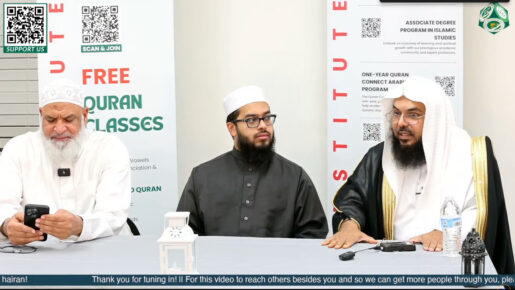


The Harvard Club hosted leaders in Dallas’ homeless response to discuss promising strategies – and potential solutions for the crisis.
The Harvard Club of Dallas hosted the first of its “Crimson Conversations” at the George W. Bush Presidential Center on November 14, where alumni learned about efforts to reduce homelessness in downtown Dallas and explored promising strategies for the future.
“This is the first of what we hope to be many programs,” said Rebecca Posten, Harvard Club vice president of programs, to The Dallas Express. “The idea is to demonstrate how you can take difficult topics with very different perspectives and have educated, civil discussions.”

The Harvard Club hosted leaders in Dallas’ “Crimson Conversations”
The panelists included Housing Forward CEO Sarah Kahn, Ashford Inc. Senior Managing Director Mark Nunneley, and Metrocare Chief Housing Officer Ikenna Mogbo. Meanwhile, developer and Housing Forward Board Chair Peter Brodsky served as moderator.
Housing Forward is a nonprofit organization designated as the lead agency by the Department of Housing and Urban Development for coordinating the homeless response in the Dallas area. Nunneley performs frequent homeless counts in the Central Business District downtown. MetroCare is the largest provider of mental health, developmental disability, and permanent supported housing in Dallas County.
To begin, Brodsky asked the panelists to define homelessness.
“On any given night, there are about 3,500 people experiencing homelessness – about 20% of those are people living in families, the other 80% are single adults,” Kahn said.
Nunneley agreed, citing their lack of safe and secure housing. Mogbo also agreed and emphasized that anyone is vulnerable to homelessness.
“Everyone here, with the right amount of trauma in your life, will be homeless tomorrow,” he said.
Brodsky also asked about the primary cause of homelessness.
Kahn blamed the rising housing costs faster than wages. “There are individual risk factors that can make someone very vulnerable to homelessness,” she said. “If you’re paying over 50% of your income on housing and you have a sudden loss of income – or you have a health emergency, or an unmanaged addiction, or mental health issue, or chronic illness – then those types of events can set people into housing instability, which often spirals into homelessness.”
Nunneley emphasized the role of mental health in the homeless crisis.
“There’s a huge portion of the homeless that have mental health issues,” he said. “That’s a huge component in our city.” He explained the need for mental health treatment – not just housing – to help homeless people recover.
“You can’t just take an unsheltered person and put four walls around a lot of them and assume that they’re going to be able to be okay,” Nunneley said. “They have to have the mental health services, and they have to provide all the other items that are necessary for them to heal and become active members of society.”
Mogbo agreed about the importance of behavioral health, but also emphasized the role of housing.
“Remember when your YMCA was a 10-to-12 story building, and the bottom two floors were the gym and the other floors were single-room occupancy apartments that veterans and the homeless population that you see now were living in,” he said. “That real estate was in the downtowns of our cities, and they became very expensive.”
Mogbo said these types of buildings were sold and redeveloped into expensive apartments, leaving the former tenants without homes.
Brodsky asked him what came first – mental health or addiction, or the lack of housing.
“In general, I believe that the addiction and the lack of support to help you with that addiction, or that behavioral health issue, is what creates the situation where you become homeless,” Mogbo said.
Kahn explained that the homeless population across Dallas and Collin counties is fluid, with nearly 8,700 new families and individuals entering homelessness every year. She said groups had been addressing crisis response with short-term shelters, but not sustainable solutions.
“We didn’t have enough aligned investments in getting people out of homelessness and back into stable living,” she said. “That created a dynamic similar to building emergency rooms, where you don’t have enough doctors. The emergency room waiting room fills up very quickly, and if you’re not getting people out, it spills out onto the streets.”
Since Housing Forward launched its “Street To Home Initiative” in July 2024, it has helped rehouse more than 7,400 people from the streets – including close to 277 from encampments downtown, Kahn previously told The Dallas Express.
“We now are working on, ‘How do we maintain a response that allows us to prevent street sleeping and encampments from ever popping up again in the downtown area?’” she said at the time.
Housing Forward is also a major partner in the “Safe In The City” campaign, which officially launched in May – bringing together the City of Dallas, Downtown Dallas Inc., and other groups to implement a six-step plan to end homelessness, as The Dallas Express reported at the time.
Nunneley, who has been compiling frequent homeless counts and reports for downtown Dallas for the past two years, shared an October 23 count for the Central Business District.
“There are no more encampments in the Central Business District – zero,” Nunneley said at the time. “They’ve totally eliminated encampments.”
The count found only 30 homeless people downtown, down from the peak number of 411 on February 3, 2024. Since June 18, 2025, the count has fallen mostly into the double digits.
Shelters like The Bridge Homeless Recovery Center – Dallas’ largest shelter, in the heart of downtown — offer a “one stop shop,” a first step toward an exit pathway. As The Dallas Express reported, high demand has been straining the shelter’s capacity.
“Every single shelter in the City of Dallas is at capacity. There are homeless on the street,” Nunneley said during the panel. “We need a facility to take these people.”
He pointed to Haven for Hope — a comprehensive “transformational campus” in San Antonio, which offers a safe place to stay off the streets while they engage with a network of services, working with Housing Forward and other partners to find a longer-term solution. Since there are not enough shelter beds to help people temporarily transitioning from living on the street, this could help streamline local efforts.
“We think this solution works,” Nunneley said. “It’s a very successful model, it works, and we’d like to see a model like that in the Dallas area.”
Kahn said Housing Forward takes an incremental approach, focusing on goals such as eliminating street sleeping by moving more homeless people out of shelters.
“Saying that we are committing to not letting people sleep on the street, demands that we turn over our beds at a certain rate,” she said. “We have a certain number of people flowing in; we need a certain number of people flowing out to keep them off the streets.”
Mogbo called for more housing, where homeless people can go after shelters.
“People are going to keep on coming, but you’re going to have enough end-result housing for the amount of people coming to your community, to have a place so you can resolve their issues,” he said. “Until you have that, you can build as many shelters as you want, you’re still going to have a homelessness problem.”
Brodsky claimed that “living wage” and “affordable housing” are the keys to ending homelessness.
“We have to run as fast as we possibly can, and you can’t build enough shelters unless you have exit pathways,” he said. “It really is a combination of both.”
Nunneley explained that the current situation is untenable. “Our sidewalks can’t be the waiting room,” he said. “Our underpasses can’t be the waiting room.”
Shikha Sethi, Harvard Club Vice President of Membership, told The Dallas Express that organizers wanted to begin the series with a relevant and informative topic where participants could engage in civil disagreement. She cited North Texas’ rapid growth.
“We think it might be something that may be a little forward-looking,” she said.
Posten said the Harvard Club hosted this event as part of its mission to provide educational programming and meaningful conversations to the Dallas community.
“Unlike some other programs like this – where it’s like a debate, let’s discuss and debate who’s going to win – that’s not our intention,” she said. “Our intention is to talk about the pros and cons so we all leave here better able to make our own important decisions.”