Gov.-elect Gina Hinojosa’s (D) plan to remove CAIR’s Texas terrorist designation would withdraw an executive finding the state has used to support its enforcement campaign. Her pledge alone does not repeal the laws behind land restrictions, criminal investigations and civil enforcement.
Hinojosa plans to reverse the designation, The Washington Post reported in a November 14 interview. The report does not establish that she also plans to remove the Muslim Brotherhood’s designation.
Gov. Greg Abbott’s (R) November 18, 2025, proclamation took two distinct steps against the Council on American-Islamic Relations and the Muslim Brotherhood: It designated them as foreign terrorist organizations under Texas criminal law and separately as transnational criminal organizations under the state’s property law.
Abbott cited the Holy Land Foundation terrorism-financing case, including the conviction of Ghassan Elashi, whom the proclamation identifies as a founding board member of CAIR’s Texas branch. The federal record includes convictions, court findings and FBI restrictions that predate Abbott’s action.
The Holy Land Foundation record
The U.S. Treasury designated the Richardson-based Holy Land Foundation for Relief and Development as a Specially Designated Global Terrorist on December 4, 2001, and ordered its assets blocked. A federal jury convicted the charity and five leaders in November 2008 of providing material support to Hamas.
The Justice Department’s account of the case said the defendants provided approximately $12.4 million in support to Hamas. U.S. District Judge Jorge A. Solis sentenced Elashi to 65 years in prison on May 27, 2009.
Federal prosecutors named CAIR as an unindicted co-conspirator in 2007. In a July 1, 2009, order, Solis found “ample evidence” of CAIR’s associations with the Holy Land Foundation, the Islamic Association for Palestine and Hamas. He noted that the evidence largely predated the foundation’s 2001 designation.
The order cited a July 1994 meeting agenda listing CAIR among the working organizations of the Palestine Committee, whose creation the Muslim Brotherhood supervised. Solis declined to strike CAIR’s name from the list, but ordered the list sealed, finding that prosecutors should not have published it. Prosecutors did not charge CAIR in that case; the listing was not a federal terrorist designation.
A 2013 Justice Department inspector general report documented the FBI’s 2008 policy restricting non-investigative contacts with CAIR following the case. CAIR denies supporting terrorism and challenged Abbott’s proclamation in court. A Texas rescission would not overturn the federal convictions or erase the court record.
The land restriction requires its own decision
Texas’ property law expressly authorizes the governor to remove an entity’s land-purchase designation. The statute requires consultation with the Department of Public Safety director and the Homeland Security Council.
If Hinojosa removes CAIR’s property designation, that change would eliminate that particular ground for barring future acquisitions, subject to any other applicable restriction or court order. Simply withdrawing the terrorist label would not necessarily accomplish that.
The statute makes removal prospective. It applies to acquisitions on or after the removal’s effective date, rather than automatically clearing earlier transactions. Texas would retain the underlying law, including restrictions arising from other designated entities or countries.
The law also contains exceptions for U.S. citizens, lawful permanent residents and certain entities they own or control. It does not impose a blanket land ban on Muslims or everyone who supports CAIR.
Investigations and lawsuits follow separate paths
Abbott separately directed DPS on November 20, 2025, to investigate CAIR and the Muslim Brotherhood. A decision about the designation would not, by itself, establish whether DPS had closed any investigation or whether federal or local authorities had ended their own work.
Texas’ criminal code defines a foreign terrorist organization through its structure, overseas operations, criminal activity and threat to the state or its residents. The definition does not expressly make a governor’s designation a required element. Withdrawing the proclamation would not repeal the law or bar prosecutors from seeking to prove a violation.
The state’s civil nuisance law likewise requires proof of specified activity and court findings before a judge can impose an injunction. The proclamation alone does not establish anyone’s guilt.
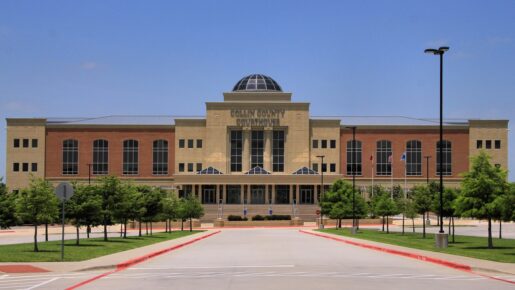
Attorney General Ken Paxton (R) filed a February 5, 2026, lawsuit in Collin County seeking to stop the Muslim Brotherhood, CAIR and its Austin, Houston and DFW chapters from operating in Texas. The petition sought declarations and injunctions under state law, not merely recognition of Abbott’s proclamation.
CAIR’s DFW and Austin chapters filed their federal challenge on November 20, 2025, disputing the proclamation’s legality. Those filings pursued different remedies: Texas sought restrictions against the organizations, while the CAIR chapters sought relief against state officials.
Federal sanctions and Egypt’s permanent listing
President Donald Trump’s administration took separate federal action on January 13, 2026. Treasury designated the Egyptian and Jordanian Muslim Brotherhood branches as Specially Designated Global Terrorists for providing material support to Hamas. The State Department designated the Lebanese branch as both a Foreign Terrorist Organization and a Specially Designated Global Terrorist.
Those sanctions block covered assets under U.S. jurisdiction and generally prohibit U.S. persons from transacting with the designated entities, subject to exceptions and licenses. A Texas governor cannot lift them. The January actions named specific Brotherhood branches; they did not designate CAIR.
Egypt also made the Brotherhood’s terrorist listing permanent through a notice published in its official legal gazette on November 8. The National reported that the measure bars activities, meetings and fundraising, closes premises and freezes assets. It replaces a temporary listing rather than imposing Egypt’s first ban on the group.
Massad Boulos, Trump’s senior adviser for Arab and African affairs, welcomed Egypt’s action in a November 14 statement reported by the Egyptian Gazette: “The United States commends Egypt for permanently designating the Muslim Brotherhood a terrorist entity.” Hinojosa’s reported pledge concerns CAIR, not these Brotherhood designations.
Political support came from CAIR Action
CAIR Action’s election guide rated Hinojosa and Attorney General-elect Nathan Johnson (D) as “Preferred,” a category separate from full endorsement. Johnson’s office would handle state litigation, making its position relevant alongside the incoming governor’s.
CAIR Action is a separate 501(c)(4) advocacy organization from CAIR, a 501(c)(3) that does not endorse candidates. Abbott’s proclamation named CAIR and the Muslim Brotherhood, not CAIR Action as a separately named entity.
In October 29 answers previously reported by The Dallas Express, CAIR Action denied providing direct contributions or campaign assistance to Texas candidates and denied exchanging endorsements for commitments. Its recommendation does not establish that Hinojosa promised a policy change in return.