


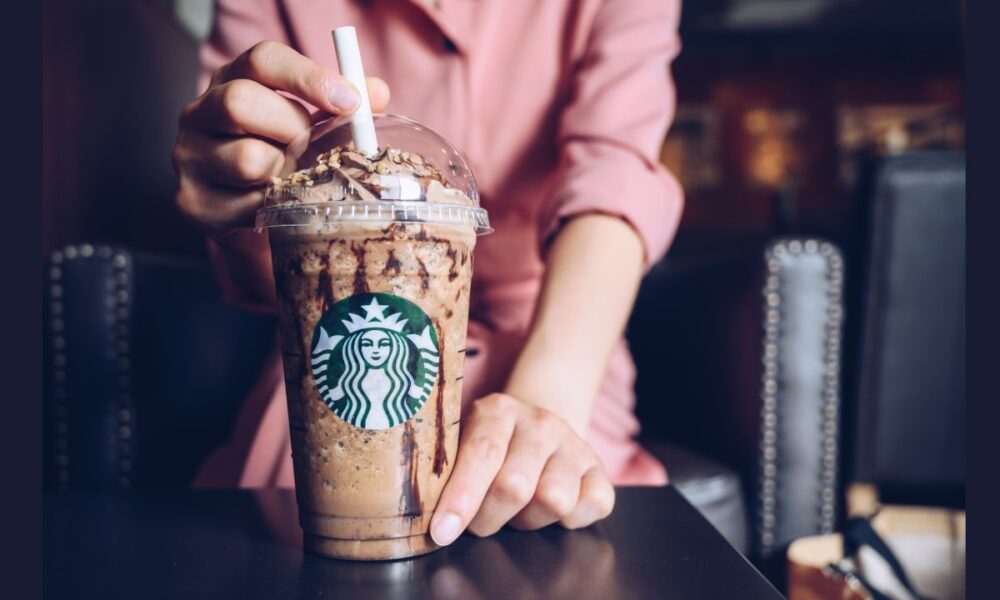
Health and Human Services Secretary Robert F. Kennedy Jr. is pressing Dunkin’ and Starbucks to produce safety data proving their high-sugar drinks are safe for teenagers as part of his “Make America Healthy Again” initiative to overhaul food ingredient rules.
Speaking at a rally last week at Brazos Hall in Austin, Texas, Kennedy said the companies must prove their products meet the highest standards.
“We’re going to ask Dunkin’ Donuts and Starbucks, ‘Show us the safety data that show that it’s OK for a teenage girl to drink an iced coffee with 115 grams of sugar in it.’ I don’t think they’re going to be able to do it,” Kennedy told the applauding crowd, CBS News reported.
Kennedy framed the demand as part of closing the “GRAS loophole,” the Generally Recognized as Safe policy that lets companies self-certify new additives without full Food and Drug Administration oversight.
In a recent “60 Minutes” interview, Kennedy said the exemption “was hijacked by the industry, and it was used to add thousands upon thousands of new ingredients into our food supply,” The Hill reported. He added that “In Europe there’s only 400 legal ingredients. This agency does not know how many ingredients there are in American food.”
MAHA Action, Kennedy’s nonprofit health advocacy group, said in a statement that “The reforms aim to ensure American foods follow the highest safety and nutritional standards globally.”
Federal dietary guidelines recommend no more than 10 grams of added sugar per meal. Nearly every drink on Dunkin’s menu exceeds that amount, and at least six contain more than 100 grams, according to the company.
CBS News contributor Dr. Céline Gounder said the issue extends far beyond any one chain.
“This isn’t about any one brand. Ultra-processed foods and beverages are bad for you, regardless of who happens to sell them,” she said, per CBS. “Your go-to beverage really shouldn’t be liquid candy.”
The Centers for Disease Control and Prevention links frequent consumption of sugary drinks to weight gain, obesity, type 2 diabetes, heart disease, non-alcoholic liver disease, tooth decay, and cavities.
Gounder noted that taxes on sugary drinks and photo warnings have been shown to reduce consumption, but she said a direct federal ban is unlikely.
“It’s gonna require either new legislation and regulation, or state and local governments stepping in where they can,” she said. “The FDA is not the sugar police, and it can’t ban sugar from beverages.”
The National Association of Manufacturers pushed back in a report released last week, saying the U.S. food and beverage supply chain produces “safe, abundant, accessible and nutritious” options for Americans. It warned that policy changes “threaten America’s safe and abundant food supply, global leadership in safe and nutritious food production and innovation across food technologies,” and could raise costs for consumers and companies.
The Department of Health and Human Services said it has strengthened reviews and closed loopholes, but did not detail what action, if any, Kennedy might take against high-sugar drinks.
On Wednesday, Dunkin’ announced the release of a new zero-sugar energy drink available in six flavors.
In February, the company confirmed that it was testing a 48-ounce drink bucket at selected locations in New Hampshire and Massachusetts only. A specialty flavored iced coffee of that size could contain as much as 126 grams of sugar and as much caffeine as about five 12-ounce Red Bulls, according to registered dietitian Avery Zenker.